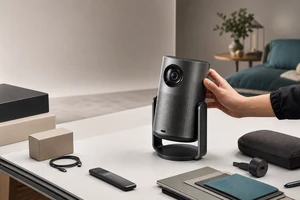
This Shenzhen brand-film director communication checklist is designed for judgment before a pitch or quotation. Give candidate teams one sample of brand tone, one actor action, and one version table, and ask them to translate these into storyboards, Shenzhen location scouting, lighting plans, audition methods, and acceptance milestones. This article focuses on director communication and procurement questions; the linked solution page covers the full scope of TVC and brand advertising production.
The first question I ask in a procurement meeting is not “Which camera did you use?” but “Whom should this line persuade, and of what, once it is filmed?” A brand-film budget should ultimately map to verifiable shot tasks.
Procurement Meeting: Turn “Looks Like the Brand” into Acceptance Statements

The brand owner first writes three sentences: the tone by which the brand should be remembered, the action the audience should take, and the page that the finished video should lead into. Procurement then asks the director to translate them into a one-page proposal covering the main film’s emotional arc, key settings, actor state, storyboard count, and delivery versions. A team that only shows the style of past work without explaining its choices should not yet enter price comparison.
- Tone: restrained and credible, or light and touched with everyday life?
- Action: should the actor pick up the product and complete an operation, or communicate only through a look and pause?
- Result: will the website main film, overseas advertising assets, and sales demonstrations share the same evidence shots?
Brief Translation: Test the Director’s Judgment with Lines and Actions
Do not let the director speak only of a “premium feel.” Give two candidate teams the same 15-second line, the same product action, and the same brand reference card, and ask each to deliver a storyboard. Compare three things: whether the line leaves the actor a natural pause, whether the action can be proven in one close-up, and whether the shots leave safe composition for later short-form and vertical delivery.
| Procurement Input | On-Set Verification | Acceptance Standard |
|---|---|---|
| Brand tone and prohibited expressions | Actor performs two readings of the line | Preserve natural pauses instead of forcing cuts in post |
| Core product action | Director breaks it into wide, close, and hand-detail shots | One task per shot, capable of explaining the selling point |
| Overseas sales scenario | Reserve clean imagery without text and subtitle-safe areas | Reusable across the main film and short cuts |
Real creative judgment often occurs in a tiny detail: raising the product two centimeters can turn an actor’s action from “displaying” into “using.” Procurement has a basis for judgment only when the director can explain why the change was made instead of saying merely that it “feels better.”
Shenzhen Execution: Put Location Scouting, Lighting, and Team Configuration into the Quotation
A Shenzhen shooting schedule should at minimum specify when the sample reaches the studio, who confirms product status, whether the setting permits continuous changes, whether air conditioning affects sound recording, and when the director, producer, cinematographer, lighting, sound, and art teams will be present. Cross-border ecommerce teams must also prepare an operational sample, backup power, demonstration account, and engineering contact so the actor does not mime with a device that has not been configured.
If the set must serve the website, YouTube, and overseas sales materials, location scouting cannot judge only whether the background looks good. It must also check whether lighting can remain stable, camera positions can reset quickly, and product reflections can be controlled. Shenzhen’s “15th Five-Year Plan” outline also places cultural industries and overseas expansion within the context of industrial development. The project Brief should therefore specify the handoff between local production and overseas delivery instead of leaving “internationalization” as a slogan (Shenzhen’s “15th Five-Year Plan” Outline).
Version Decisions: The Main Film Is Not One Landscape Video for Every Platform
Separate the versions during director communication. Google Ads’ official specifications list recommended 1080p sizes for 16:9, 9:16, and 1:1. LinkedIn video ads support 16:9, 1:1, 4:5, and 9:16, require direct video-file uploads, and use SRT subtitles. In other words, the director of photography must reserve vertical safe areas, subtitle positions, and self-contained actions during the main-film stage rather than forcing the landscape video into a vertical crop after delivery.
YouTube Video Format Specifications can be used to verify delivery aspect ratios and file quality; LinkedIn Video Advertising Specifications remind the team to confirm duration, file format, subtitles, and thumbnails. YouTube also emphasizes that there is no ideal duration for all content and that editing length should follow audience response and the content task. Therefore, the quotation should list the main film, 15–30-second advertising cuts, vertical versions, and clean master without subtitles separately.
Rights and Acceptance: Do Not Review Only the Image in the Final Round
Brand-film acceptance should cover at least four layers: whether the image completes the storyboard task, whether actor performance matches the brand tone, whether sound and subtitles can be used for overseas delivery, and whether music, font, likeness, and asset rights form a traceable chain. China’s Copyright Law and WIPO materials on audiovisual works both indicate that rights involving directing, cinematography, music, and other creative steps cannot be deferred until launch. During procurement, put the scope, territory, term, media, recutting rights, and source-file delivery into the contract and delivery checklist.
- Shot-by-shot check: does every core selling point have corresponding visual evidence?
- Version-by-version check: do the website, YouTube, LinkedIn, and vertical ads use the correct aspect ratio?
- Word-by-word check: do English subtitles, brand names, product specifications, and CTA match the final Brief?
- Item-by-item check: have rights documents for music, actors, fonts, assets, and finished videos been archived?
Six Follow-Up Questions for Procurement Owners
Send the following six questions to candidate teams; answers should map to files or actions. First, which sentence in the Brief will change a shot? Second, which actor action requires an audition? Third, which Shenzhen on-set condition will change the schedule? Fourth, which light or lighting change will affect product texture? Fifth, how will the main film be divided into YouTube, LinkedIn, and vertical assets? Sixth, how will the delivery directory distinguish masters, subtitles, advertising cuts, and rights evidence? The more specific the answers, the clearer the later rework boundary.
Once you have a brand tone, sample status, and target versions, first organize the Brief, script, actor requirements, Shenzhen on-set conditions, and acceptance goals into a director communication sheet, then review the Shenzhen TVC Advertising and Brand Film Production Solution to verify the scope of creative, filming, post-production, rights, and multi-version delivery.