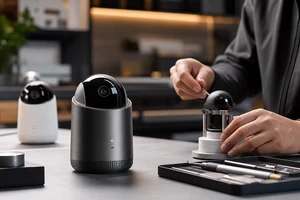
This Shenzhen cross-border ecommerce photography procurement and acceptance checklist divides a project into SKU and sample status, white-background main images, usage settings, product pages, advertising assets, file naming, and rights boundaries. Brands can use one table to compare Shenzhen teams’ on-site collaboration and overseas-platform delivery. This article focuses on photography procurement and acceptance; the linked solution page covers projects that also require a main film, functional demonstration, and advertising video.
Procurement Should First Ask: Are You Delivering Photographs or a Set of Usable Evidence?
The first question I ask in a vendor-comparison meeting is not “How many cameras do you have?” but “What user judgment is this image set meant to support?” For smart hardware, the first main image should reveal the full appearance, detail images should explain ports, materials, and accessories, and contextual images should show size, placement, and usage actions. Mixing these three tasks into one attractive studio image often leaves the product page without evidence and advertising without crop-ready imagery.
The Shenzhen Commerce Bureau’s 2026 objectives identify high-quality cross-border ecommerce development, the bonded economy, and international consumption scenarios as priorities. For content procurement, photography deliverables must remain usable by product-page, sales-proposal, and media teams instead of looking good only on publication day.
First Research Table: Can Visual Judgment Map to Product Tasks?
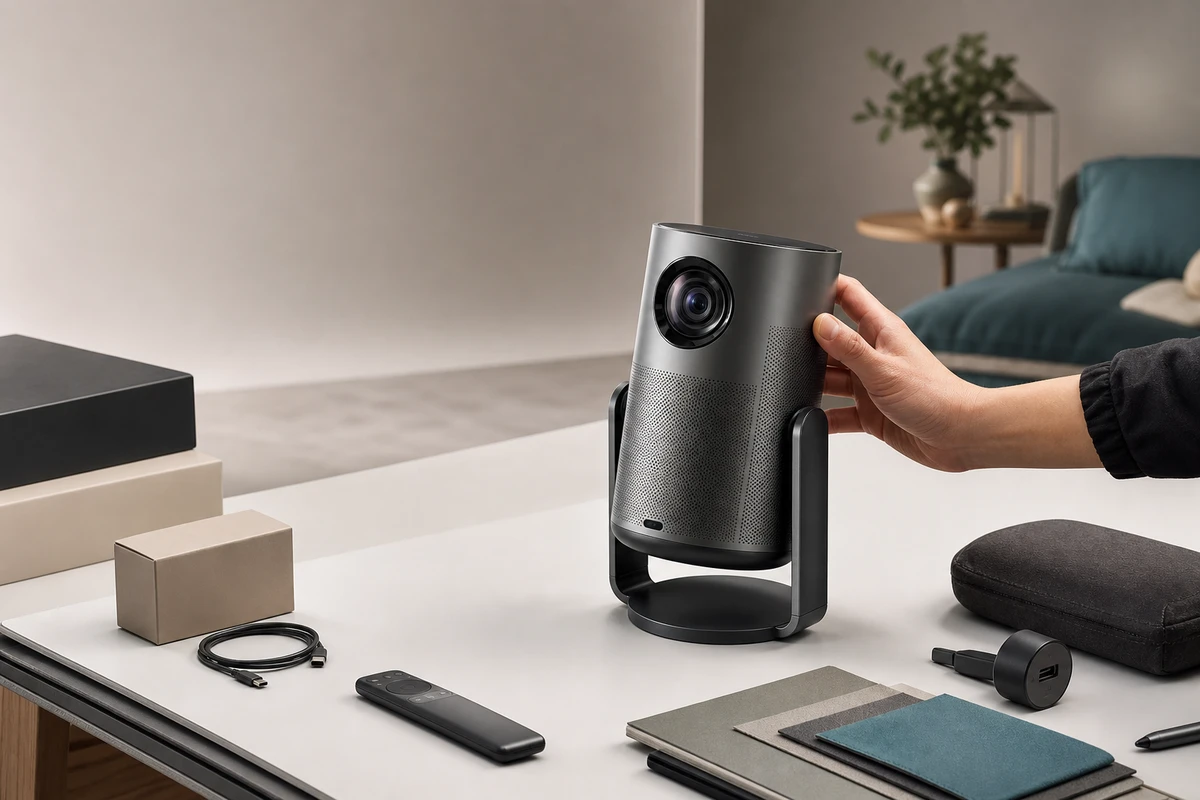
Ask vendors to complete four columns for each SKU: purchase concern, product fact that must be proven, corresponding image, and reusable channels. If the concern about a portable projector is “Will it take up too much space in the bedroom?”, the imagery needs a desktop context that shows scale, port details, and the projected result. If the concern about a charging device is “Is it easy to carry?”, complete the relationship among storage, grip, connection, and accessories. This selling-point breakdown lets procurement compare proposals more effectively than “make it premium and emphasize texture.”
Amazon’s Official Product Image Guidance emphasizes that the main image should show only the product being sold against a white background and recommends using other images for usage context, angles, and functions. TikTok Shop’s Product Image Rules require the main image to show the product clearly and secondary images to cover front, back, left, right, accessories, details, and usage settings; watermarks, text, or numerical renders may not substitute for the real product. Put these requirements into the shot list in advance so vendors’ samples are comparable.
On-set judgment is also concrete. If an image needs text added in post to explain a selling point, photography has not completed the evidence task. If the white-background, detail, and contextual images for the same SKU have inconsistent color temperature, the later product page will look like a collage. The creative director first defines “which image makes users recognize it, which makes them believe it, and which lets them imagine using it,” then arranges lighting and composition.
Second Research Table: Shenzhen On-Site Conditions Determine Rework Cost
Before quoting, detail sample movement: is the unit sent to Shenzhen an engineering sample, mass-production sample, or retail-packaged sample; is there a backup; are color, accessories, and packaging frozen; and does the product require power, networking, disassembly, or human operation? Also confirm the studio tabletop, reflection control, power, network, storage, prop purchases, and product manager’s attendance. Miss one item, and the photographer may capture only the exterior while post-production is later asked to add a “sense of use.”
Team configuration cannot be judged only by the photographer’s name. An executable cross-border ecommerce photography project needs at least one person responsible for product facts, one for visual consistency, one for samples and props, and one for file naming and version handoff. Shenzhen’s advantage in attendance is not merely being “close to the factory”; it is the ability to replenish, reset, or reshoot quickly when a sample fails, provided the vendor has written the sample ledger and on-site responsibilities into the schedule.
My usual on-set priority is to lock the white-background main image first, then one continuous usage sequence, and only then add lifestyle atmosphere. If the main and detail images are unstable, no attractive setting can rescue the product page. Conversely, only a complete action sequence can later be divided into product-page visuals, short-video hooks, and overseas sales demonstrations.
Third Research Table: How the Same Assets Enter Different Platforms
Shopify’s Product Media Documentation supports images, 3D models, and video and explains that product media must display correctly in a theme. Procurement should not fixate on one pixel number; it should deliver clear originals, consistent ratios, readable filenames, and accurate alt text for the same SKU so product pages, collection pages, and later content teams can reuse them. Image alt text and accessibility requirements should enter the acceptance folder together.
Amazon’s main image focuses more on confirming “what it is,” while secondary images carry use and detail. TikTok Shop permits square product images and requires imagery to represent accurately the product the buyer receives. If the brand also needs advertising assets, TikTok’s Carousel Advertising Specifications use landscape, square, and vertical sizes, while LinkedIn Single-Image Advertising Specifications provide 1.91:1, 1:1, and mobile vertical recommendations. Procurement should require photographers to retain safe composition and crop margins rather than delivering finished images that work on only one page.
This is also why I do not recommend solving “product-page images” and “media KV” with one visual template. The former lowers comprehension cost; the latter captures one concern during scrolling. In other words, the product page should be complete and objective, while feed assets must use the first frame to capture a concern within the opening seconds. The asset pool can have six columns: main image, structural details, usage settings, size relationships, short advertising cuts, and sales-proposal images. Remarketing and A/B testing will then have a version matrix to rotate.
Quotation and Acceptance: Work Backward from Deliverables to Vendor Capability
A comparable quotation should specify the number of SKUs, main and secondary image counts for each SKU, number of settings, props, retouching rounds, original and finished formats, copyright scope, and delivery cycle. A quote that says only “one shooting day, several retouched images” does not tell procurement what the budget buys or whether it covers product pages, advertising assets, and sales proposals. The editor recommends listing the asset pool and version matrix together in the quotation appendix.
Acceptance can proceed through five layers: are product facts accurate; are white backgrounds, materials, and colors stable; are contextual proportions and usage actions credible; are file sizes, names, formats, and alt text complete; and have unwatermarked originals, finished files, and rights boundaries been delivered? Shopify specifies image dimensions, formats, and file limits, while TikTok Shop defines image size, quantity, and authenticity requirements. Platform rules should not be revisited with the photographer only after an upload fails.
When screening Shenzhen teams, first review the Petaboo Product Video Case to observe how product actions, usage settings, and overseas content assets are organized. If the main product film, functional demonstration, and advertising cuts also need planning, review the Shenzhen Cross-Border Ecommerce Product Video Production Solution. The case demonstrates the method only and does not replace sample testing for this project.
Research Conclusion: Bring the Research Table into the Brief Instead of Choosing a Company by Feel
Comparing Shenzhen cross-border ecommerce photography vendors ultimately comes down to three things: can they translate product facts into visual tasks, control sample and lighting variables on a Shenzhen set, and deliver files for the different uses of Shopify, Amazon, TikTok Shop, and advertising? Put these three layers into the Brief and require each vendor to answer with the same table; only then are price, cycle, and sample work genuinely comparable.
Before the first conversation, organize the SKU list, real usage settings, prohibited expressions, platform entry points, desired launch time, and acceptance owners. If you first need to review studio conditions, sample flow, and asset-version arrangements, book a studio consultation and let the team provide executable shooting recommendations around the specific product.