How should you choose a Shenzhen video-production case study? Do not treat runtime, camera-model lists, or atmospheric shots as the answer. A more useful judgment is whether real key frames show that the team can turn product actions, relationships between people, and later versions into executable shot tasks. Using the Petaboo Levante 200 handheld pet dryer as an example, the three authentic video frames below correspond to use context, operational proof, and accessory delivery. They help brands ask the questions that genuinely affect quotation, filming, and acceptance before selecting a supplier.
When evaluating a case study, first ask whether the images answer pre-purchase questions
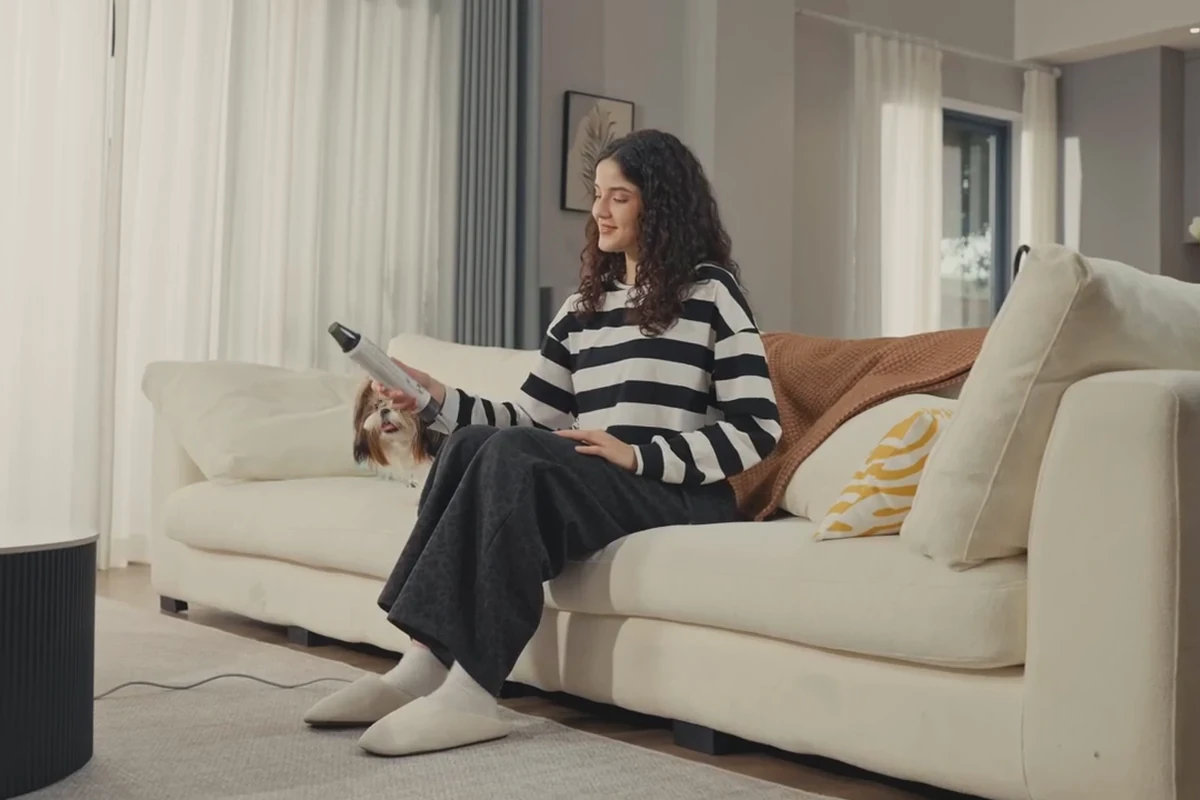
A product film is not complete merely because the product is centered in frame. The person responsible for procurement should first write down three checks: can viewers tell within seconds where the product is used; is the key action clearly visible; and can the same material be separated into product-page, advertising cutdown, and social-content versions? Petaboo’s living-room setting places the person, pet, and device in one relationship. It first establishes that care is taking place, then brings the product into the action. That sequence is closer to a real purchase decision than filming a still life alone.
Frame one: context is not decoration; it is how the selling point enters
The person on the case-study cover is seated on a sofa, with the device, pet, and home environment all in view. This is not a generic lifestyle image. It tells the production team that this film’s primary selling point is “a care process that can be understood at home.” The pre-production brief should turn this context task into shots: who operates it, where the product enters, what state the pet is in, and what viewers need to see first. Only then can art direction, lighting, talent blocking, and camera placement all serve the same question on set, rather than being supplemented on the spot with attractive-looking shots.
Frame two: product operation needs to retain the hand, direction, and response
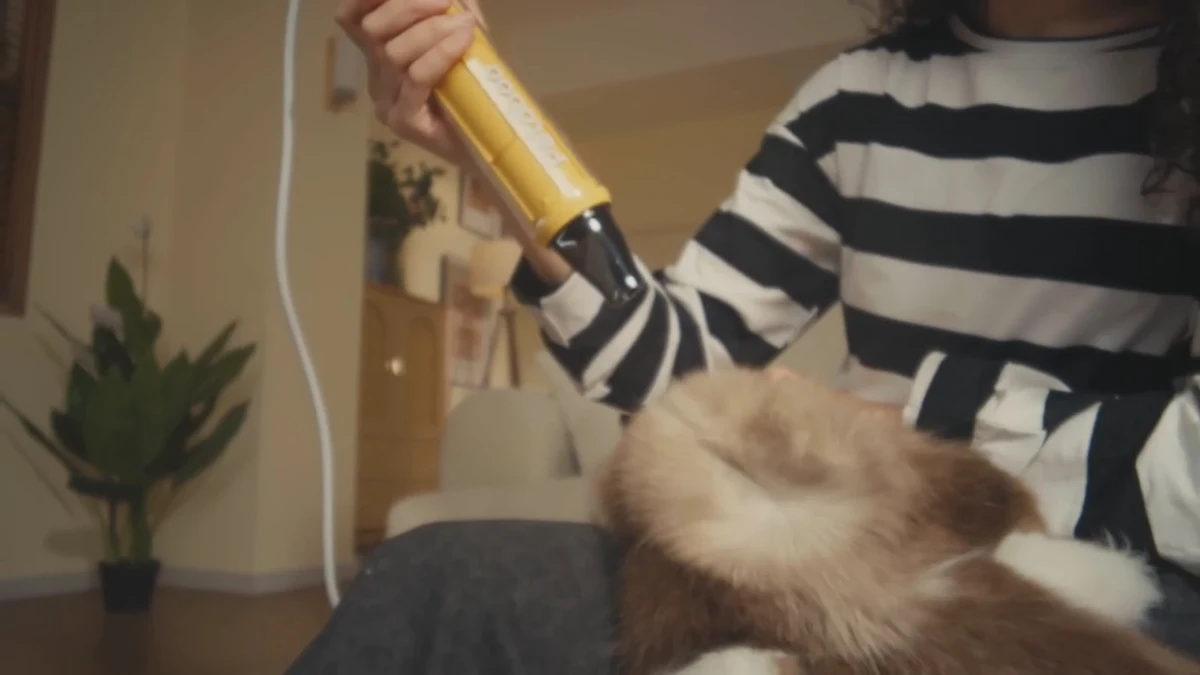
When the device enters the care action, the image does not need to stack every specification, but viewers must be able to see the action’s direction, how it is held, and the distance between the product and its user. This close-up retains the hand, device, and the pet’s fur, supporting proof of use rather than merely emphasizing appearance. During procurement, ask: does the functional shot have a corresponding camera-position plan? Have safe areas been reserved for the hero film, vertical cutdowns, and the product page? If the answers remain verbal, post-production often ends with selling points that cannot be cropped, subtitles covering the product, or material that cannot be reused.
Frame three: accessories and storage determine whether delivery can keep telling the story
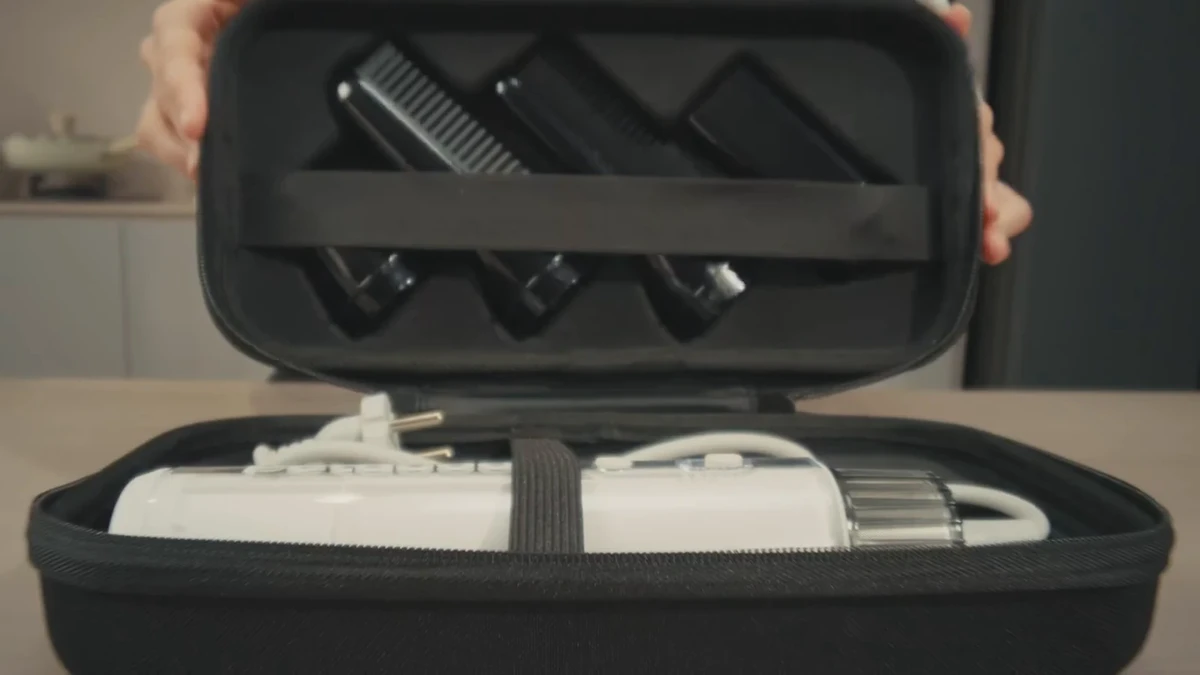
Product-video case studies often omit storage, accessories, and putting the product away after use, yet these directly affect a user’s sense of whether it is complete and easy to take along. This storage-bag key frame can be separated into detailed evidence for a product page and also serve as supplementary Campaign material. For the production team, accessory shots should be listed separately in the shoot list: what version is needed for unboxing, combinations, close-ups, and environmental relationships? For post-production, naming rules should be explicit for the hero film, six-second cutdown, vertical footage, and text-free master.
Break the case study back into production capability: assess shot logic, not aesthetics alone
When evaluating a case study, ask the supplier to explain each frame choice: why this camera position first establishes the relationship of use; why the functional shot follows the person’s action; and why the accessory image can enter the product-page and paid-media asset matrix. Whether lighting preserves layers in the white body, fur, and black storage bag also says more about on-set control than “the image looks premium.” For planning video-ad channels and formats, refer to Amazon Ads’ video-ad materials; for how lighting serves subject recognition, see ARRI’s lighting learning resources. These materials cannot replace the case study itself, but they can help a team turn aesthetic judgment into handoff-ready production conditions.
Before issuing a brief, use one question sheet to compare suppliers
Finally, turn the judgment into executable questions: what is the proof in the first screen of this film? Does every selling point have action, close-up, and context shots? Does the shoot day include a window for reshooting accessories, materials, and storage? Which images will go on the product page, and which need a vertical composition for TikTok Shop or overseas social media? Does the delivery package include a text-free master, subtitled versions, and a searchable material list? A team that can answer these questions one by one with case-study frames is more likely to keep storyboards, the set, and delivery connected in one chain after the quotation is accepted.
Review the Petaboo Levante 200 pet-care product video case study, and learn about ONCE video-production services, so that the shots, versions, and acceptance conditions of the next product film can be aligned in advance.
Frequently asked questions
Can I judge a supplier’s capability by looking only at finished case-study films?
No. Ask the team to explain the selling-point task, camera-position choice, filming constraints, and version breakdown behind key frames before judging whether its capability is reusable.
Must a product video include people on camera?
Not necessarily. Whether people appear depends on whether action, scale, or context is needed to build understanding of the product; the key is whether each shot answers a specific pre-purchase question.
What is most easily missed during delivery acceptance?
Common omissions are a text-free master, vertical safe areas, accessory details, asset naming, and the relationship to cutdowns. They should be written into the acceptance sheet before filming begins.