A Shenzhen video-production quote is not a figure calculated as “number of shoot days times a daily rate.” It is a procurement outcome shaped jointly by the number of samples, shot complexity, lighting and crew, version specifications, music and copyright, and revision boundaries. Only when the buyer puts these variables into the request for quotation can it compare suppliers’ real delivery capabilities.
Ask first in the quote review: who should this film help make a decision?

A brand marketing lead usually needs a commercial that clearly communicates positioning; e-commerce operations care more about whether a product page can prove functionality; overseas sales need a shareable product video that edits specifications, scenarios, and results of use together. If these three goals are folded into the single request to “make a promotional film,” the quote will contain only a total price, leaving no room for shot evidence or delivery accountability.
On site, a creative director first presses on one question: after the sample is placed on the table, what result must the buyer see? Material reflections, installation steps, a capacity comparison, or the friction a person encounters when using it in a real setting? The answer determines the script, props, camera positions, and shooting days; it cannot be added later in editing.
Break the quote into five production variables
The first is samples and scenes. One model, one clean background, and three colors are not the same workload as multiple models, multiple packages, and a home or factory setting. The second is lighting and camera positions: highly reflective products need controlled lighting and polarizing treatment, while transparent parts may require dedicated rim lighting; when motion paths, macro shots, or a stabilizer are needed, equipment and on-set coordination also change the schedule.
The third is crew configuration. Director, producer, camera, lighting, production assistants, stylists, models, and post-production staff are not better simply because there are more of them; each person must correspond to a shot task. The fourth is post-production versions: the hero film, a horizontal product-page version, a vertical TikTok Shop version, an Amazon feature demonstration, and a short LinkedIn B2B cut should be written into the version matrix before shooting. The fifth is the scope of use for music, fonts, actor likenesses, and stock assets. If the license term and territory are not clear, even a low price can turn into rework costs before launch.
Shenzhen on-site conditions must be reflected in the schedule, not written merely as “local shooting”
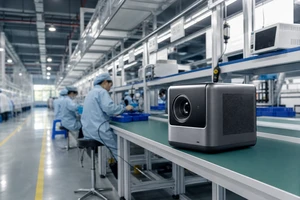
The RFQ should make the movement of samples from warehouse to studio clear: who receives them, who confirms colors and firmware, who is responsible for spare parts, when the Shenzhen crew arrives, and whether a studio shoot needs set construction, lighting control, or time to await replacement products. If the shoot involves a factory, office, or outdoor location, confirm access, noise, power, parking, and weather alternatives in advance.
Shenzhen’s cross-border e-commerce service ecosystem is placing platform operations, marketing promotion, and supply-chain coordination on the same overseas-expansion chain, and the Shenzhen Municipal Commerce Bureau’s introduction to the platform-service ecosystem likewise shows that local sellers face multi-platform coordination. For production providers, this means the quote must include sample management, on-site production, and version coordination—not just studio days.
Why cross-border versions widen quote differences
A version is not simply a resized file. Shopify product-page videos support file uploads; the official rules require each video to be no longer than 10 minutes, no larger than 1GB, up to 4K, and support MP4, MOV, and WebM. These rules mean master retention, compression, and cover checks must be scheduled in advance. TikTok ad preview recommends 9:16, at least 540×960, and 5–60 seconds, while TikTok Shop video packages have different limits including 720×1280 and no more than 16 seconds. The Shopify video specifications and TikTok ad preview specifications should be fed back into the delivery checklist.
Amazon Sponsored Brands video official requirements include 16:9, 6–45 seconds, MP4/MOV, and safe zones; LinkedIn video ads support ratios including 4:5, 9:16, 16:9, and 1:1. In quote review, do not merely ask, “Can you provide several more versions?” Verify frame ratio, duration, subtitles, audio, cover, naming, and upload testing one by one. Refer to the Amazon Ads video requirements and LinkedIn video ad specifications for the detailed rules. In other words, a master is not one extra delivered file; it preserves acceptable shots and safe zones for every platform.
A creative director will retain the same group of core shots as the master, then decide which actions are worth reshooting for the vertical format; forcibly cropping horizontal footage into vertical typically squeezes both the product and subtitles out of the safe zone.
Budget acceptance: use deliverables to check the quote in reverse
Once you receive a quote, first break the total price back into six columns: creative and script, pre-production, shoot execution, post-production editing, versions and subtitles, and licensing and revisions. Each column must specify quantity, schedule, delivery format, and approver. If it says only “one polished cut, several short videos,” require the supplier to add shot duration, ratio, resolution, subtitle languages, and revision rounds.
Music, fonts, stock libraries, and actor licensing should also be listed separately. China’s Copyright Law requires the corresponding permissions when adaptations, translations, and the production of sound or video recordings involve existing works; the Copyright Law published by the National People’s Congress can serve as an entry point for contract review. The State Administration for Market Regulation’s Enforcement Guide on Issues in Applying the Advertising Law also reminds teams to first determine the factual and media boundaries of commercial communications. WIPO clearly explains rights in creative contributions such as directors, cinematographers, and music in audiovisual works; the WIPO copyright materials on audiovisual works are useful for reminding teams not to write “buyout” as an empty phrase without territory, term, and media boundaries.
An RFQ checklist you can send directly to suppliers
- Samples: model, color, quantity, spare parts, arrival date, and responsibility for return shipping.
- Objectives: state separately that the hero film serves brand awareness, the product page serves functional proof, and short ad cuts serve launch testing.
- On site: Shenzhen studio shooting or outdoor location, set construction, lighting control, crew access, and weather alternatives.
- Versions: frame ratio, duration, subtitles, cover, and naming for the website, Shopify, Amazon, TikTok Shop, and LinkedIn.
- Licensing: territory, term, media, and exclusivity for music, fonts, actors, stock libraries, and the finished film.
- Acceptance: rough cut, polished cut, version testing, revision rounds, and delivery time for source files and masters.
If the buyer already has a sample list, launch platforms, and budget range, it can prepare a brief against the ONCE VISUAL video-production services page, send “what to shoot, what to deliver, and when to accept” to the production team, and then begin quote comparison.