This Shenzhen factory-video shot list first answers the three things overseas customers most often verify: how a production line executes consistently, which quality-control actions are visible, and how sales can continue explaining a product after receiving the footage. This article turns those questions into shots of production lines, inspection, sample demonstrations, and engineer interviews; check the complete corporate-film scope on the solution page at the end.
Treat the shots as a remote factory-audit meeting first
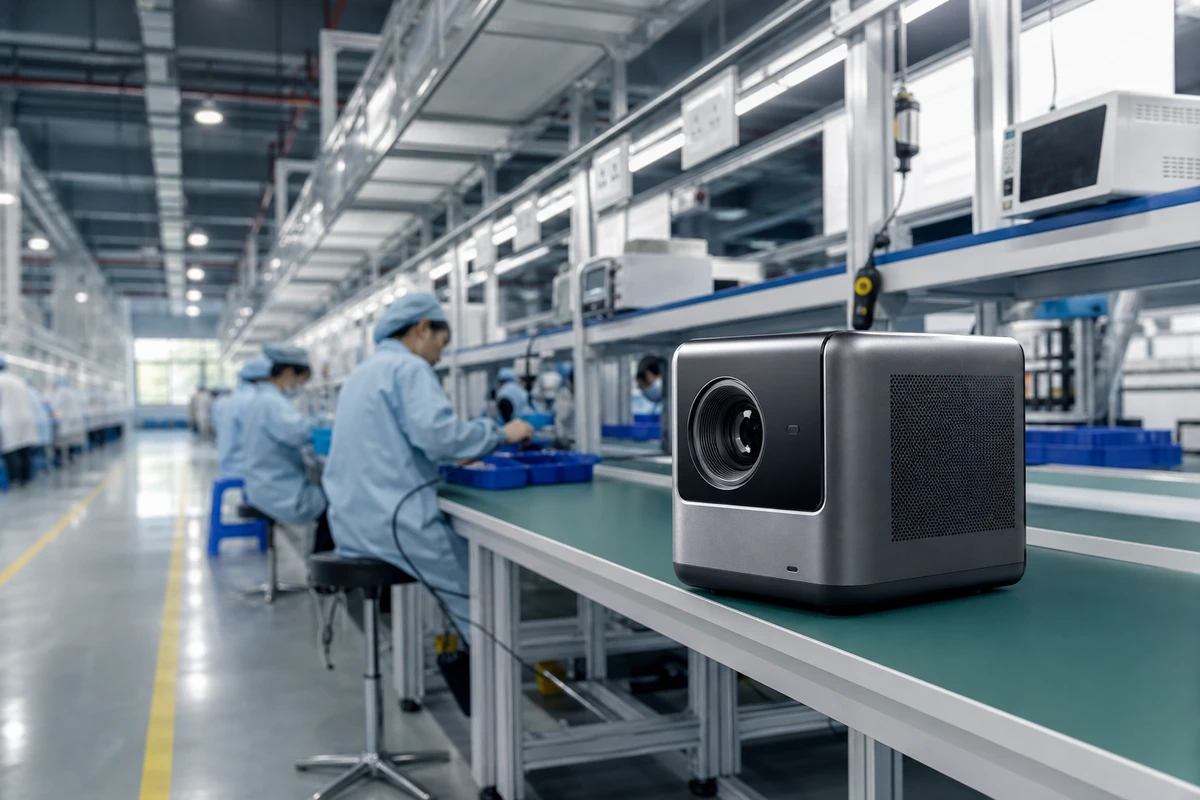
More overseas customers are putting Shenzhen manufacturing and cross-border supply chains on the same comparison table. Shenzhen Government Gazette continues to emphasize advanced manufacturing, modern supply chains, and coordination between domestic and foreign trade, while the Shenzhen Municipal Commerce Bureau places suppliers, sellers, platforms, and logistics companies on the same chain. For a video project, this means “we have a factory” is insufficient: buyers want to know how the factory moves from samples to volume delivery.
Before shooting, I ask the sales team to list the five questions customers ask most often, then assign them to shots: Where does the product complete its key process? Who confirms the first article? Who is responsible when an exception occurs? How do samples, inspection records, and packaging correspond? Whom should overseas customers contact next? This is more important than choosing an imposing music track first. To align with Shenzhen’s overseas-expansion and supply-chain context, see the Shenzhen Municipal Commerce Bureau’s public information on end-to-end visual traceability for cross-border e-commerce and the advanced-manufacturing and supply-chain measures in the Shenzhen Government Gazette.
First set of evidence: a production line is not a wide shot, but traceable actions
A wide shot only shows that a space exists; actions show that capability exists. In other words, the storyboard should follow a sample’s real path: incoming materials or preparation, key processing, assembly, functional testing, packaging, and shipping preparation. At every point, retain at least one identifiable reference in the frame, such as a workstation number, batch label, test interface, fixture movement, or product-structure detail. Parameters that cannot be disclosed may be masked, but do not blur all information into blankness.
On set, I prioritize shooting “what hands are doing” before “what equipment looks like.” A dolly move, fixed camera positions, and one or two close-ups are enough to explain the process; drones or complex moving shots need not conceal gaps in the process. If a product involves key industrial goods, the State Administration for Market Regulation’s implementation opinions on quality-safety traceability remind us that origin, destination, and chains of responsibility are facts worth organizing carefully. Video can present evidence, but cannot draw conclusions on behalf of a company or regulator.
Second set of evidence: show the method of quality inspection, not just the instruments
Overseas customers seeing test instruments does not mean they understand quality control. A more effective shot combination is: the engineer explains what a test verifies, the instrument reading or decision screen appears, abnormal samples are isolated, and the result returns to a record. ISO’s explanation of quality-management systems likewise brings process, customer requirements, and continual improvement together. Therefore, a corporate film can show the closed loop of “inspection action—decision—record—feedback,” rather than merely arranging for someone to say “strict quality control” to camera.
Interview questions should be short and answers should be editable into short sales cuts. For example: “What problem is most likely at this step?” “Under what circumstances will the line stop?” “What can customers verify after receiving a sample?” When engineers use terms, subtitles should provide corresponding English keywords, and sales should add an explanation customers can understand. In my experience, real pauses, pointing, and retest actions are more like evidence of trust than a slogan without an on-site subject.
Third set of evidence: delivery capability must be usable by sales
A factory film does not end when a long version is delivered. One Shenzhen shoot should reserve at least three types of material: a complete explanatory film for the website or YouTube, horizontal or square short cuts for LinkedIn B2B reach, and process, inspection, and product-detail clips that sales can call up in visits. LinkedIn’s official video-ad specifications list requirements including MP4, ratio, duration, and subtitles; YouTube’s official upload-encoding recommendations remind teams to retain suitable resolution, frame rate, audio, and color information. They are not creative scripts, but they affect safe zones, sound recording, and master management on site.
If customers need to prove the provenance of material from shooting through editing, archive original files, shooting dates, version names, and revision records together, and evaluate the C2PA Content Credentials provenance-recording mechanism as the project requires. This is not to turn certification into an advertising claim, but to provide procurement, legal, and sales with a traceable file path.
How to schedule a Shenzhen shoot so the budget is comparable
For Shenzhen factory shoots, coordination—not camera-position count—is most easily underestimated. State in the brief whether the production line runs continuously, which areas may be filmed, whether samples need to be transferred from R&D or the warehouse, how long engineers and sales can be available, whether bilingual Chinese-English production is needed, and which screens and files must be masked. Do not write only “how much per day for a camera operator” in the budget; at minimum separate pre-shoot scouting and script, on-site crew and equipment, sample and safety coordination, interviews, editing, subtitles, masters, and short-cut versions.
For a single factory and single product line, use an internal schedule of “one day of on-site shooting and three working days to the first cut” as a comparison baseline, then adjust for route complexity, number of interviewees, and language versions. During on-site collaboration, I have one person who understands the production line fact-check facts and one who understands sales fact-check questions; the director and camera team translate both checks into camera positions, lighting, sound, and editing tasks.
This is how I accept a factory sales film
- Claims about capacity, quality, and delivery each have corresponding action shots or document explanations; none relies only on voiceover for conclusions.
- Check sample models, process names, interview identities, and subtitle translations item by item; sensitive information is masked.
- The website long version, LinkedIn short cuts, YouTube version, and sales clips use the same facts and do not change commitments because they are shortened.
- File names clearly state language, ratio, duration, version, and date; replay the first frame, subtitle safe zones, audio, and cover on actual devices.
- When customers ask “How do we cooperate next?”, the ending gives a clear contact or brief entry instead of an unusable slogan.
The core of this acceptance is to organize existing production, inspection, and collaboration facts into an evidence package that overseas sales can keep using. If you are preparing a factory open day, overseas customer visit, or website update, see the Shenzhen corporate-film and factory-video production solution, then submit the samples, production line, interview subjects, and target versions.