Challenges with spatial video ads often arise after editing is complete. Apple’s developer documentation describes spatial video as a QuickTime file containing stereoscopic MV-HEVC video and spatial metadata. For production teams, this means visuals, encoding, and metadata must be validated together.
First, distinguish standard stereoscopic video from spatial video.
Just because footage plays in a desktop player does not mean it meets spatial playback requirements for the target device. At project kickoff, clearly document capture devices, left-right eye mapping, frame rate, resolution, encoding settings, and final playback environment. Headset apps, system photo libraries, and web players may use different read paths; no single player can replace comprehensive testing.
Research Seed 0649 documented a 2024 spatial video post-production troubleshooting case. While compatibility issues noted in that older article cannot be generalized to all current systems, it underscores the need to retain metadata verification steps. Current Apple documentation now explicitly provides instructions for creating and editing metadata for spatial photos and videos.
Preserve metadata during editing.
Maintain separate copies of original spatial files, proxies, working masters, and delivery masters within the editing project. Log software versions, encoding settings, and metadata retention status for every transcode or export. If intermediate steps output only standard 2D files, adding spatial data later often results in loss of original capture relationships.
Export verification can follow this sequence.
- Verify left and right eye footage and timeline settings in the editing software.
- Check whether the files still retain the metadata required for spatial video.
- Open the files separately on the target headset, mobile phone, and desktop player.
- Test fast-forward, pause, looping, and audio-video synchronization.
- Record the file hash and final export settings.
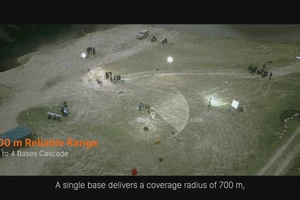
The image below is a frame from an ONCE proprietary product video illustrating spatial composition, used to discuss the relationship between foreground, background, and camera movement. It is not a spatial video and does not imply that Apple Vision Pro footage was used in this article.

The delivery package must allow the recipient to verify the contents.
Do not include only a single final file in the spatial video delivery package. It is recommended to also provide playback instructions, compatible device list, encoding details, metadata verification results, a thumbnail, and a 2D preview. This enables the production team to quickly determine whether reports of 'unable to open' from brands or platforms are due to file corruption, unsupported devices, or players failing to read spatial metadata.
If you are planning product videos or brand space content, you can start with ONCE Commercial Visual Solutions Specify the target devices and distribution channels.
Material Review
- Research Seed 0649 Shooting for the Apple Vision Pro, post-production part two
- Apple Developer Creating spatial photos and videos with spatial metadata
- Apple Apple Movie Profiles