Define the necessity of lip-sync synchronization during project initiation.
Before launching a global brand video project, marketing leads must first determine if the content involves character dialogue. If the video primarily features product close-ups, environmental B-roll, or voiceover narration, excessive focus on lip matching is unnecessary. Lip-sync synchronization for multilingual dubbing needs to be included in early planning only when the footage contains clear facial close-ups with substantial dialogue. At this stage, target market languages should be identified, as syllable length and pronunciation habits vary significantly across language families. For instance, English often uses monosyllabic words, while Spanish or Italian tends to have more syllables. Failing to confirm the number of language versions at this stage risks timeline misalignment in post-production that cannot be resolved through simple editing.
The criterion lies in how viewers allocate their audiovisual attention. If core information relies on actors’ expressions to convey emotion, lip sync becomes a key experience metric. If core information depends on graphic overlays or data displays, lip sync is a secondary metric. The team must clearly label which shots require strong synchronization and which require weak synchronization in the project brief to ensure reasonable resource allocation later.
Design duration redundancy during scriptwriting.
When writing the original Chinese script, screenwriters must reserve time margins for subsequent multilingual adaptation. It is generally recommended that the actual spoken duration of Chinese dialogue be controlled at around 80% of the allowed screen time. This means actors should maintain appropriate pauses and breathing space during performance, avoiding rapid speech that fills every second. The production team should mark the maximum allowed duration for each line of dialogue in the storyboard script and inform the director of this constraint. If the script is too tight, translated foreign lines will often exceed the screen duration, forcing post-production to accelerate playback or use hard cuts to accommodate the audio, which severely damages the naturalness of the performance and brand quality.
Specific actions include establishing a language duration coefficient table. German and Russian have slower average speech rates but longer words, while French and Spanish have higher syllable density. Screenwriters should conduct simulated reading tests during the initial draft phase based on the linguistic characteristics of target markets. The criterion is that the reading duration of the translation does not exceed 95% of the original footage duration, leaving a 5% technical buffer for handling breaths and subtle rhythm adjustments.
Strategies for set design and lighting reserves.
Beyond script control, set design must also leave room for post-production. Lighting technicians should avoid using overly strong rim light that locks onto mouth edges; soft frontal lighting facilitates minor visual corrections in post-production. The art department should avoid high-frequency flickering or complex dynamic elements in background selection to prevent visual dissonance when adjusting frame speeds in post-production. If the shooting environment allows, it is advisable to retain some depth of field space behind the actors, so that slight zoom adjustments to match lip opening amplitude do not compromise image quality due to excessive cropping.
The criterion lies in the plasticity of visual information. Static backgrounds are superior to dynamic ones, and uniform lighting is better than high-contrast chiaroscuro. A reference frame without actors must be shot on set for background repair during compositing. If the scene contains many reflective materials or transparent media, assess their potential interference with digital face replacement technology in advance.
Personnel arrangement and cross-cultural communication mechanisms.
Assembling a production team with multilingual awareness is crucial. The producer must designate a language supervisor familiar with the target market’s culture to review script cultural adaptability in the early stages. The director must reach a consensus with the director of photography on the importance of slow-paced performance for later dubbing. The dubbing director should be bilingual or equipped with professional translators to accurately convey emotional instructions during remote monitoring sessions. All personnel must hold a technical alignment meeting before shooting to unify understanding of lip-sync standards.
Specific actions include creating a multilingual production manual that defines responsibilities for each role. The language supervisor must intervene during the table read phase to point out sentences that may cause ambiguity or duration overflow. The criterion is that all core team members understand the pronunciation characteristics of the target language and their impact on lip sync, reflecting corresponding countermeasures in the shooting plan.
Performance control and camera strategy on set.
Directors should guide actors to use neutral, relaxed pacing during on-set performance. Avoid exaggerated mouth movements or extremely fast speech, as these features appear abrupt and uncoordinated when converted into other languages. Cinematographers should preserve the complete contour of the actor’s face in composition, avoiding extreme close-ups that lock onto mouth details unless the shot is designed for a single-language version. If budget allows, consider shooting multiple takes at different speeds, or use over-the-shoulder shots or reaction shots for language versions requiring precise matching to bypass lip-sync issues. Although on-set recording is mainly for reference, clear original audio tracks help dubbing actors grasp emotional rhythm in post-production.
Execution requires actors to hold their expression still for two to three seconds after delivering lines, providing sufficient tail margin for editing. For camera setup, the main camera should maintain medium or close-up shots, avoiding extreme close-ups directly focusing on the lips. If close-ups are necessary, set up a wide-angle camera as backup to switch angles if lip matching fails. The criterion is that the footage library contains enough non-dialogue reaction shots, and the actor’s performance has sufficient rhythmic flexibility for post-production adjustment.
Audio-first principle in post-production editing.
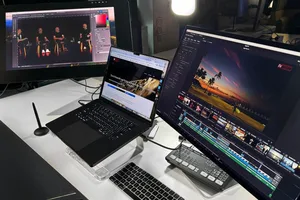
In post-production, editors should follow the principle of audio driving visuals. Adjust edit points based on target language dubbing demos first, then fine-tune visual rhythm. For key shots requiring lip sync, use J-cuts or L-cuts to let sound enter early or exit late, visually weakening the strict correspondence between lips and sound. If a segment cannot match the new language’s syllable length regardless of adjustment, decisively replace it with non-dialogue reaction shots, product close-ups, or B-roll. Never forcibly stretch or compress video frame rates to match audio, as this causes noticeable stuttering or frame skipping, directly impacting viewer trust in the brand.
During execution, editors must precisely align dubbing waveforms with the visual timeline. Focus on checking plosives and closed-mouth sounds, ensuring the error between lip closing/opening actions and sound start points is within two frames. If the error is too large, prioritize cutting away from the shot rather than modifying audio speed. The criterion is that viewers cannot detect audio-visual desynchronization at normal viewing distances, and the editing rhythm remains smooth and natural without abrupt jumps.
Execution standards for dubbing casting and emotional consistency.
When selecting overseas voice actors, do not judge solely by timbre; focus on assessing consistency in emotional expression with the original actor. Brands should provide detailed character backgrounds and original performance videos, requiring voice actors to mimic emotional fluctuations rather than simply reading text during auditions. If the original actor’s performance is restrained while the voice actor’s tone is intense, it creates a disjointed audiovisual experience even if lip sync is perfect. Additionally, confirm that dubbing file formats and sample rates meet delivery platform requirements to avoid quality loss from secondary conversion due to technical mismatches. Dubbing directors should provide real-time feedback during remote monitoring to ensure stress and pauses in every line follow the natural logic of the local language.
The screening process should include blind listening tests to remove visual interference and judge emotional fit by sound alone. Require voice actors to provide dry vocal files for easier post-production mixing. The criterion is that the correlation between the dubbing emotional curve and the original performance curve exceeds 80%, with clear pronunciation free of accent barriers, aligning with the auditory aesthetic habits of the target market.
Multidimensional acceptance checklist and delivery specifications.
Separate visual, auditory, and technical metrics during acceptance. First, check for jitter or black frames caused by duration adjustments. Second, blind-listen to audio to ensure consistent background music-to-voice ratios across language versions, preventing key information from being masked by volume changes. Finally, verify that subtitle files are fully synchronized with dubbing, especially the spelling accuracy of technical terms. Deliverables should include clean versions without subtitles, hard-subtitled versions, and separated audio tracks for secondary distribution on various social platforms. All source project files must be archived by language version to ensure quick retrieval for future language additions.
Acceptance actions include frame-by-frame inspection of key lip-sync frames and random multi-device playback tests. Technical metrics must cover loudness normalization, channel balance, and codec compatibility. The criterion is zero technical flaws, consistent audiovisual experience across mainstream platforms, and clear file structure for future iterations.
Inapplicable scenarios and risk control boundaries.
Not all global brand videos are suitable for lip-sync strategies. For fast-paced social media shorts, user attention focuses on visual impact and information density, so minor lip misalignments are usually ignored; prioritize information delivery efficiency. If the budget is limited and there are more than three language versions, forcing lip sync will significantly increase costs and timelines; instead, use voiceover narration with rich visual cuts. Additionally, if the original actor has a strong personal style, such as exaggerated comedic expressions, multilingual dubbing struggles to capture their essence; carefully evaluate whether to keep the original audio with subtitles rather than blindly replacing it with dubbing. Brands must weigh ROI at project initiation to avoid over-consuming resources on non-core elements.
Risk assessment must combine distribution channel characteristics. TV ads demand high quality and suit precise lip sync. Social media feed ads demand speed and suit simplified processing. The criterion is the match between project core goals and production costs; if the experience improvement from lip sync does not offset the added cost, abandon the strategy.
Standardized process review and continuous optimization.
Before launching the next project, organize feedback data from past multilingual versions to identify which lip-sync issues most affect user perception. Establish standardized pre-production communication templates with the team, incorporating language adaptation requirements into statements of work. For complex multilingual sync needs, consult experienced production service providers for detailed technical assessments. By continuously accumulating language duration coefficient libraries for different language families, teams can more accurately predict script capacity, reducing post-production revision costs at the source and forming reusable assets for global brand video production.
Specific actions include building a case library to record lip-sync challenges and solutions from each project. Regularly update language coefficient tables to reflect the latest changes in linguistic habits. The criterion is a year-over-year decrease in rework rates for multilingual projects and an improvement in duration prediction accuracy for new projects to over 90%, forming stable industrial production capabilities.

If you are preparing a global brand video project, organize your brief, reference visuals, product or corporate materials, delivery platforms, and copyright scope first, then view theOverseas Marketing Video Services pageto ground communication from abstract preferences into executable production boundaries.