Define Communication Priorities During Project Initiation
Before launching an overseas exhibition video project, brands must clarify their core communication objectives. Many teams mistakenly believe that simply recording lively scenes is sufficient, but it is crucial to strictly distinguish whether the audience consists of channel partners or end consumers. If targeting channel partners, the focus should be on showcasing product technical details and professionalism; if targeting consumers, the emphasis should be on emotional resonance and usage scenarios. Clarifying this premise determines whether the visual language leans toward grand narratives or micro close-ups. Brands need to prepare a list of product selling points, target audience profiles, and reference samples in advance. Poorly defined project initiation leads to chaotic editing logic later, failing to effectively convey brand value. At this stage, confirm whether the video will be used for the website homepage, social media traffic generation, or internal reporting, as different purposes have vastly different requirements for duration and pacing.
Information Layering Strategy in Pre-Production
Pre-shooting material preparation directly determines the quality of the final cut. The production team must work with the brand to organize information hierarchy, separating core product information from auxiliary atmospheric elements. It is recommended to create a detailed storyboard script specifying which shots showcase product functions and which enhance on-site popularity. Brands must provide high-resolution product images, technical specification sheets, and booth design diagrams. Without these basic materials, photographers struggle to capture key details on site. The risk lies in the complex on-site environment and significant lighting changes; without a preset plan, important information is easily missed. An exception is breaking-news-style reporting, but such content is generally unsuitable for long-term brand building. The consequence is low usability of footage and high costs for post-production remediation.
Scene Setup and Personnel Coordination
Efficient on-site execution relies on precise personnel allocation. The director controls the overall visual style, ensuring every frame aligns with the brand tone; the photographer focuses on composition and camera movement, needing familiarity with gimbals and sliders to navigate narrow booth spaces; the lighting technician must survey on-site light sources in advance and prepare portable fill lights to eliminate facial shadows or product reflections; the sound engineer must wear monitoring headphones, real-time monitor environmental noise, and adjust microphone directionality. All members must conduct a full-process rehearsal before the event opens, simulating shooting paths during peak crowd periods. The criterion for success is whether the team can complete scheduled shots without interference. Unclear division of labor leads to visible crew members in shots or missed key dialogues. The core of collaboration is communication efficiency; using walkie-talkies for instant contact is recommended to avoid loud shouting that disrupts the on-site atmosphere.
Techniques for Balancing Motion and Stillness On Site
During actual shooting, photographers must balance dynamic crowds with static products. Using a gimbal to follow moving subjects enhances immersion, while fixed positions combined with sliders clearly display product appearance. Lighting setup is critical; exhibition venues often haveza luan lighting, requiring fill lights to highlight product texture and avoid shadows obscuring key details. Audio recording cannot be ignored either; due to high on-site noise, directional microphones are needed to capture clear voices or ambient sounds. The criterion is whether the visuals clearly convey product features and whether the audio interferes with information reception. Pursuing only visual impact while ignoring audio quality makes the final video appear cheap. The team must playback checks in real time to verify focus and exposure, ensuring footage meets color grading requirements. Any blurry or overexposed shots should be reshot on site to avoid irreparable issues in post-production.
Logical Restructuring in Post-Production Editing
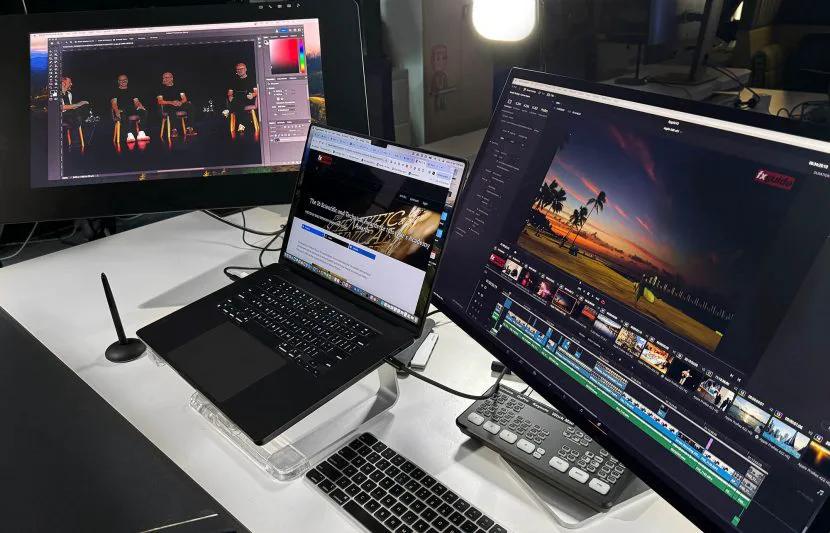
Post-production focuses on the secondary restructuring of information. Editors must adjust the narrative pace based on the communication goals defined earlier. For product showcases, use fast-paced editing with dynamic music to highlight technological feel; for atmosphere building, slow down the pace appropriately and retain original on-site sound to enhance authenticity. Color grading must unify tones to ensure brand image consistency. Subtitle translations must be accurate and conform to the linguistic habits of the target market. The risk lies in over-relying on effects, leading to hollow content. An exception is creative short films, where exaggerated techniques are acceptable. Deliverables should include a rough cut for structure confirmation, a fine cut for detail adjustment, and the final master. Each version requires separate feedback records to avoid confusion.
Version Management for Multi-Platform Adaptation
Overseas marketing videos must adapt to the technical specifications of different social platforms. Platforms like Instagram, TikTok, and LinkedIn have different requirements for aspect ratio, duration, and file size. The production team must output multiple versions during post-production, such as vertical short videos for mobile distribution and horizontal long videos for website display. Brands must confirm the latest publishing rules for each platform in advance to avoid upload failures or quality compression due to format errors. Audio mixing must also be optimized for different playback devices to ensure good listening experience on both phone speakers and headphones. The risk lies in ignoring platform characteristics and using a single version, resulting in diminished propagation effects. An exception is customizedtou fang, which requires exclusive versions for specific campaigns. The consequence is abnormal video display on different devices, affecting user experience.
Key Checkpoints in the Acceptance Phase
Before video delivery, brands must conduct strict acceptance checks. Checkpoints include image clarity, color accuracy, subtitle spelling, audio balance, and copyright compliance. Special attention must be paid to unauthorized brand logos or person likenesses in the product shots to avoid legal disputes. Source files must be properly stored for subsequent modifications or secondary creation. Acceptance criteria should align with the initial contract, and any deviations require written confirmation. The risk lies in non-standard acceptance processes, leading to later disputes. An exception is urgent launch projects, where some non-core checks can be simplified. The consequence is low-level errors appearing after the video goes live, damaging brand reputation. It is recommended to establish a standardized acceptance checklist, verifying item by item and signing off.
Applicable Boundaries and Next Steps
This video production model applies to scenarios with clear product display needs and on-site activity recording. It is not suitable if the brand only requires pure image promotion without specific products, or if on-site conditions are extremely limited preventing shooting. Additionally, if the budget is extremely limited and cannot support a professional team, simplifying the production process may be considered. ONCE provides brand globalization video, overseas marketing video, and social media short video content production services, customizing solutions according to client needs. It is recommended that brands thoroughly organize their requirements and communicate fully with the production team before project initiation. The next step is to compile existing materials and communication goals, then contact a professional team for preliminary assessment to ensure smooth project progression.
If you are preparing a brand globalization video project, you can first organize the Brief, reference images, product or corporate materials, delivery platforms, and copyright scope, then viewthe Overseas Marketing Video Service Page, turning abstract preferences into executable production boundaries.