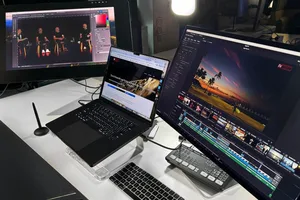
Define communication hierarchy and asset reuse strategies during project initiation.
Before launching a brand globalization video project, marketing leads must clarify the functional differences between hero films and social media cuts. Hero films serve brand storytelling and trust-building, typically used on official websites, at exhibitions, or on long-form video platforms. Social media cuts cater to algorithmic recommendations and instant conversion, emphasizing visual impact and information density in the first three seconds. Failing to distinguish these goals at inception often results in sluggish pacing or missing information when forcing cuts later.

The team must define priority levels for core selling points across different durations in the brief. For example, hero films can fully present brand philosophy and technical background, while cuts should directly showcase product usage scenarios or pain-point solutions. At this stage, confirm whether to adopt a "one source, multiple uses" strategy—deriving different versions from the same footage—or to plan lightweight content specifically for social media. The former helps maintain visual consistency, while the better aligns with platform context. The risk lies in insufficient shot redundancy planning early on, leading to a lack of usable material in post-production.
Script and storyboard design must reserve editing interfaces.
When writing scripts, screenwriters and directors must not only consider linear narrative completeness but also reserve independent structural arcs for short video cuts. Each key information point should have the potential to stand alone. In storyboard design, it is advisable to increase the proportion of close-ups and B-roll, as these shots effectively boost completion rates and serve as transition buffers in social media environments.
Specific actions include marking "independently extractable segments" in the storyboard script and assessing their readability in silent mode. Overseas social media users often browse with sound off, so visual language must be self-explanatory. The criterion is whether viewers can understand the intent within ten seconds without dialogue. If heavy narration is required to clarify logic, the segment is unsuitable as an independent cut. An exception is strong narrative-driven ads, where integrity must be maintained; forced cutting would disrupt narrative tension. In such cases, abandon the cut strategy and instead produce derivative content like behind-the-scenes footage or cast interviews.
Composition and safe area management during production.
Directors of Photography must balance aspect ratio requirements for horizontal hero films and vertical social media cuts during lighting and composition. Traditional widescreen compositions often lose the subject or key props when converted to 9:16 vertical format. Solutions include using center-weighted composition or leaving sufficient vertical safe zones to ensure the subject remains clear and balanced after reframing.
On-set execution must record the usable range of each shot, especially peak performance moments. If the hero film requires wide angles to show the environment while cuts need close-ups to highlight expressions, the cinematographer should shoot different frame sizes from the same position or use high-resolution capture to allow for post-production cropping. The risk is that excessive reliance on digital zoom degrades image quality, amplifying noise in low-light conditions. Therefore, pre-production communication must confirm resolution requirements for final delivery platforms to select appropriate camera and lens combinations. If budget constraints prevent multi-camera coverage, rehearsals must determine which shots must guarantee vertical composition integrity.
Logical restructuring and rhythm adaptation in post-production.
Editors should use separate timeline projects for hero films and cuts. Hero films focus on emotional buildup and logical progression with a relatively relaxed pace. Social media cuts require a visual hook within the first two seconds, followed by rapid information delivery, avoiding lengthy introductions. Never simply speed up or hard-cut the hero film, as this causes audio-visual desynchronization or emotional discontinuity.
Sound design is key to distinguishing the two. Hero films can use complete musical scores and layered sound effects to create immersion. Cuts need emphasized key sound effects, such as product clicks or ambient noises, to compensate for rapid visual information flow. For subtitles, overseas social media requires multilingual adaptation; retain clean dialogue tracks to facilitate adding subtitle layers in different languages later. Quality criteria include whether cuts remain engaging in loop playback and whether hero films convey core messages in silent mode. If cuts feel too jumpy or overloaded, revert to the asset library for smoother transition shots.
Multi-dimensional acceptance checklist and copyright compliance review.
Delivery acceptance should not focus solely on visual aesthetics; a structured checklist is required. Confirm all core selling points are covered during scripting and storyboarding. Check exposure, focus, and composition safe zones during production. Verify duration, aspect ratios, and subtitle accuracy for different versions during editing. Ensure balance among background music, sound effects, and voiceovers during sound mixing, aligning with target market auditory habits.
Copyright scope is a red line for global projects. Confirm that music, fonts, likeness rights, and location permits cover major global distribution regions and perpetual usage rights. If using AIGC-generated assets, verify platform terms of use and commercial licensing status. Deliverables should include the hero film master, cut files for various platform specifications, clean versions without subtitles, separated audio tracks, and project source files. Missing records in any step leads to high costs for subsequent revisions. The risk involves ignoring cultural taboos or legal restrictions in specific regions, resulting in content takedowns. Therefore, involve localization consultants for cultural sensitivity reviews during acceptance.
Identify project types unsuitable for the hero film and cut strategy.
Not all brand globalization videos suit the hero film plus cut model. Forcing cuts into technical whitepaper-style videos that rely on complex logical deduction leads to information fragmentation and reduced professionalism. Such content is better suited for serialized short dramas or deep-dive videos combining text and graphics. Additionally, if a brand is in its startup phase lacking sufficient visual assets, blindly pursuing high-production-value hero films may misallocate resources. In this case, prioritize low-cost, high-frequency authentic user testimonial videos.
Another unsuitable scenario is highly interactive event promotion. Such content relies on real-time feedback and community management, which static video cuts cannot support. The criterion is whether the content has independent viral value. If content can only be understood within a specific event page or offline context, it should not be distributed as independent social media cuts. An exception exists if the brand has strong IP influence, where fans are willing to invest time in complete narratives. In this case, weaken the cut strategy and concentrate resources on refining the hero film quality.
Next steps and collaboration preparation.
Marketing leads are advised to compile a list of core brand selling points, target audience personas, and competitor reference links before requesting quotes. Clarify primary distribution platforms and their latest technical specifications to avoid producing based on outdated standards. When communicating with production teams, focus on asset reuse rates and copyright clearance plans rather than just per-video pricing. ONCE provides brand globalization video, overseas marketing video, and social media short video production services, assisting with the entire process from strategy to delivery. Prepare detailed creative briefs based on actual business needs to enable the team to provide more targeted execution plans.
If you are preparing a brand globalization video project, start by organizing your brief, reference visuals, product or corporate materials, delivery platforms, and copyright scope, then view theOverseas Marketing Video Services pageto ground communication from abstract preferences to executable production boundaries.