Predicting Motion Rhythm During Project Initiation
Before launching an AIGC commercial project, brands must clarify whether core communication goals rely on high-dynamic visual performance. If product demonstrations involve rapid displacement or complex deformation, traditional frame-by-frame animation is costly, while purely generative video often lacks physical consistency. In such cases, a workflow combining live-action footage with AI frame interpolation becomes viable. The key decision factor is confirming whether the main subject exhibits regular mechanical motion or fluid changes. If actions contain numerous illogical abrupt changes or complex occlusion interactions, AI struggles to infer intermediate frames, easily causing image tearing. Teams must define during early communication which shots allow artistic blur and which require pixel-level precision.
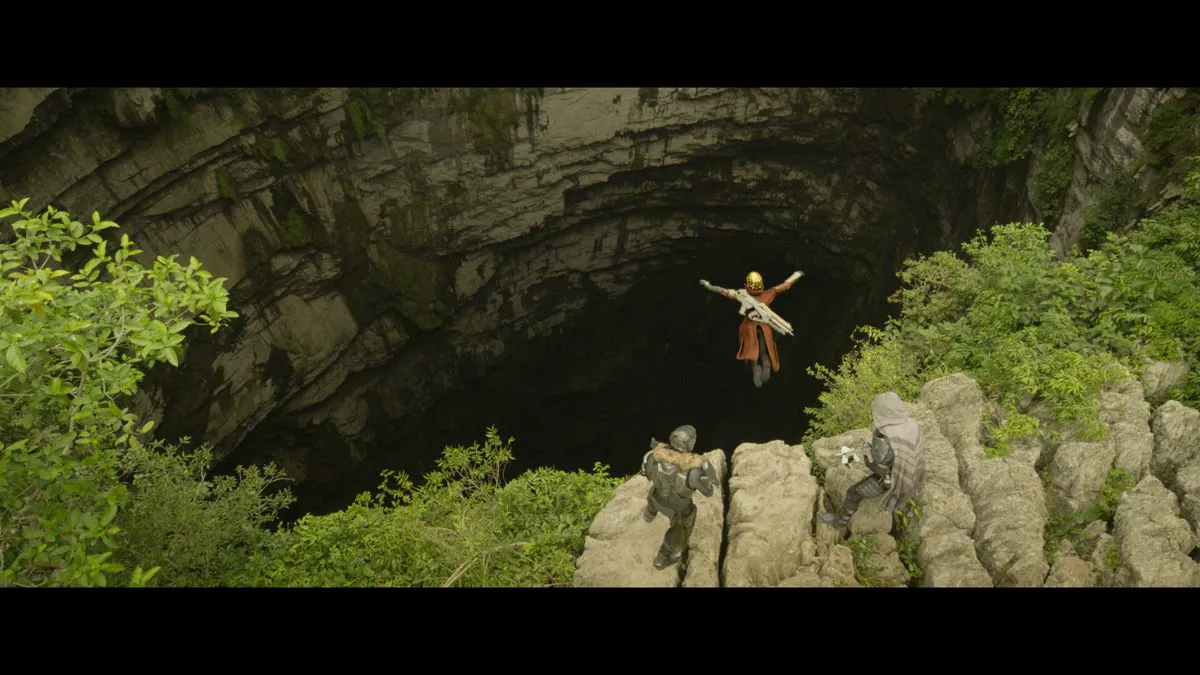
The risk lies in over-relying on post-production algorithms to fix pre-production shooting defects. If live-action footage has excessive motion discontinuity due to high shutter speeds, or noise from underexposure, AI models may misinterpret noise as detail and amplify it, resulting in a dirty image. An exception is highly stylized abstract concept films, where visual flaws can be integrated into visual effects. Without prior technical testing, post-production rework rates increase significantly, potentially causing project delays.
Parameter Control During Shooting Execution
Cinematographers must adjust shutter angle during shooting to retain appropriate motion blur. Perfectly sharp freeze frames hinder AI motion vector estimation, while excessive blur causes loss of subject edges. A medium shutter speed is recommended to ensure clear subject outlines within single frames while maintaining natural displacement transitions between frames. Lighting should avoid high-frequency flicker, as AI tends to produce artifacts when processing drastic light changes. Constant light sources or diffused ambient light help algorithms recognize continuity in object surface textures.
The standard is that motion trajectories are clearly visible to the naked eye without obvious stuttering during raw footage playback. If shooting at high frame rates for slow-motion processing, ensure storage media write speeds meet data requirements. Risks include inconsistent on-set color temperature causing AI color drift, and cluttered backgrounds interfering with subject segmentation. Exceptions include creative shots intentionally using strobe effects; these must be marked separately to avoid automatic frame interpolation. Non-compliant footage forces post-production teams to spend excessive time on frame-by-frame retouching, increasing budget uncertainty.
Vector Estimation in Post-Production Workflow
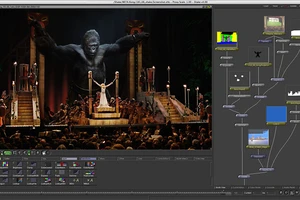
After importing footage, editors must first perform denoising and stabilization, taking care not to over-stabilize and alter original perspective. AI frame interpolation relies on optical flow or deep learning models to estimate motion vectors. Test render short clips first to check for jelly effects or trailing in high-speed motion areas. For shots with multiple intersecting subjects, manually draw masks to separate foreground and background, calculate motion tracks independently, and then composite. This effectively prevents background textures from incorrectly attaching to moving objects.
Specific actions include creating proxy files for quick preview and setting keyframes to constrain AI interpolation direction. The standard is smooth object edges without ghosting during slow-motion inspection. Risks include algorithms hallucinating non-existent details, such as distorted facial features or deformed product logos. Exceptions include transparent or translucent objects like glass or mist, which require reduced interpolation strength or blend modes. Failing to process segments individually greatly increases rendering errors and may crash the entire timeline.
Aligning Sound Design with Visual Rhythm
Immersion in AIGC commercials comes not just from visuals but from audio-visual synchronization. When AI increases visual frame rates for extreme smoothness, original sound effects may need adjustment to match the new timescale. Sound designers must fine-tune foley trigger points based on interpolated footage to ensure auditory feedback like impacts and friction aligns strictly with visual contact points. If visual pacing accelerates, background music tempo or density must also adjust to avoid audio-visual disconnection.
The standard is consistent experience whether listening with eyes closed or watching with eyes open. Overly smooth visuals may reduce impact, requiring compensation through enhanced low-frequency sound or subtle screen shake to restore physical texture. Exceptions include dreamlike or surreal themes where audio-visual desynchronization serves as artistic expression. Neglecting audio adaptation results in visually polished but emotionally flat videos lacking impact.
Detail Inspection During Acceptance
When accepting AIGC commercials, brands should focus on integrity during high-speed motion moments. Checklists include product logo deformation, broken character joints, and warped background lines. Review key segments frame-by-frame at native resolution on professional monitors rather than relying solely on compressed web previews. Verify compatibility across playback platforms and ensure encoding formats meet publishing requirements. Subtitle and graphic positions must remain fixed to prevent shifting during scaling.
Specific actions include selecting three representative dynamic shots for full-resolution output testing. The standard is absence of obvious artificial artifacts and adherence to physical logic. Minor flaws unnoticed on small screens may be magnified on large displays. Exceptions include glitch art styles explicitly requested by art directors. Vague acceptance criteria lead to inconsistent feedback and endless revision cycles.
Project Types Unsuitable for This Technology
Not all brand videos suit AI frame interpolation. For documentary-style promos emphasizing authenticity, artificially added smoothness undermines credibility. If budgets are limited and schedules tight, AI training and rendering costs may exceed traditional editing. Videos requiring high-precision industrial demonstration or medical simulation demand pixel accuracy; AI-generated speculative content may pose legal or compliance risks. Such projects should stick to traditional CGI or direct live-action output.
The standard is matching content error tolerance with brand tone. Technical showboating risks overshadowing core messaging. Exceptions include internal test videos or private concept demos. Forcing unsuitable technology may damage brand image or render communication ineffective.
Recommended Next Steps
Brands are advised to provide representative live-action footage for small-scale technical testing before formal project initiation. Compare interpolation results under different parameters to determine the visual tone best suited to the project style. Compile reference videos with clear copyrights and specify which dynamic effects must be preserved versus optimized. Based on AIGC video production services listed on our website, the ONCE team can assess project feasibility and develop customized workflows to ensure technology serves creative expression within controllable limits.
If preparing an AIGC commercial project, compile your brief, reference visuals, product or corporate materials, delivery platforms, and copyright scope first, then visitthe AIGC Video Services pageto translate abstract preferences into executable production parameters.