Spatial Logic Assessment During Project Initiation
Before launching an AIGC commercial or AI product video project, brands must first assess the content's reliance on spatial continuity. Generative models excel at single-shot visual spectacles but often suffer from axis confusion in multi-shot narratives. If the core requirement involves strong narrative logic or complex spatial interaction, technical boundaries must be confirmed in advance. Teams should clarify communication goals and key selling points to determine if multi-angle editing is essential for showcasing product details. If a single long take or static display suffices, there is no need to incur the high trial-and-error costs of maintaining spatial orientation. The risk at this stage lies in underestimating the model's limited contextual understanding, leading to unmanageable post-production repair workloads.
Standardized Pre-Production Preparation
To ensure spatial consistency in generated content, brands must provide highly structured reference materials. This includes clear character design sheets, 3D scene layout sketches, and lighting references for key frames. Scripts and storyboards must specify precise camera angles and movement trajectories, avoiding vague directional descriptions. Production teams must confirm virtual camera parameters such as focal length, depth of field, and lighting direction, keeping them constant across shots. An exception applies when the creative intent deliberately pursues a surreal collage style, allowing for relaxed spatial constraints. Without these foundational materials, generation results will appear randomly disjointed, damaging the brand's professional image. Delivery platform requirements must also be considered at this stage, as aspect ratio and resolution limits across channels affect composition strategies.
Staffing and Collaboration Workflows
Efficient execution of AIGC video projects requires close cross-functional collaboration. Prompt engineers translate abstract concepts into precise model instructions, focusing on accurate spatial prepositions and relationships. Visual designers provide stable reference images and ControlNet parameters to ensure aesthetic consistency. Post-production compositors address minor artifacts in generated footage, using digital tools to correct perspective deviations. Project managers coordinate progress and establish version control to prevent file chaos caused by frequent revisions. Teams should hold regular alignment meetings to ensure a shared understanding of spatial logic and avoid rework due to miscommunication.
Perspective Locking Strategies During Production
In generative video production, maintaining spatial orientation hinges on controlling variables. Teams should use fixed seed values or image-to-video features to ensure consistent perspective across shots of the same scene. For AIGC workflows, it is recommended to generate keyframe sequences first, then interpolate or extend based on those frames, rather than generating long videos directly. This effectively prevents object morphing over time. A risk is that models may ignore subtle background geometry, causing misalignment during cuts. In such cases, depth maps or normal maps should be used as auxiliary control signals to enforce preset spatial structures. If directional errors occur, adjust spatial prepositions in the prompt immediately rather than relying on post-production cropping.
Spatial Correction Techniques in Post-Production
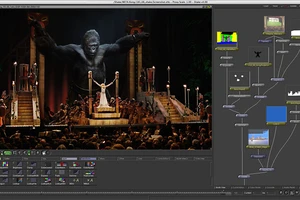
Even with proper pre-production controls, generated footage may exhibit slight spatial deviations. Post teams should use digital compositing for adjustments, such as 2D tracking to stabilize background elements or 3D camera solving to reconstruct scene space. Avoid rapid cuts between drastically different angles to allow viewers cognitive buffering. Sound design is crucial here; consistent ambient audio and panning can compensate for minor visual inconsistencies. If unfixable logical breaks occur, consider inserting transitions or black frames to turn technical flaws into stylistic choices. Acceptance checks should verify the alignment of editing rhythm and spatial logic, documenting all versions for traceability.
Multi-Dimensional Final Delivery Checklist
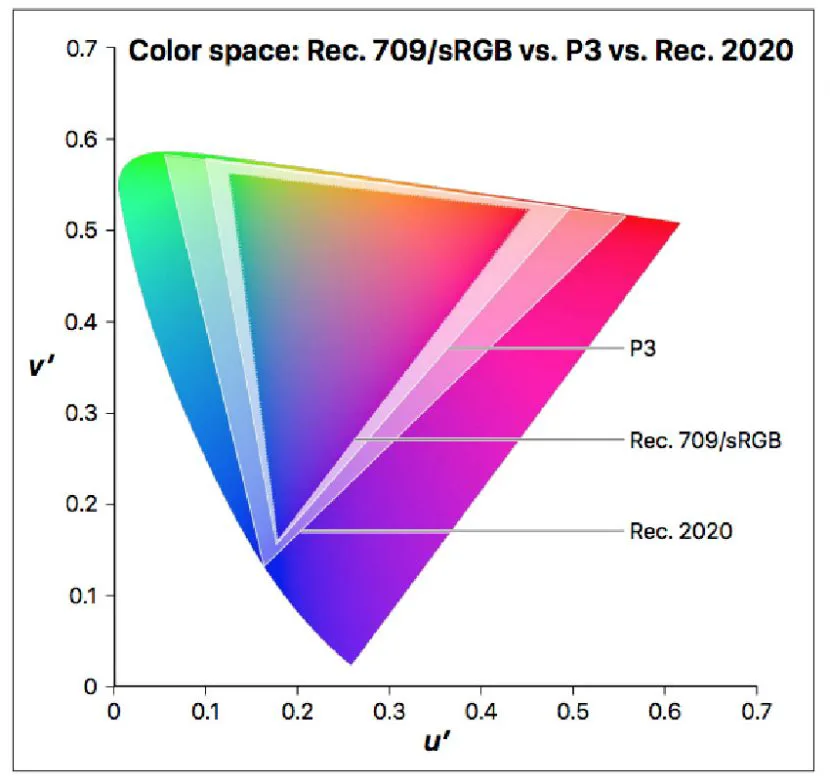
Brands accepting AIGC commercials should implement an itemized inspection process. First, verify script and storyboard execution to confirm key selling points are clearly conveyed. Next, scrutinize spatial continuity at cuts, checking subject placement, lighting direction, and background perspective for natural transitions. Audio, subtitles, and color grading require independent verification against platform technical standards. Master and source file delivery must define copyright scope and confirm the legality of training data sources. Severe spatial disorientation affecting comprehension should be deemed a critical defect requiring remakes. Avoid subjective scoring; verify strictly against previously confirmed technical documentation.
Boundaries Where Generative Technology Is Unsuitable
Not all brand videos suit generative solutions. Traditional live-action or high-fidelity 3D rendering remains superior for precise internal mechanical structures, physics-compliant motion, or realistic facial micro-expressions. Generative models have inherent limitations in handling complex causal logic and fine spatial relationships; forcing their use may distort brand messaging. Additionally, tight deadlines with low error tolerance pose delivery risks due to workflow uncertainty. Teams must honestly assess technical capabilities against project needs, avoiding quality sacrifices for tech trends. Exercise caution in areas prone to copyright disputes to ensure flawless commercial usage rights for the final deliverable.
Prudent Recommendations for Next Steps
Amid rapid AIGC iteration, brands and teams should remain cautiously optimistic. Pilot spatial control techniques in short social media clips or non-core assets before scaling to high-budget TVCs or corporate videos. Build an internal knowledge base recording effective prompt combinations and control parameters to create reusable workflow assets. Monitor industry copyright regulations to ensure compliant technology application. True competitiveness lies in accurately conveying brand value through tools. For specific needs, consult our published service scope for customized workflow recommendations.
If preparing an AIGC commercial project, organize your brief, visual references, product or corporate assets, delivery platforms, and copyright scope before reviewing theAIGC Video Services pageto translate abstract preferences into actionable production boundaries.