Defining Product Recognition During Project Initiation
Before launching an AIGC commercial project, brands must define the core elements of product recognition. This primarily refers to whether viewers can accurately associate visual symbols with a specific brand or product line without audio cues. Marketing leads should prepare an analysis document covering core selling points, target audience profiles, and visual differentiation from competitors. Without clear visual anchors, generative imagery often becomes overly stylized yet lacks distinctiveness. The team must confirm whether the communication goal is reinforcing brand tone or driving direct conversion, as this determines the subsequent balance between realism and artistic expression.
Specific actions include holding a creative alignment meeting to output a list of visual keywords. The criterion is whether non-insiders can correctly identify the brand in a blind test. If the recognition rate falls below the preset threshold, visual symbols must be refined until exclusive visual memory points are established.
Completeness Check for Pre-Production Materials
The production team requires high-precision 3D product models or multi-angle HD footage from the brand. Text descriptions or low-resolution images alone cannot guarantee consistency of product details in AI-generated content. Brands should provide standardized color specification files and material reference images to facilitate post-production color matching. Additionally, stylistic boundaries for reference imagery must be defined, avoiding third-party materials with unclear copyright status for training or reference. If the brand cannot provide structured data, project risks increase significantly, potentially leading to multiple reworks that still fail to restore the product's true texture.
Operationally, a material library index must be established, annotating the purpose and limitations of each reference image. Criteria include whether material resolution meets 4K output requirements and whether texture maps possess physical attribute parameters. Materials missing key angles must be reshot during pre-production; relying on AI to hallucinate unprovided structural details is strictly prohibited.
Scene Construction and Role Allocation
AIGC workflows require role shifts within traditional film teams. Art directors must transition from building physical sets to prompt engineering, defining lighting logic and spatial relationships. Technical directors must master ControlNet technology to ensure generated frames adhere to perspective rules. Production managers must coordinate computing resources and render queues to prevent schedule delays caused by hardware bottlenecks.
Specific actions involve creating a detailed responsibility matrix clarifying who handles prompt iteration and who verifies visual consistency. The standard is whether team members can proficiently use relevant generative tools and understand brand visual guidelines. If skill gaps exist, specialized training or external technical support must be secured before project launch to ensure flawless execution.
Hybrid Live-Action and Virtual Strategies During Shooting
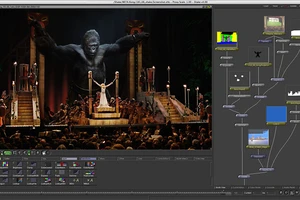
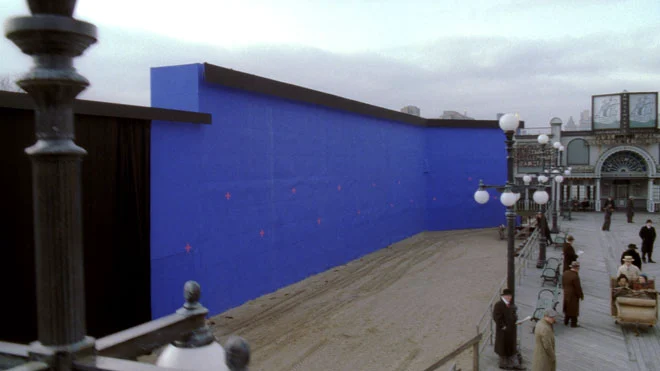
Purely generative video lacks control over product detail presentation; therefore, a hybrid strategy combining live action and AI generation is recommended. Cinematographers should shoot key product features, such as ports, textures, or signature silhouettes, under controlled lighting. These live-action assets serve as constraints for post-generation to prevent morphological distortion. Gaffers must record on-set lighting parameters to maintain consistent lighting logic when compositing virtual backgrounds. Relying entirely on AI for panoramic shots risks uncanny results due to perspective errors and physics violations, directly undermining audience trust in the brand.
During execution, gray cards and color charts must be used for on-set calibration, retaining RAW format data. The criterion is whether light source direction, color temperature, and shadow softness match between live-action footage and generated backgrounds. Any lighting conflicts must be corrected via digital matte painting during compositing to ensure a natural visual experience.
Version Control Mechanisms in Post-Production Workflows
Establishing strict version control is critical during editing and VFX compositing. Every revision must note specific adjustments, such as color grading shifts, pacing changes, or element replacements. Colorists must perform primary grading according to brand VI standards to ensure product color consistency across display devices. Sound designers must synchronously process ambient sound and music to prevent emotional dissonance between audio and visuals. Without clear version records, multi-party collaboration leads to confused instructions and final cuts deviating from the initial creative direction. Teams should hold regular review sessions to confirm keyframes individually.
Specifically, use collaborative platforms to manage project files; local private storage is prohibited. The standard is that any historical version can be quickly retrieved and feedback precisely mapped to timeline nodes. Version confusion or file loss constitutes a major procedural failure, requiring immediate emergency response to restore data and review management gaps.
Key Metrics Checklist for Final Delivery Acceptance
Acceptance requires item-by-item verification against previously defined recognition standards. First, check that core product features are clearly visible in keyframes without blur or distortion. Second, verify color accuracy to ensure no significant deviation from brand specifications. Third, test compatibility across playback platforms to check for compression artifacts or banding. Subtitles must be checked for spelling errors and timeline synchronization. Source file delivery must include layered project files for future partial modifications. If any metric fails, the brand has the right to demand corrections until contractual delivery standards are met.
Execution requires issuing a detailed acceptance report listing all non-compliant items and correction suggestions. The standard is that the final video has no technical flaws on mainstream mobile and desktop players, and brand element exposure meets agreed frequencies. For subjective aesthetic disagreements, previously confirmed style references serve as the final arbitration basis to avoid indefinite revision cycles.
Applicable Boundaries of AIGC Video Production
Not all brand projects suit AIGC technology. For products emphasizing extreme realism or precise mechanical structures, traditional live action plus CGI rendering remains safer. AI generation has limitations in handling complex interaction logic or high-precision physics simulations. However, AIGC offers distinct advantages for projects with limited budgets requiring rapid creative iteration. Brands must assess their tolerance for uncertainty; if random fluctuations in generated results are unacceptable, choose this technical solution cautiously. Furthermore, content involving portrait rights or sensitive scenes must strictly comply with laws to avoid infringement risks.
Specifically, conduct technical feasibility assessments during project evaluation and list high-risk scenarios. The criterion is whether the core concept relies on physical details that AI cannot stably reproduce. If core selling points involve precision craftsmanship or authentic human emotional connection, prioritize traditional production methods or limit AIGC to background atmosphere rather than main subject presentation.
Next Steps and Compliance Review
Brands are advised to conduct small-scale proof-of-concept tests before formal contracting. Generating a few keyframes or short clips helps evaluate the team's understanding of brand visual language and technical capabilities. This effectively reduces trial-and-error costs after large-scale investment. Simultaneously, review copyright clauses with marketing and legal departments to ensure clear commercial usage rights for generated content. Proceed with full production only when both technical feasibility and legal compliance are guaranteed. The ONCE website offers services including corporate videos, brand films, TVCs, product videos, overseas marketing videos, social media shorts, and AIGC video production, matching workflows to specific needs.
Execution requires signing NDAs and IP ownership agreements to clarify the legality of training data sources. Criteria include whether the proof-of-concept video meets expected visual baselines and passes legal review. If test results are poor or copyright risks exist, terminate the project or adjust the technical route immediately; do not blindly enter full production.
If preparing an AIGC commercial project, organize your brief, reference imagery, product or corporate materials, delivery platforms, and copyright scope first, then view theAIGC Video Services pageto translate abstract preferences into actionable production boundaries.