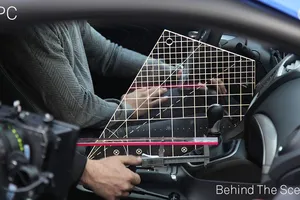
First, determine whether the long-form footage is worth turning into social media shorts.
Not all long-form videos are suitable for being broken down into social media shorts. Brands must answer three questions before project initiation. First, does the long-form video contain complete narrative units, such as a product demonstration, a usage scenario, or a customer testimonial, that can still stand independently when separated from the long-form video? Second, do users on the target social media platform have the patience to watch this type of content? Usually, the first 3 seconds of a short video determine whether viewers stay or leave; if the core visuals of the long-form video appear after the 40-second mark, you must consider re-editing the pacing. Third, were enough backup shots retained during the long-form shoot, such as footage with different shot sizes, angles, and expressions? These backup shots are the foundation for the secondary creation of short videos.

The criteria for judgment can be set as follows. Divide the long-form video by scene; if each scene can clearly convey a single point of information within 15 seconds, it has reusable potential. If a certain scene relies on context to be understood, such as needing to set up a brand story or technical principles, it is not suitable for direct extraction. The risk is that brands tend to simply cut the highlight segments of a long-form video shorter, resulting in a short video that looks like a trailer and lacks independent communication value. An exception is if the long-form video itself is a product documentary or brand story film where every segment inherently has a beginning, continuation, transition, and conclusion; in this case, the difficulty of breaking it down is reduced, but the opening hook still needs to be redesigned.
The brand must prepare an asset list, including the original feature files, edit timelines, continuity logs, shot notes, music copyright documents, and subtitle files. The production team must confirm whether the feature's shooting resolution, frame rate, and color space meet the delivery requirements of social media platforms. If the feature is 4K at 25 frames per second and the social media platform requires a 9:16 vertical or 1:1 square aspect ratio, the team must determine if the composition allows for reframing. If the feature heavily uses wide-angle lenses or center-framed subjects, reframing may lose the main subject, requiring additional shooting or dynamic tracking.
The distribution goals and target audience for the short video must be determined during the project initiation phase.
For social media short videos of brand overseas expansion, the primary goal is to make international users stop scrolling and generate clicks, comments, or shares. During project initiation, the brand must write down three specific goals, such as increasing product awareness, driving website traffic, or establishing brand tone. Each goal corresponds to a different editing strategy. To increase awareness, the product's appearance and features must be highlighted. To drive traffic, a clear call to action must be designed at the end of the video. To establish tone, iconic brand visual elements must be retained.
Audience analysis must be specific to demographics, platforms, and viewing habits. For example, TikTok content targeting young North American consumers requires a fast pace, eye-catching subtitles, and music that aligns with local trends. Conversely, LinkedIn content targeting B2B decision-makers must be more professional, with high information density and polished visuals. The brand must provide audience personas, including age, profession, interests, frequently used platforms, and viewing times. The production team must use this information to determine the short video's duration, aspect ratio, subtitle language, and voiceover style.
The risk is that brands often try to use a single short video across all platforms, resulting in a mismatch for every platform. An exception is that if the brand has a limited budget, a master version can be created first and then fine-tuned according to platform requirements, but the master version must adhere to the specifications of the most core platform. The delivery consequence is that if the target audience is not clearly defined during project initiation, repeated revisions may occur later, leading to increased costs.
Footage for short videos must be reserved while shooting the feature.
If the brand plans to extract short videos from the feature footage, they must consciously shoot additional standalone shots during the feature production. The production team must mark which shots in the storyboard are "versatile shots," meaning they can be used for both the feature's narrative and the short video's independent display. These shots typically include product close-ups, character expressions, environmental B-roll, and action details.
Specifically, a "short video asset list" should be added on shoot days for the director or director of photography to quickly capture during breaks. For instance, if the feature requires a front-facing push-in shot of a product, the short video will also need a rotating product close-up, a handheld usage scene, and a lighting variation shot. When shooting, leave negative space in the composition because social media short videos often require overlaid subtitles or graphics; if the subject fills the frame, there will be no room in post-production.
Regarding audio, the feature might use a directional microphone, but the short video needs clear production sound or ambient noise, so a separate track of dialogue-free room tone must be recorded during the shoot. For lighting, the short video might use stronger contrast or colors; if the feature uses a natural light style, the short video footage may need to be recolored. However, shoot in RAW format or high-bitrate encoding whenever possible to leave ample room for post-production.
The risk is that pickup shots will increase shoot time and costs, so the brand must confirm the budget with the production team in advance. An exception is that if the feature shoot is already complete and there is no opportunity for pickups, the team must rely on existing footage; post-production can create novelty through cropping, speed ramping, and transitions, but the effect is limited. The delivery consequence is that if there is insufficient footage, the short video may only be able to use a few key shots from the feature, resulting in repetitive content.
Post-production editing must reorganize the footage according to platform logic.
When extracting short videos from long-form content, the focus is on re-narration. The production team must first import all long-form footage into the editing software, build an asset library, and categorize it by scene, shot size, emotion, and action. Then, based on the short video script, they should select the most powerful visuals; typically, the first three seconds must use the most impactful shots, such as product close-ups, character eye contact, or dynamic action.
The editing pace must adapt to social media platforms, usually cutting to a new shot every two to three seconds to maintain visual freshness. If a shot from the long-form video is relatively long, it can be edited into multiple versions at different speeds, such as normal speed, slow motion, and fast forward. Subtitles are key for social media short videos; the brand must provide accurate English copy, and the production team must design the subtitle style to ensure it is clearly readable on mobile screens.
Color grading must be consistent; if the long-form footage comes from different scenes, the color temperatures may vary, requiring unified tones in post-production. Sound design should be concise, as social media users often watch on mute, so subtitles and visual information must convey the message independently. However, if music is used, copyright compliance must be ensured; the brand must provide music licensing proof, or the production team must use royalty-free music libraries.
The risk is that excessive post-production processing can make the footage lose its authenticity, so brands must avoid making short videos feel too much like commercials. The exception is that if the brand itself is positioned as high-end or artistic, effects and color grading can be used boldly. The consequence of delivery is that if subtitles and music are not confirmed in advance, it may affect the release schedule.
The acceptance checklist must cover visuals, audio, subtitles, and versions.
When receiving the short video, the brand must check it item by item. For visuals, check for improper cropping, out-of-focus shots, shaky footage, and color deviations. For audio, check for background noise, audio clipping, and inconsistent volume levels. For subtitles, check for spelling errors, grammatical errors, and incomplete display. For versions, check if different aspect ratios such as landscape, portrait, and square are provided, as well as versions without subtitles, with subtitles, with music, and without music.
The specific acceptance action is to play the video separately on mobile phones and computers to view the effects on different screens. It is necessary to check the display of the short video on different platforms, such as Instagram Reels, TikTok, and YouTube Shorts; interface elements on each platform may obscure the picture, so important information must be placed within the safe area. The encoding format of the exported file must also be checked to ensure it can be uploaded normally to the platform.
The risk is that the brand only checks the final video and not the source and project files, making subsequent modifications difficult. The exception is that if the brand only uses it for a one-time placement and does not plan to make secondary modifications, only the final video can be delivered. The consequence of delivery is that if the acceptance is incomplete, issues may only be discovered after publication, affecting the brand image.
Inapplicable situations must be identified in advance.
Not all long-form videos are suitable for repurposing. If the long-form video is a pure interview or demonstration without scene changes, the short video will appear monotonous. If the long-form footage is of low quality, such as low resolution, shaky camera, or inaccurate exposure, these issues will be more obvious when magnified in the short video. If the brand requires the short video to include extensive product feature explanations, but the long-form video lacks corresponding visuals, additional filming or animation will be needed.
Additionally, if the long-form content involves sensitive information or copyright issues, such as containing third-party music or unauthorized portraits, publishing the short video may trigger legal risks. Brands must confirm the copyright ownership of all assets in advance. If the long-form video was filmed a long time ago and its visual style does not match the current brand tone, the short video may convey the wrong message.
The risk is that, to save costs, the brand forces the use of unsuitable assets, resulting in a poor short video that wastes the advertising budget. The exception is if the brand is willing to invest in post-production effects, such as using AI to generate backgrounds or restore image quality, then it can be attempted. The consequence of delivery is that if the inapplicability conditions are ignored, the short video may fail platform review or trigger negative user feedback.
Next Steps
Before launching the project, the brand should first organize an inventory of long-form assets and hold an asset evaluation meeting with the production team to clarify which clips can be reused and which require supplementary filming. If the evaluation results are feasible, proceed to the scripting and editing stages. If the evaluation results are not ideal, consider whether to adjust the short video goals or increase the filming budget. Do not rush to launch; first, produce a test version for internal or small-scale user viewing, and optimize it after collecting feedback. Before the final version is published, double-check the platform's latest specification requirements to ensure flawless delivery.
If you are preparing an overseas brand video project, you can first organize the brief, reference visuals, product or company materials, delivery platforms, and copyright scope, and then view theOverseas Marketing Video Services pageto ground communication from abstract preferences into executable production boundaries.