The Essence of Collaboration Between Remote Directors and Local Crews
A common scenario for global brand videos is when the brand is based in China, the shoot takes place overseas, and the director may be located in a third country. The remote director is responsible for the creative vision, visual language, pacing, and overall aesthetics, while the local crew handles locations, equipment, talent, lighting, audio, and on-set execution. The quality of information exchange between the two directly determines whether the final video aligns with the script's intent.
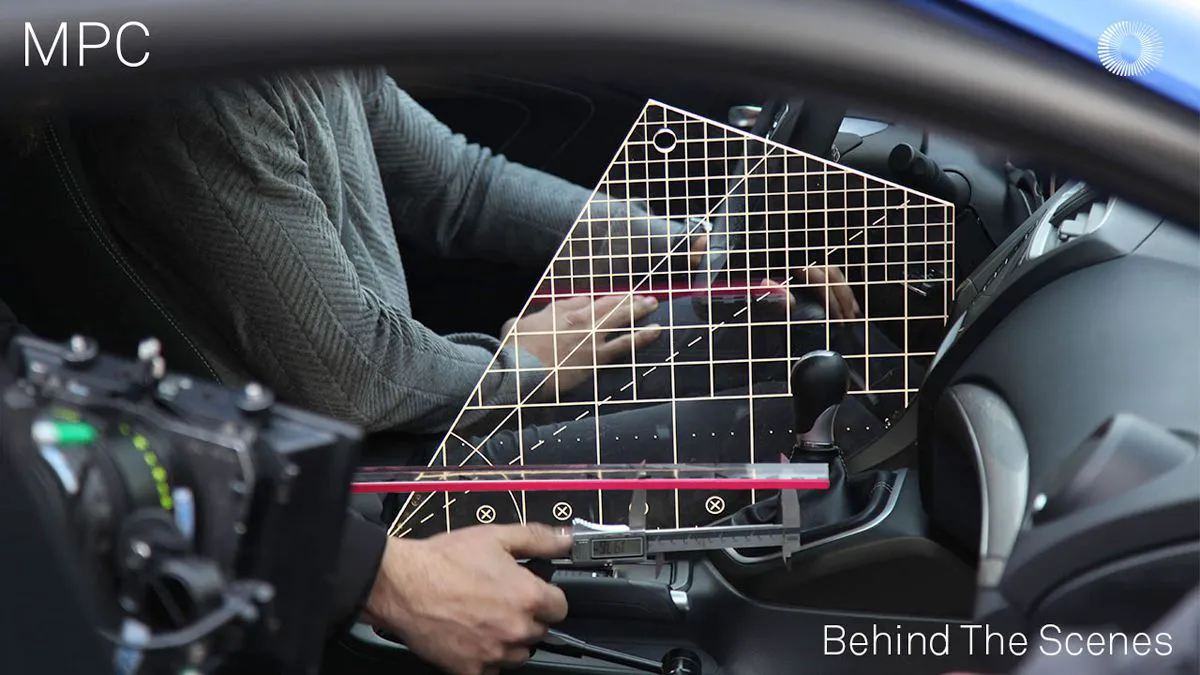
Brands need to understand that a remote director is not a remote control, and the local crew is not just an execution tool. The remote director provides the visual direction and standards of judgment, while the local team provides implementation capabilities and on-set information. The key to collaboration lies in translating abstract creative concepts into executable shooting instructions, and then converting on-set feedback into adjustable creative decisions.
If the brand expects the remote director to control every shot in minute detail, or if the local team operates with complete autonomy, it will lead to deviations. What the brand needs to do is establish a clear communication mechanism so that both parties work within the same frame of reference.
Five types of materials the brand must prepare during the project initiation phase
Before looking for a remote director or a local crew, the brand should first complete an internal review. The more specific the materials, the more accurate the proposal, and the less rework required later.
- Communication goals and audience profiles Clarify whether this video is for brand promotion, product launch, or social media traffic generation. The audience's country, age, consumption habits, and cultural taboos will all affect shot selection and narrative style.
- Core selling points and information hierarchy List the three core messages that must be conveyed, sorted by priority. Avoid cramming too many selling points into the script, which leads to confusing visual language.
- Reference visuals and style samples Collect at least five reference videos, noting the preferred timestamps, camera movements, color grading, pacing, and sound effects. The focus of reference visuals is to serve as an anchor to unify the visual language.
- Shooting conditions and limitations This includes shooting locations, seasons, weather, venue permissions, actor schedules, equipment lists, budget ranges, and timeline requirements. This information determines the feasibility of the plan.
- Delivery Platforms and Copyright Scope Confirm which platforms the video will be used on, whether different aspect ratios are needed, whether music copyrights, portrait rights, and venue authorizations are required, and whether modifications and secondary editing are allowed.
If the brand cannot provide reference visuals, the remote director will rely on text descriptions, but text is prone to ambiguity. For example, "premium feel" means different things in different cultures; in European and American markets, it may lean toward minimalism, while in Southeast Asia, it may lean toward brightness. Therefore, provide at least one style reference, otherwise the plan may deviate from expectations.
Division of Responsibilities Between the Remote Director and the Local Crew
Clarifying responsibilities prevents conflicts over who is in charge on set. The relationship between the remote director and the local crew is primarily collaborative.
The remote director is responsible for script interpretation, storyboard design, camera movement, composition, lighting style, actor direction, pacing, and color grading direction. The remote director conveys their intent through video conferencing, live monitoring, and photo and video feedback.
The local crew is responsible for location scouting, equipment rental, lighting setup, camera operation, sound recording, actor coordination, on-set safety, and logistics. The local team needs to understand the director's visual language and translate it into actual footage.
The brand should designate a local producer as the communication hub. All on-set issues should first be consolidated to the producer, who will then communicate with the remote director. This prevents the director from being overwhelmed by information from multiple sources and avoids chaotic on-set decision-making.
A common risk is the local team habitually stepping in to save the day, making their own adjustments when the director's instructions are unclear. This can cause the visual style to deviate. The brand should require the local team to pause shooting when encountering ambiguity and confirm via a live connection, rather than guessing based on experience.
Pre-production workflow and key confirmation points before shooting.
The week before shooting is the highest-risk period. The brand should organize at least two remote meetings: one for a technical rehearsal and one for creative alignment.
During the technical rehearsal, the remote director and the local cinematographer and gaffer review the equipment list, confirming camera models, lens focal lengths, lighting types, audio equipment, and monitoring methods. The remote director needs to know the specific performance of the local equipment, such as latitude, dynamic range, and frame rate, to design feasible shots.
During creative alignment, the script and storyboard are reviewed line by line to confirm the shot size, camera movement, duration, actor actions, dialogue, props, and set dressing for each shot. The remote director should provide storyboards or reference frames, and the local team should note on-set feasibility, such as whether the location size is sufficient and if the lighting conditions match.
The brand must confirm the following items:
- Shooting dates and time zone differences, ensuring the remote director's online hours cover key shooting periods.
- Network bandwidth and monitoring equipment, whether real-time video stream monitoring can be achieved, and if the latency is acceptable.
- Backup communication plans, such as satellite phones or mobile hotspots, to prevent shooting delays caused by disconnections.
- Footage backup plans, including local dual backups plus cloud uploads, to prevent data loss.
- Authorization documents for actors and locations, signed in advance to avoid post-production copyright disputes.
If the brand ignores time zone issues, the remote director may work in the early hours, leading to impaired judgment. It is recommended to schedule key shooting periods during the director's daytime working hours and adjust the shooting schedule if necessary.
Remote Director Working Methods During Shoot Execution
On the day of the shoot, the remote director observes the set through a real-time monitoring system. However, the monitored image differs from the actual set; for example, color, brightness, and depth of field may be distorted. The remote director should rely on the local cinematographer's parameter reports rather than drawing conclusions solely from the monitored image.
The remote director needs to establish a "confirmation instruction" system. After each shot, the local cinematographer uploads a thumbnail or short video, and the director marks the points needing adjustment, such as "move the camera half a meter to the left," "soften the lighting," or "relax the actor's expression." These instructions must be specific, avoiding vague requests like "make it a bit more natural."
The local crew must record the version number for each adjustment, such as "Shot 3 - Version 2 - Lighting Adjusted." This allows for quick location of the best footage during post-production editing.
The remote director should also pay attention to on-set audio recording. If the local sound mixer cannot transmit high-quality audio in real time, the director should request on-set monitoring headphones and confirm the ambient noise level. For scenes with heavy dialogue, it is recommended to use wireless microphones and record on a dual-system.
A common issue is when the remote director requests a retake, but the local team believes the footage is sufficient. At this point, the brand should intervene and defer to the director's judgment, as the director is responsible for the overall pacing. However, the brand must also control retake costs by setting a retake limit for each shot, such as a maximum of three times, requiring producer approval if exceeded.
After the shoot, the remote director should participate in the initial footage review to confirm that all shot coverage is complete and no key actions or lines are missing. If omissions are found, reshoots must be scheduled on the same day, as they cannot be fixed in post-production.
Remote Collaboration and Version Management in Post-Production
During the post-production phase, the remote director collaborates with the editor, colorist, and sound designer. The brand needs to clarify the acceptance criteria for each stage.
During the editing phase, the remote director provides editing direction, such as pacing, transitions, and music style. The editor outputs a rough cut, and the director notes revision feedback. The brand should request timeline screenshots or video links from the editor to allow the director to review frame by frame.
During the color grading phase, the remote director provides reference color tones and style frames. The colorist outputs the graded version, and the director reviews it on a professional monitor or calibrated screen. The brand should note that standard computer screens may have color shifts, so using a colorimeter or referencing the director's screenshots is recommended.
During the sound phase, the remote director confirms dialogue clarity, music mixing ratios, and sound effect layering. The brand should require the sound mix to be auditioned on multiple devices, such as phones, headphones, and TVs, to ensure consistent results across different playback environments.
Version management is the step most easily overlooked by brands. It is recommended to establish the following version list:
- Rough cut, for internal review
- Fine cut, for visual and pacing confirmation
- Color graded version, for color confirmation
- Mixed version, for sound confirmation
- Subtitled version, for multilingual release
- Master, for archiving and distribution
- Platform-adapted versions, such as vertical, square, and different durations.
Each version must record the modification date, modifier, and modification details. If the brand repeatedly switches between multiple versions, it can easily lead to confusion. It is recommended to set a version freeze point, such as no longer modifying the editing structure after color grading begins, and no longer modifying the color grading after audio mixing begins.
Acceptance Checklist and Delivery Standards
When the brand reviews the video, they should not only look at the final effect but also check the technical specifications and copyright documents. The following acceptance items should be confirmed one by one:
- Whether the resolution, frame rate, and encoding format meet platform requirements.
- Whether the color performs consistently across different devices, without color casts or overexposure.
- Whether the dialogue is clear and the background music does not overpower the dialogue.
- Whether the subtitles are accurate, free of typos, and synchronized with the timeline.
- Whether all required versions are included, such as horizontal, vertical, 15-second, 30-second, and 60-second.
- Whether source files, project files, color grading LUTs, font files, and music licensing documents are provided.
- Does it include portrait right authorization letters, location release forms, and music copyright certificates?
- Are subtitle files, such as SRT or VTT, provided to facilitate subsequent translation?
The brand should require the production team to provide a delivery checklist detailing all files and authorizations. If any item is missing, the delivery should be considered incomplete. Especially regarding music copyright, using unauthorized music may lead to platform removal or legal risks.
During acceptance, it is recommended that the brand organize an internal review with at least three people, including the marketing director, brand director, and target audience representatives. Review feedback should be specific, such as "the transition at the third second is too slow" or "the product close-up is not clear enough," rather than "it feels wrong."
If the project fails acceptance, the brand should list the revision points in writing and agree on the number of revisions and the deadline. Avoid verbal communication that may lead to misunderstandings.
Situations where the remote directing model is not applicable
The remote directing model is not a cure-all. The following situations may not be suitable, and the brand should assess them in advance.
- The shoot involves complex actions or high-risk stunts, requiring the director to command in real time on set.
- The shooting environment has extremely poor network connectivity, making real-time monitoring impossible, such as in remote mountainous areas or at sea.
- A large amount of improvisational performance or reality-show-style interaction is required, and the director needs to stimulate the actors' emotions on set.
- The brand lacks a clear visual style reference, requiring the director to explore continuously on set.
- The local team lacks remote collaboration experience and cannot accurately execute the director's instructions.
If any of the above apply, the brand should consider sending a director on-site or choosing a local director to lead. The remote directing model is suitable for projects with clear scripts, controllable scenes, and style references, such as product demonstrations, corporate promotions, and standardized commercials.
Additionally, if the brand's budget is tight, the savings on the remote director's travel expenses may be offset by communication equipment and post-production revision costs. The brand should evaluate comprehensively and not just look at surface savings.
Next Steps
The core of remote collaboration for global brand videos is information transparency and standardized processes. The brand should prioritize perfecting internal materials before selecting a remote director and local team. Conducting a small-scale test shoot before the project launches to verify communication and monitoring workflows can significantly reduce the risks of the official shoot.
When selecting partners, require them to provide past remote collaboration case studies to understand their communication habits and problem-solving methods. Do not just look at their portfolios; ask clearly how they resolve time zone, language, and cultural differences.
Finally, stay flexible. If the test shoot reveals that the remote directing model is inefficient, adjust the plan promptly, such as by adding an on-set assistant director or shortening the shooting schedule. The core of global brand videos is conveying brand value; technology is just a means, so do not sacrifice results for the sake of the model.
If you are preparing a global brand video project, you can first organize your brief, reference visuals, product or corporate materials, delivery platforms, and copyright scope, and then view theOverseas Marketing Video Services page, translating communication from abstract preferences into actionable production boundaries.