At the project stage, first determine whether the dangerous action is worth doing
Stunts and dangerous actions in TVC commercials usually aim to create visual impact, but such choices significantly raise budgets, extend timelines, and increase safety risks. When initiating a project, brands must first answer one question: does the dangerous action directly serve the core selling point or communication goal? If the action is purely decorative, remove it or replace it with a safer alternative. There are three criteria to evaluate: first, does the action help the audience remember the product function or brand attitude; second, can the action be understood within five seconds; third, does it have a natural connection to the product usage scenario. If none of these criteria are met, the production team should proactively propose a simplified solution to avoid taking risks for the sake of spectacle.
Materials the brand needs to prepare include the creative script, reference images, product usage instructions, location constraints, a list of cast physical conditions, and insurance requirements. The production team needs to confirm the stunt difficulty grading, stunt performer qualifications, safety team configuration, emergency plan, and filming permits. A special reminder here: any project involving dangerous actions must include a safety budget; do not cut safety measures to save money. If the budget is insufficient, reduce the number of stunts rather than compromise on safety.
Move action-risk planning to the storyboard stage when breaking down creative concepts.
Storyboarding is the core tool for controlling hazardous-action risks in TVC commercials. During the storyboard stage, the director and stunt coordinator need to break every dangerous action down into executable shot sequences, clearly defining each shot's start frame, end frame, movement path, and actor positioning. For example, in a shot where a car drifts and an actor jumps out, the storyboard must show the angle at which the car enters the frame, the actor's body posture during the jump, the landing buffer zone, and the camera follow path. The purpose is to let all crew members know the action boundaries in advance and avoid improvisation on set.
Specific actions include: first, marking safe distances and buffer zones for every hazardous shot; second, determining whether a stunt double is needed and the body-type similarity between the double and the lead actor; third, planning the shooting order so safe shots are filmed before dangerous ones; fourth, preparing multiple backup plans, such as replacing a practical shot with CGI compositing. The risk is that if the storyboard is not detailed enough, misunderstandings can easily occur on set. The exception is that some actions depend on on-site lighting or wind conditions, so the storyboard can only serve as a reference; in these cases, the production team must leave room for adjustments.
Hard Criteria and Matching Process for Selecting Stunt Doubles
A stunt double is not just anyone who wears the same outfit. TVC commercials require a double to match body type, skin tone, hair color, movement habits, and facial features, at least ensuring no difference is visible in wide shots and back-of-frame shots. The production team should create a stunt-double matching checklist covering height, weight, shoulder width, leg length, hairstyle, skin-tone swatch, and habitual gestures. Before shooting, a costume fitting and camera test must be conducted, with the double and lead actor standing side by side for comparison at different focal lengths and angles, to confirm that no mismatches will appear during color grading and editing.
The criterion is that a stunt double must have professional experience in the relevant action type, such as climbing, skydiving, racing, or martial arts, and cannot be hired solely based on a similar physique. The production team should review the double's past work and credentials, and conduct on-site physical fitness tests. The risk is that subtle differences between the double and the lead actor may be amplified during high-speed movement, so post-production should prepare for face replacement or CGI touch-ups. If the budget is limited, a digital double can be considered, but it requires advance 3D scanning and motion capture, which also requires a professional team.
On-Set Safety Control and Action Execution Workflow
When shooting dangerous action, the set must have a clear chain of command. The director is responsible for shot quality, the action director is responsible for action safety, and the safety supervisor is responsible for overall risk control. The three parties must jointly confirm the action script before filming and sign a safety confirmation form. The shooting process includes: first, conduct a walkthrough without actors; second, the double or actor performs a low-speed rehearsal; third, clear all non-essential personnel during the actual shoot; fourth, immediately review the footage and personnel status after shooting.
Specific actions include setting up safety mats, protective nets, firefighting equipment, and first-aid personnel, checking the load-bearing capacity of all fixed installations, and ensuring that operators of camera stabilizers or cranes are qualified. The risk is that on-set conditions can change at any time, such as increased wind or slippery ground; in such cases the safety supervisor has the authority to halt filming. The exception is that some actions require a combination of live-action and CGI, where the live-action portion only captures reference elements; safety requirements can be somewhat reduced then, but it is still necessary to ensure the actor is not injured.
How Post-Production Compositing Removes Stunt Double Traces and Enhances Realism
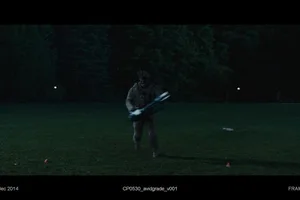
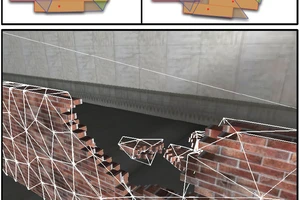
Dangerous actions in TVC commercials usually require extensive compositing work in post-production, including erasing the stunt double's face, replacing it with the lead actor's face, fixing continuity errors, enhancing action impact, and adding environmental effects. After the post-production team receives the footage, the first step is to organize the shot list and mark the frame numbers where the stunt double appears in each dangerous shot; the second step is to perform face tracking and replacement; the third step is to match lighting and color; the fourth step is to add motion blur or particle effects to make the action look more realistic.
The judging standard is that the audience cannot detect the stunt double switch at normal playback speed, nor can they see obvious edges when played back in slow motion. The production team must use high-precision tracking software and prepare multiple compositing versions. The risk is that if face replacement is not handled well, it can create an uncanny valley effect, so the actor needs to participate in post-production voice recording and facial motion capture. The delivery consequence is that if the post-production compositing quality does not meet the standard, the entire TVC commercial may be returned for rework; therefore, it is recommended to shoot extra close-ups of the lead actor's face and action references during filming to facilitate post-production matching.
The acceptance checklist covers picture, sound, versions, and rights.
When the brand side accepts a TVC commercial, they should not only watch the final cut; they must confirm each stage separately. For picture, check whether dangerous actions are smooth, whether the stunt double is visible, whether colors are consistent, and whether the composition matches the storyboard. For sound, confirm whether action sound effects are synchronized with the picture, whether ambient sound is natural, and whether music and voice-over are clear. For versions, confirm whether the delivered master format, resolution, frame rate, and color space meet platform requirements, and keep the editing project files and original footage.
Specific acceptance actions include: first, frame-by-frame inspection of the starting and ending frames of dangerous actions; second, checking color on professional monitoring equipment; third, test playback on a regular screen to confirm the viewing experience; fourth, verifying subtitles and copyright information. The risk is that unclear acceptance standards will lead to repeated revisions in post-production, so it is recommended to send the acceptance checklist to the production team at project kickoff. The exception is that if the commercial needs to be distributed in overseas markets, language versions and localized subtitles must also be confirmed.
Clear guidance on applicable boundaries and unsuitable scenarios
Stunt performers and dangerous action are not suitable for every TVC. If the product is a daily consumer good, such as food or household items, dangerous action may make viewers uncomfortable and weaken trust. If the brand tone is gentle or professional, such as healthcare or finance, dangerous action will feel out of place. Additionally, if the budget falls below the minimum required for safe filming, or if production time is insufficient to complete safety rehearsals, the production team should clearly reject the dangerous-action plan and instead use CGI or AIGC to generate virtual effects.
The criterion is that dangerous action must align with brand values, and viewers must be able to understand its connection to the product. If that connection cannot be established, it is best to abandon the idea. Another unsuitable scenario is when the actor or stunt performer has health issues, or when local laws prohibit certain high-risk actions. In such cases, the production team must provide alternatives, such as using remote-controlled equipment or full-CG production. Brands must understand that safety always comes first, and no action design is worth risking human safety.
Next step: validate starting with the lowest-risk shots
For brands preparing to launch a TVC project, we recommend selecting one or two of the lowest-risk dangerous-action shots for a small-scale test shoot to verify stunt matching, post-production compositing, and the overall effect. The test cycle can be kept to a few days, with the budget share controlled at around ten percent of the total budget. After the test, decide whether to expand the action scope based on the results. At the same time, maintain close communication with the production team to ensure every stage has a clear owner and acceptance criteria. This controls risk while ensuring the creative concept is realized.
If you are preparing for a TVC commercial project, start by organizing the brief, reference visuals, product or company materials, delivery platforms, and copyright scope, then viewthe TVC commercial service page, moving communication from abstract preferences to executable production boundaries.