The starting point for interview questions should be communication goals
Interview segments in corporate promotional videos often fall into two extremes. One is the interviewee reciting the company profile; the other is the production team asking open-ended questions like "How do you feel about the company?" and getting a pile of adjectives. Both outcomes waste the potential of the interview. Interviews that can truly uncover specific stories must break communication goals into verifiable narrative units at the project initiation stage. The brand side needs to answer three questions first. First, who is this video for—potential customers, industry partners, or new employees? Second, what fact do you want the viewer to remember after watching it—whether a certain product solved an on-site failure, or a certain service process shortened waiting times. Third, who is the most convincing person to tell this fact: frontline engineers, sales leaders, or the customer themselves?
Only after the production team gets these three answers can it design the interview outline. The focus of the outline is a question path grouped by topic. Under each topic, prepare three levels of questions. The first level is fact confirmation, such as "What happened on site that day?" The second level is detail probing, such as "What tool were you holding in your hand at that moment, and what was the surrounding environment like?" The third level is feeling reconstruction, such as "What were you most worried about at that moment?" These three levels are all indispensable. Without facts, details have no anchor. Without details, feelings become empty words. Without feelings, facts are just a running account. The brand side must complete this breakdown together with the production team at the project initiation stage; otherwise, even if they improvise on set, the resulting content will most likely be generic.
The criterion for selecting interview subjects is involvement in the event, not rank.
Many brands are used to arranging executives for interviews, thinking a high position means authority. But corporate promotional films need to dig up specific stories, so an interviewee's level of involvement matters far more than job title. The criterion is simple: ask yourself one question. Did this person personally experience the key event the film needs to tell? If the answer is yes, even if he is a warehouse manager, he is more suitable to appear on camera than a vice president who did not experience the event. During pre-production scouting, the production team should ask the brand to provide three pieces of information about each candidate. First, the specific project names and dates he participated in. Second, the specific actions he performed in that project, such as operating a certain machine, coordinating a certain supplier, or handling a certain customer complaint. Third, the on-site details he could observe at the time, such as colleagues' reactions, environmental sounds, and the condition of objects.
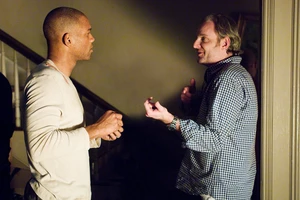
If the brand can only provide positions and titles, the production team should warn of the risk. An interview subject without event involvement can only rely on improvisation in front of the camera, and improvisation under pressure tends to revert to clichés. Another common misconception is having interviewees memorize scripts beforehand. Memorization eliminates filler words, pauses, and thought processes—the very sources of a story's authenticity. The right preparation is to give interviewees question directions and let them recall events in their own words, rather than reciting standard answers. On the shoot day, the director should control the interview pace, chat about everyday topics for ten minutes to help the subject relax, and then move on to formal questions. If the interviewee mentions a specific time, number, name, or object in an answer, those are signals of a good story, and the director should immediately follow up.
Design interview scenes with a visual mindset, letting the environment participate in the storytelling.
The choice of interview scene directly affects the story's credibility. Corporate promotional interviews do not have to be in front of a clean studio backdrop. If the interviewee is talking about troubleshooting in a workshop, having real equipment, tool cabinets, and warning lines in the background is more convincing than a solid-color background. During scouting, the production team should record each candidate interviewee's work environment and evaluate three conditions. First, whether the location has enough natural light or is easy to light. Second, whether the environment has obvious brand identifiers or industry characteristics, such as laboratory instruments, logistics warehouse shelves, or a customer service center's wall of headsets. Third, whether the environment allows quiet shooting, such as whether there is continuous noise or frequent foot traffic.
If environmental conditions are not ideal, a compromise solution can be adopted. Schedule the interview at the location where the event took place, but choose the time of day with the least noise, or use a telephoto lens to compress the background, blurring the environment while preserving color and outline. Another approach is to have the interviewee perform a simple action while speaking, such as organizing tools, checking a screen, or walking through a corridor. The action can ease the interviewee’s tension in front of the camera and provide cut points for post-production editing. However, the action should not be too complex, or the interviewee will become distracted and the quality of the answers will decline. When reviewing the footage, the brand team should check whether the interview visuals match the content of the story. If the interviewee is talking about on-site customer service but the image remains in an office background, this disconnect will weaken the credibility of the story.
The standard for post-production editing decisions is the density of concrete facts.
After interview footage enters post-production, the first question the editor faces is what to cut and what to keep. The key criterion is which sentence contains verifiable concrete facts. A qualified story segment should contain at least three elements. First, a specific time point or period, such as "last winter" or "three o’clock that afternoon." Second, a specific action or decision, such as "I shut down the entire production line" or "I called the supplier." Third, a perceivable result, such as "the equipment resumed operation after forty minutes" or "the customer placed an additional order the next day." During editing, prioritize segments that contain all three elements, then keep segments that contain two elements, and discard segments that contain only adjectives without facts.
In post-production, the relationship between interviews, B-roll, and real-life footage also needs to be handled. Corporate promotional videos are usually not pure interview films; interview segments need to be interspersed with other footage. The editor needs to match each piece of interview content with corresponding visual evidence. If the interviewee mentions a product defect, the image should show the actual defect or maintenance record. If a service process is mentioned, the image should show the key steps in the process. When a match cannot be found, it is better to let the interview shot stay on screen longer than to forcibly insert unrelated B-roll. When the brand team reviews the footage, it can do a simple test. Turn off the sound and watch only the visuals—can the overall thread of the story be understood? If the visuals cannot convey information independently, it means the connection between the interview and the visuals is insufficient and needs to be re-edited.
Sound details and subtitles are the final safeguard of story integrity.
The quality of interview recordings is often underestimated. In corporate promotional videos, the interviewee's tone, pauses, breathing, and subtle ambient sounds are all part of the story. The production team should use professional recording equipment on set rather than relying on the camera's built-in microphone. At the same time, ambient sound tracks should be recorded to enhance spatial depth in post-production. If the interviewee's voice trembles slightly when describing a tense moment, do not remove that detail. Excessive noise reduction and audio beautification will strip the interview of its authentic texture. During post-production mixing, the interview voice should remain clear and intelligible, and the background music volume should not overpower the voice. When selecting music, avoid tracks with overly strong rhythms or excessively intense emotions, as these will conflict with the narrative quality of the interview.
Subtitles are another area where problems easily arise. Corporate promotional videos usually require subtitles, but the way they are presented affects the reading experience. For interview segments, it is recommended to use sentence-by-sentence subtitles that appear and disappear in sync with the speaking rhythm. Subtitle font, size, and position should be consistent and should not cover the interviewee's face. The brand side should pay special attention to subtitle accuracy, especially for technical terms, names, place names, and numbers. A single incorrect product model or date can collapse the credibility of the entire story. During review, check the synchronization between subtitles and audio sentence by sentence, and check for typos. If the video is to be released on overseas platforms, translated subtitles must also be prepared. The focus of translation is to adjust word order according to the expression habits of the target language, but the specific facts and numbers in the original speech must be preserved.
The acceptance checklist should cover five separate stages of interview content.
When reviewing a corporate promotional video project, the interview section should not be judged only by the final cut; it must be checked across five stages. First, the scripting stage. Confirm whether the interview outline covers the communication objectives established during project initiation, and whether each key topic includes questions at three levels: facts, details, and feelings. Second, the production stage. Check whether the interview footage includes enough backup content, such as interesting details mentioned by the interviewee during casual conversation before the formal questions, as these often become highlights of the video. Third, the editing stage. Confirm whether the interview segments in the final cut follow the specific factual density standard, and whether the deleted footage truly has no remaining value. Fourth, the color grading stage. Check whether the interview shots and B-roll shots have a unified color tone, whether the interviewee's skin tone looks natural, and whether the background color matches the brand tone. Fifth, the sound stage. Check the balance between voice, ambient sound, and music, as well as the accuracy and synchronization of subtitles.
Each stage should have clear deliverables. The scripting stage delivers the interview outline and question hierarchy table. The production stage delivers original footage and backup files. The editing stage delivers the editing timeline and first version of the final cut. The color grading stage delivers the graded version and color reference. The sound stage delivers the mixed version and subtitle files. During review, the brand side should confirm item by item whether these deliverables exist and whether their content matches the final cut. If the production team only provides the final cut and not the stage-by-stage deliverables, the brand side should be alert to the difficulty of later revisions. Another easily overlooked review point is rights. Interviewees need to sign portrait rights usage agreements that clearly define the authorization scope, including the platforms of use, duration of use, and whether modifications are allowed. These agreements should be completed before production, not signed retroactively during post-production.
Cases where the interview-and-question method is not suitable should be identified early.
Not every corporate promotional video is suited to using interviews and questions to dig up stories. There are three situations to be cautious about. First, the product itself lacks complex usage scenarios or service processes, such as simple daily necessities or standardized software tools. For these products, it is hard to extract dramatic events from interviewees; demonstrations or animation are better suited to showcasing features. Second, the brand has strict length limits, such as a fifteen-second social media ad. Within such a short time, interview segments can hardly develop a complete story; forcing interviews in will only fragment the information. Third, the interviewee touches on trade secrets or legal risks, such as ongoing merger negotiations or unreleased technical specifications. Even if the interviewee is willing to talk, the brand must consider the risk of information leakage; such content is not suitable for the video.
If it is confirmed unsuitable, the brand and production team should adjust the plan as early as possible, rather than discovering the problem on set. Adjustment options include switching to voice-over narration, using reenactments, or relying entirely on live-action footage and graphics. The decision on suitability should be made during the project initiation stage. The production team can ask the brand to provide three candidate events, each with clear time, place, characters, and outcome. If the brand cannot provide a single complete event, the interview-and-question route should be rejected. Conversely, if the brand can provide three or more events, the interview method is worth investing in. This upfront judgment can save substantial shooting and post-production costs and avoid producing an awkward final video that has neither story nor information.
Next, we recommend validating with a small-scale event first.
If your brand is preparing a corporate promotional video and has determined that the interview-and-question method is suitable, we recommend not jumping straight into large-scale production. First select the smallest, clearest event as a pilot. For example, the handling of a customer complaint or a specific milestone in a new product's development and testing. Use this event to complete a full interview shoot and edit, producing a sample clip under three minutes. The value of the sample is to show the brand the difference between a concrete story and abstract slogans, and to let the production team verify whether the interview outline, scene selection, and editing standards are effective. After the sample is approved, expand to other events and more interviewees.
During the sample stage, the brand side should prepare materials including a timeline of events, a list of participants, on-site photos or videos, and relevant documentation. The production team should prepare interview outlines, shooting plans, location assessment forms, and post-production editing standards. Both parties conduct a formal review after the sample is completed, checking each item against the acceptance checklist mentioned in this article. If the sample passes, the project can move into formal production. If the sample does not meet the standard, the problem most likely lies in the choice of interview subjects or the depth of fact-finding; adjust these two variables and try again. The key value of a corporate promotional video is whether the audience can remember something that actually happened. Interview questions are only a tool; whether the tool is effective depends on whether you are willing to spend time drawing the story out from people’s memories.
If you are preparing a corporate promotional video project, you can start by organizing the brief, reference visuals, product or company materials, delivery platforms, and copyright scope, then visitCorporate Promotional Video Services page, turning the conversation from abstract preferences into executable production boundaries.