The real challenge of supply chain videos is abstraction
The supply chain covers raw-material sourcing, manufacturing, warehousing and logistics, quality control, and information coordination. Most of these steps take place inside closed factories, on high-speed production lines, or within back-end systems, so audiences cannot see the full picture directly. If a corporate video only films the exterior of the plant and machines in motion, viewers still won't know what makes your supply chain strong. The key to making it understandable is turning invisible processes into visible logic.
At the project kickoff stage, three questions must be answered. First, who is the video for: building trust with potential customers, showing efficiency to investors, or training new employees. Second, what single sentence should viewers remember after watching, such as fast delivery, strict quality control, flexible customization, or full traceability. Third, which supply-chain segments are most worth filming—not all segments are equally important; simply choose the two or three directly tied to the core selling point.
If these three questions do not have clear answers, the subsequent scriptwriting and filming will lose direction. The brand side should organize an internal meeting before the project kicks off, bringing together the heads of sales, production, logistics, and brand, each listing the three points the audience is most likely to care about, then merging and ranking them. The production team needs to receive this ranked result to determine which shots are worth budgeting for.
Break the supply chain down into visual units the audience can perceive.
Every stage of the supply chain can be turned into a visual unit. Raw material procurement can show the supplier's quality inspection site, how raw materials are stacked, and the actions of sampling and inspection. Manufacturing can capture the trajectory of robotic arms, close-ups of workers' hands operating, and products moving on conveyor belts. Warehousing and logistics can show the paths of AGV carts, labels on shelves, and scanning actions during loading. Quality control can capture readings from testing instruments, differences between comparison samples, and the stamping process for certificates of conformity.
Each visual unit should answer a specific question: what pain point this stage solves, what technology it uses, and what advantages it offers over traditional methods. For example, an automated high-rise warehouse solves space utilization issues, and a visual inspection system solves missed inspections by humans. The brand side needs to provide key data or facts for each stage, such as capacity, yield, and inventory turnover days, but the production team should not simply pile these numbers onto the screen; instead, it should use pacing and visual metaphor to let the audience feel the efficiency.
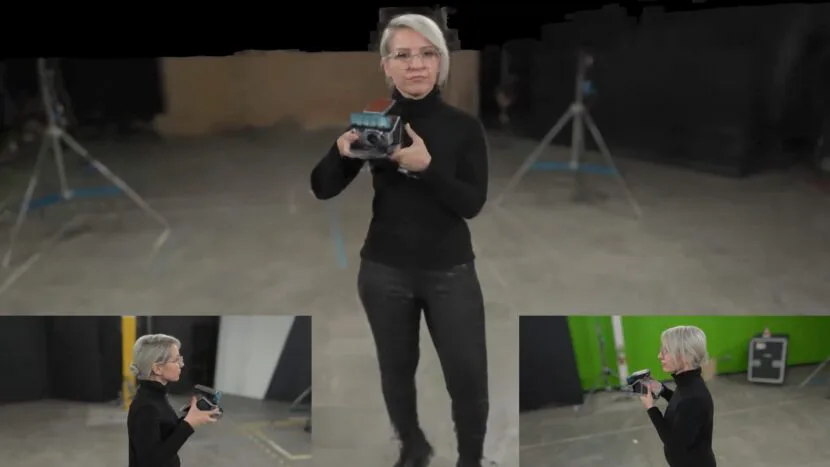
The technical approach of rapidly generating 3D scenes in the reference case can be borrowed, but not copied directly. The case suggests using rapid reconstruction technology to visualize complex scenarios; supply chain promotional videos likewise need to turn complex physical processes into clear visual paths. You can use animated diagrams, data visualization, or a combination of live-action and effects, but the core is to let the audience understand a stage's input, action, and output within seconds.
Pre-Shoot Checklist: Supply Chain Details to Confirm
Filming a supply chain facility is different from shooting a typical office scene. Plant areas often have safety rules, equipment noise, low light, and restricted personnel movement. The production team must record the following details during the location scout.
- Emergency exits and PPE requirements for each filming area, including whether hard hats, safety goggles, or reflective vests are required.
- Production line operating hours: which periods have equipment running at full speed and which allow shutdowns for staged shots.
- The mix of natural and artificial light, and whether additional lighting is needed.
- Noise levels, and whether post-production dubbing or close-range wireless microphone recording is needed.
- Whether movable obstacles such as forklifts, pallets, or temporary material stacks affect camera placement.
- Data interfaces and on-screen content, whether filming system interfaces is permitted, and whether desensitization is required.
The brand should prepare a plant floor plan in advance, marking areas where filming is permitted and prohibited. The production team uses the plan to map out camera movement routes, avoiding last-minute coordination on the shoot day. It is also necessary to confirm whether a dedicated contact will accompany the crew to explain the operational logic of each step, so the cinematographer can capture key actions.
If any step involves trade secrets, such as formulas, client lists, or real-time inventory data, the production team must be informed in advance. The production team can handle these by blocking, blurring, or replacing screen content, but these restrictions must be clearly stated in the contract to avoid rework in post-production.
How to capture the rhythm of a supply chain during production
The rhythm of a supply chain comes from the cadence of repeated actions and the connections between stages. When filming, don't only shoot static equipment—capture the details in motion.
For automated production lines, use high-speed photography to capture the robotic arm's pick, flip, and place movements, which strengthens the sense of precision. For manual operations, use shallow-depth-of-field close-ups to film hand movements such as applying labels, tightening screws, and inspecting appearance, letting viewers see focus and skill. For logistics, use time-lapse photography to capture the flow of goods from inbound to outbound, or use a tracking shot to follow an AGV through the racks, creating a sense of moving through space.
Sound design is equally important. On-set recording can retain the ambient hum of operating equipment, the exhaust of pneumatic cylinders, and the friction of conveyor belts—these sounds enhance realism. But during post-mixing, control the volume to avoid overpowering the narration. If on-site noise is too loud, keep only the low-frequency ambient sound and layer in post-produced sound effects.
When filming, pay attention to the relationship between people and equipment. Don't only shoot machines, and don't only shoot people. It's best to have operators in the frame; their gaze, gestures, and movements can guide viewers to understand the equipment's function. If a worker is unwilling to show their face, you can film them from behind or use hand close-ups, but you need to communicate in advance and obtain consent.
How Post-Editing Makes Supply Chain Logic Clear
The core task of the editing stage is to organize scattered footage into a logical thread. We recommend a problem-to-solution narrative structure. First present a supply chain pain point, such as errors during peak order periods, then introduce your solution, such as an intelligent sorting system, and finally show the results, such as improved accuracy and shorter delivery times.
Transitions should follow physical logic. From raw materials to production, use a match cut on a change in the object's form, such as raw powder falling into a mixer, followed by a shot of product granules falling from the outlet. From production to warehousing, use a continuous action cut, such as products sliding from the end of the line into a tote, followed by a shot of the tote being placed on a pallet by a robotic arm.
Data visualization is an important way to make supply chains understandable. But avoid complex charts and use clean animations instead. For example, use a flowing light strip to represent order information flow, different colored blocks to show inventory status, and progress bars to represent production cycles. These animations need to blend with live-action footage so they don't look out of place. AIGC tools can help generate some animation elements, but human review is needed for accuracy.
Voice-over scripts should avoid jargon stacking. Translate abbreviations like JIT, VMI, and ERP into language the audience can understand, such as just-in-time delivery, vendor-managed inventory, and enterprise resource planning systems. Each sentence should convey only one point of information and appear in sync with the visuals, neither ahead nor behind. Subtitles should be concise, no more than one line, with clear font size and high contrast against the background.
How Color Grading and Sound Enhance the Texture of Supply Chain Footage
Color grading can establish a unified visual style, but avoid over-filtering. Supply chain scenes usually include metal, plastic, cardboard boxes, and lighting; a neutral-to-cool tone works well to highlight a tech feel, or a warm tone can emphasize human warmth. The key is to keep skin tones natural and equipment colors accurate, preventing color casts that could lead viewers to misjudge product condition.
Sound design should be layered. The base layer is ambient sound, such as air-conditioning hum and equipment operation, kept at around -20 dB. The middle layer consists of action sounds, such as bolts tightening, labels peeling, and conveyor belts rolling, which need to sync with on-screen actions. The top layer is narration and music; narration should be clear, and the music tempo should match the edit points. During tense supply chain moments, the music can speed up; when showcasing results, the music can relax.
If using AI-generated voiceover, choose a natural Chinese pronunciation to avoid a mechanical feel. Also check whether the AI voiceover's phrasing and emphasis are accurate, and adjust manually when necessary. Subtitles and voiceover must be synchronized, with a timeline error of no more than two frames.
Delivery Acceptance Checklist and Common Rework Points
Delivery acceptance should not be judged solely on the final video; it must be confirmed at every stage. The brand side needs to prepare an acceptance checklist and review the following items one by one.
- Does the script cover the core selling points established at project kickoff, and are there any supply chain steps that have been omitted?
- Do the storyboards match the footage captured on set, and are there any last-minute changes that were not updated in the script?
- Is the image clear, are there any shaky, overexposed, or underexposed shots, and do all shots meet the usable standard?
- Is the audio clean, is there any background noise, clipping, or muffled recording, and is the narration in sync with the visuals?
- Check whether the subtitles have typos, match the narration, and cover all key information.
- Is the color grading consistent, is the color temperature consistent across different scenes, and are skin tones natural?
- Are the data visualizations accurate, and are there any misleading charts or incorrect numbers?
- Does the master format meet the publishing platform's requirements, and are source files and subtitle files provided?
Common rework points include unauthorized trademarks or people appearing on screen, incorrect data labels, subtitles that are out of sync with narration, and confusing transition logic. To avoid these issues, schedule an internal review after the first editing draft, and invite supply chain business leads and technical experts to participate—they can spot on-screen details that don't match actual workflows.
On copyright, confirm that all assets have legal authorization, including music, fonts, images, and AI-generated content. If using AIGC-generated visuals, confirm whether the platform's terms of use allow commercial use and keep records of generation.
Cases Where Supply Chain Promotional Videos Are Not Suitable and Alternative Solutions
Not every supply chain is suitable for a promotional video. If the supply chain is highly confidential and no internal footage can be filmed, or if the process is too complex to explain clearly within a few minutes, then a promotional video may not be the best choice.
Alternative solutions include producing animated demo videos that fully simulate the process with 3D modeling and animation without live-action filming. Alternatively, create interactive H5 pages that let viewers click to explore each stage. You can also produce case-study white papers that explain details with text, images, and data. If the budget is limited, you can first use a phone to capture key shots, combined with screen recordings and charts to make a simple video, but pay attention to image and sound clarity.
If you decide to shoot but certain stages cannot be filmed, you can film only the feasible parts and supplement the rest with animation or diagrams. However, the styles of animation and live-action footage should be consistent to avoid a jarring look. In addition, if the supply chain involves multiple factories or overseas facilities, you need to assess travel costs and coordination difficulty, and use storyboards and remote-directed shooting when necessary.
Next Steps and Action Checklist
When preparing to launch a supply chain promotional video project, we recommend first completing internal information gathering, including supply chain flowcharts, key data, customer feedback, and competitor analysis. Then hold a requirements discussion with the production team to clarify communication goals and target audience. Next, schedule a location scout to confirm shooting feasibility and constraints. Finally, develop the script and budget based on the scouting results.
If the project timeline is tight, you can deliver in phases: first produce a 60-second teaser for social media, then produce the full version for the official website and trade shows. However, the core message of the teaser and the full version must be consistent to avoid audience confusion.
ONCE provides corporate promotional videos, brand promotional videos, and company image film production services, covering the full process from pre-production planning to post-production delivery. You can discuss specific shooting plans and acceptance criteria with the team based on project needs. Remember, the value of a supply chain promotional video lies in helping the audience understand your operational capabilities, not in piling up technical jargon. Clearly explaining every step matters more than flashy filming.
If you are preparing a corporate promotional video project, you can first organize the brief, reference visuals, product or company materials, delivery platforms, and copyright scope, then reviewCorporate Promotional Video Service Page, turning communication from abstract preferences into executable production boundaries.