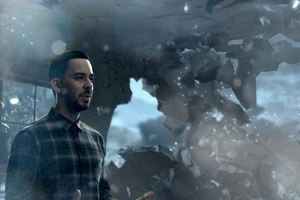
During project initiation, first assess whether hands and props are suitable for AIGC.
When evaluating AIGC commercials, brands most often overlook the visual consistency of hands and props. Hands are the most complex part of the body and the area viewers notice most, while props convey brand identity and product selling points. During project initiation, conduct a quick cost and risk assessment before proceeding directly to generation.
Brands are advised to prepare three sets of materials. First, physical products or high-resolution multi-angle photos—including at least front, side, top, and bottom views—to serve as references for model generation. Second, reference videos of hand actions, such as unboxing, gripping, pressing, or rotating; clips need not be long but must show complete motions. Third, brand visual guidelines, including primary and secondary colors, typography, graphic elements, and hand styles from previous ads, to prevent generated results from deviating from brand tone.
The production team must confirm three issues. First, determine whether the hands serve a key narrative function, such as demonstrating product usage or expressing emotion; if they are merely blurred background elements, control precision can be reduced. Second, assess whether props are replaceable; if physical props can be filmed, AIGC should only supplement or enhance rather than generate from scratch. Third, verify whether the delivery platform requires AI-generated content labeling, as disclosure rules vary and should be documented during project initiation to avoid compliance risks.
If hand movements are complex and props have strict dimensional or material requirements, such as precision instruments, food, or apparel, AIGC may fail to ensure physical accuracy, making live-action shooting with post-production compositing preferable. If hand movements are simple and props are virtual concepts or unreleased products, AIGC can significantly reduce production costs. The deciding factor is the weight given to physical realism and brand recognition; higher weights make pure generation less suitable.
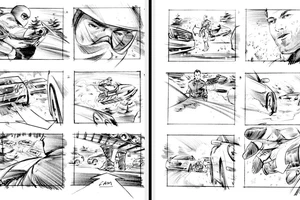
Use storyboards in pre-production to lock down hand trajectories and prop interaction logic.
Storyboards are the core tool for controlling AIGC hands and props. Brands and production teams must define hand position, finger curvature, prop orientation, and contact points for every frame during storyboarding. Avoid vague descriptions like "hand holding product"; instead, illustrate or specify exact motion paths, such as "right thumb pressing the left side of the cap, index finger wrapping around the bottle, rotating 45 degrees counterclockwise."
The production team must deliver a hand action list including action ID, start frame, end frame, hand pose, prop state, and interaction method. This list serves as both a shooting reference and a post-production validation tool. The brand must confirm that listed actions cover core product selling points, such as opening, pressing, applying, wearing, or assembling; missing key actions will significantly increase costs if added later.
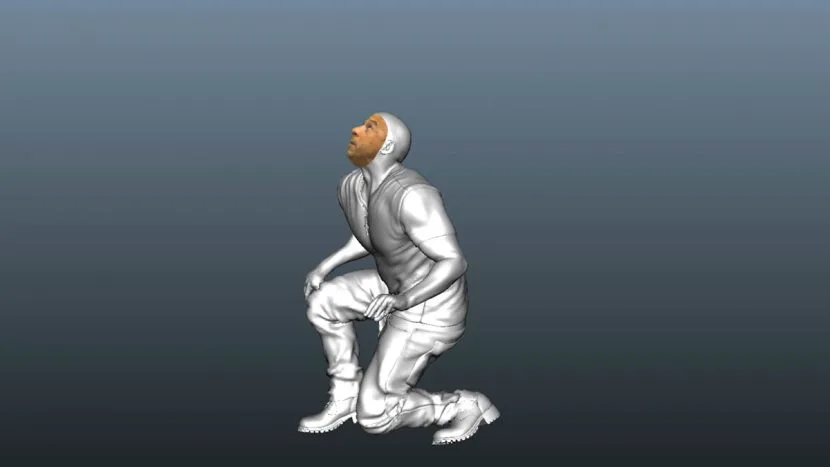
For props, the production team should create 3D models or high-resolution texture libraries; even when using AIGC, geometric references are needed to constrain shape and proportion. Brands should provide dimensional tolerances and material descriptions, such as "35mm diameter, matte plastic, fine surface texture," as these parameters directly affect output usability.
Overly detailed storyboards risk reducing generative freedom, causing unnatural AI distortions. Therefore, storyboards should retain flexibility, such as allowing hand angle variations of ±10 degrees and prop position shifts within 5mm. The production team must distinguish between hard and soft constraints in the storyboard to facilitate post-production adjustments.
Use real footage as anchors for AIGC during the shooting phase.
Even if the final output is purely AIGC, real footage must still be captured as an anchor during shooting. Brands should arrange a live shoot to record skin tone, texture, joint range of motion under real lighting, and prop reflectivity. This footage need not be retouched but must capture the complete hand motion from rest to completion.
During shooting, the production team should use fixed camera positions and constant lighting to minimize variables. Three sets of footage are recommended: first, empty hand shots without props to extract hand shape and skin details; second, static shots of hands holding props, held for at least five seconds per angle; third, continuous footage of key actions, such as lifting a product from a table toward the camera, performed slowly and evenly.
Filming props is equally important. We recommend capturing footage of the prop rotating independently, as well as close-ups of hand-prop interaction. If the prop is transparent or reflective, such as a glass bottle or metal casing, additionally capture highlights and shadow gradients; this data helps AIGC generate more realistic lighting interactions.
A key risk during filming is a mismatch between source footage and the generative model. For example, using warm lighting on set while AIGC training data is predominantly cool-toned can cause skin tone deviations. Therefore, use color and grayscale charts during filming and unify white balance in post-production. Brands must confirm copyright ownership of all footage, especially hand model likeness rights, to avoid future commercial disputes.
In post-production, apply layered control to generation parameters for hands and props.
Post-production is critical for controlling hands and props via AIGC. The production team should separate the frame into three independent layers—background, hand, and prop—and apply distinct generation parameters to each. The background allows higher creative freedom, the hand requires moderate freedom, while the prop demands strict constraints on shape and texture.
For hands, we recommend skeletal keypoint constraints: first mark the wrist, palm, finger base, and fingertip positions before generating skin and texture. If results show six fingers or abnormal bending, do not simply regenerate; instead, adjust keypoint coordinates first, then inpaint locally. Brands should provide a hand-defect checklist—such as 'middle finger too long,' 'missing nails,' or 'blurry joints'—for the post team to verify item by item.
For props, use edge detection and depth map constraints. First extract the prop’s outline and depth information, then let AIGC fill in materials and lighting. If deformation occurs—such as an elliptical bottle opening or distorted label text—lock the prop area and inpaint only that region rather than redoing the entire frame. Brands must verify that brand logos on props are clearly legible; this is a mandatory acceptance criterion.
Post-production must also address interaction shadows between hands and props. Common issues include inconsistent shadow directions or missing contact shadows that create a floating effect. The production team should manually add contact shadows using compositing software and unify light source direction. Brands should verify shadow naturalness by viewing in black-and-white mode; adjust if shadow edges are too sharp or too soft.
The risk lies in over-relying on automatic generation while neglecting manual correction. Even advanced AIGC tools cannot guarantee perfect hands in every frame. Production teams should establish manual review checkpoints, pausing to inspect every 10 generated frames rather than waiting to batch-correct after full generation. Brands should allocate sufficient post-production revision time, typically adding a 30%–50% buffer compared to traditional CGI workflows.
The acceptance checklist requires frame-by-frame verification of physical plausibility for hands and props.
Acceptance is the step most often overlooked by brands. We recommend that production teams provide a frame-by-frame acceptance sheet listing frame number, hand status, prop status, interaction logic, and issue notes. Brands should inspect each item against the following checklist rather than evaluating only the overall effect.
The first item is hand bone structure, checking for abnormal bending, incorrect finger counts, or disproportionate joints. The second is skin texture, verifying that pores, wrinkles, nails, and skin tone appear natural, especially on the back of the hand and between fingers. The third is hand motion continuity, ensuring smooth finger movement between adjacent frames without jumping or jitter.
The fourth item is prop shape, checking for distorted outlines, warped label text, or unrealistic material reflections. The fifth is the contact point between props and hands, confirming no clipping or floating, and consistent shadows and lighting at the contact area. The sixth is brand identity, ensuring logos, model numbers, and text are clearly legible and colors match brand guidelines.
The seventh item is overall lighting, ensuring consistent light direction and coordinated color temperature across hands, props, and background. The eighth is motion blur; if hands move quickly, there should be appropriate blur rather than every frame remaining perfectly sharp. The ninth is resolution, ensuring the deliverable meets platform requirements, subject to the latest official specifications prior to release.
If any item fails acceptance, the production team must log the problematic frames and return to the relevant stage for correction. The brand must clarify whether the acceptance standard is "acceptable" or "perfect"; for example, slight finger jitter may be acceptable, but a blurred logo is not. Once accepted, proceed to color grading, audio, and subtitling.
Define Version and Copyright Boundaries During Delivery
Delivery includes not only the final video but also source files, project files, and asset packages. The brand should require layered project files with separate layers for background, hands, and props, along with generation parameters and keyframe data. This allows quick adjustments later without regenerating content.
Regarding copyright, the brand must confirm ownership of AIGC-generated content and whether training data includes third-party materials. Contracts should specify that the production team assumes liability for legal disputes arising from infringing generated content. Additionally, confirm the scope of hand model likeness rights, including overseas distribution and long-term usage.
For version management, the production team should deliver at least three versions. The first is a full version for TVCs or websites. The second is a condensed version for social media shorts. The third is a vertical version for mobile devices. Each version requires separate acceptance checks for hands and props, as framing changes may affect local details.
Delivery should include technical documentation recording generation tools, parameter settings, correction logs, and known limitations. The brand should retain this document for future project reuse or auditing. If platforms require labeling AI-generated content, it must be clearly marked in both the video and metadata to avoid takedown risks.
Applicable Boundaries and Excluded Scenarios
AIGC commercials are not suitable for all brand projects. Use them cautiously or avoid them in the following situations. First, when products require strict physical dimensions or functional demonstrations, such as medical devices, auto parts, or precision instruments, AIGC cannot guarantee millimeter-level hand accuracy. Second, when brands have strict visual compliance requirements, such as nutrition labels on food packaging or drug instructions, text and graphics must be error-free.
Third, when hand gestures convey strong emotion, such as handshakes, caresses, or sign language, AIGC output may lack genuine emotional warmth. Fourth, when props are real, well-known brands like watches or luxury goods, viewers instinctively scrutinize details, making AIGC flaws easily noticeable. Fifth, when timelines are extremely tight and budgets limited, AIGC pre-production and post-correction may take longer than traditional live-action shooting.
If a brand is unsure about suitability, conduct a small-scale test. Generate a 10-second clip of a hand holding a prop using AIGC, compare it with live-action footage, and evaluate realism and production costs. Test results can inform decisions, but note that tests do not represent final output, as full projects require more shots and complex interactions.
Additionally, AIGC is unsuitable for celebrity endorsements requiring real people, as hands may be identified as specific individuals, posing publicity rights risks. It is also unsuitable for real-time interactive scenarios like livestreams or AR filters, where AIGC latency and unpredictability cannot meet real-time demands.
Recommended Next Steps
If a brand decides to try AIGC commercials, start with a small project, such as a 15-second social media video focusing on a simple hand movement and a single prop. This quickly validates the workflow, builds experience, and controls risk. The production team should confirm all acceptance criteria with the brand in advance and allow sufficient revision time.
Before project kickoff, brands can request an AIGC capability test reel from the production team to demonstrate control over hands and props. The reel need not be complete but should include at least three different hand movements and two prop materials. Evaluate the team's technical skills and communication efficiency through the reel before proceeding to formal production.
Finally, stay updated on AIGC tools, as rapid technological iteration means today's limitations may be resolved next month. However, brands should not blindly chase new technology but instead choose the most appropriate production method based on brand goals and user needs. AIGC is a powerful tool but not a universal solution; only proper use creates value.
If you are preparing an AIGC commercial project, first organize your brief, visual references, product or corporate materials, delivery platforms, and licensing scope, then visit theAIGC Video Services page, translating abstract preferences into actionable production boundaries.