Why Product Shape Consistency Is a Key Acceptance Criterion for AI Product Videos
Product shape consistency means maintaining stable appearance, structural proportions, material textures, and functional components during shot transitions, angle rotations, lighting changes, and dynamic occlusion. In traditional live-action filming, physical objects guarantee shape, requiring only continuity fixes in post. However, in AIGC commercials or AI product videos, generative models may cause outline shifts, logo distortion, port displacement, or surface texture flickering across different angles of the same product. If brands focus solely on visual style while ignoring shape consistency, the final video may look polished in still frames but reveal product identity inconsistencies during continuous playback.
Shape consistency must be established as an independent acceptance criterion during project initiation, rather than treated as an afterthought in color grading or editing. Brands must provide the production team with high-precision three-view drawings, material references, key dimension annotations, and allowable tolerances. For example, on a smartwatch, crown position, screen corner radius, and button spacing are critical features that must be locked. The production team must establish a product shape baseline using these assets, clearly defining which shots allow slight elastic deformation and which require strict rigidity. The standard is that pixel-level outline deviation between any two frames should not exceed 2% of the product width; this threshold must be adjusted based on delivery platform resolution and viewing distance. If the brand cannot provide accurate product data, project risks increase significantly; the production team should identify asset gaps before quoting and scheduling, rather than masking them with generative fixes in post-production.
Five Decision Points to Confirm During Project Initiation
The first decision point is determining the priority of product shape continuity. The brand must decide whether the product serves as the absolute protagonist or merely a background element. If the product is the core selling point, shape continuity must meet strict standards, requiring shape verification for every shot. If the product is only an atmospheric prop, requirements can be relaxed, but the script must note which shots allow abstract representation.
The second decision point is selecting the generation method. AIGC commercials can follow three paths: pure generation, live-action with generative extension, or 3D model-driven generative rendering. Pure generation suits concept demos but offers the weakest shape control. Live-action with generative extension fits existing physical products but requires multi-angle footage. 3D model-driven generative rendering meets high-precision needs but incurs higher upfront modeling and texturing costs. Brands should choose based on product complexity, budget, and timeline rather than blindly pursuing full AI generation.
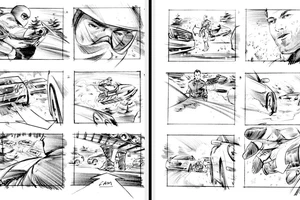
The third decision point is setting shape risk levels in the shot list. Each shot in the storyboard should be labeled low, medium, or high risk. High-risk shots include close-up product rotations, products emerging from occlusion, hand-product interactions, and reflections on shiny surfaces. Medium-risk shots include products moving within a scene at a fixed angle and products overlaid with text. Low-risk shots include distant product appearances and partially blurred products. The brand must participate in this labeling process, as only they know which product details are non-negotiable for marketing.
The fourth decision point is establishing acceptance benchmarks. The brand should require the production team to deliver a product shape benchmark document within one week of project kickoff, including a list of feature points, allowable deviation ranges for each, and a test benchmark shot. This benchmark shot should be a simple product rotation used to verify generative model stability. If even the benchmark shot fails, the technical approach must be re-evaluated.
The fifth decision point concerns copyright and asset ownership. Since AIGC commercials may use pre-trained models or third-party tools, brands must ensure generated outputs contain no unauthorized brand elements or copyrighted textures. Production teams should provide generation logs or parameter records to trace any shape anomalies. If the final video will be distributed across multiple platforms, brands must confirm that the generative model’s license permits commercial distribution and secondary editing.
Preparing Assets for Shape Continuity During Filming
Even when using pure AIGC generation, reference assets must still be prepared during filming. Brands should provide real photos or videos of the product under various lighting conditions to train or fine-tune the generative model and serve as references for post-production shape matching. Use fixed focal lengths and camera positions during shooting to prevent wide-angle distortion from altering true product proportions. For reflective materials, capture multiple environment reflection maps to help the model understand how the surface reflects its surroundings.
Production teams must execute a shape calibration workflow during filming. Place a standard color chart and ruler in frame alongside the product to facilitate color and dimension correction in post-production. For dynamic products, such as foldable devices or deformable structures, capture complete sequences in every state to ensure independent references for each. Avoid excessively shallow depth of field during shooting, as background blur can hinder the model’s edge detection. If a large aperture is necessary, additionally capture a set of reference shots using a smaller aperture.
Physical characteristics such as material reflectivity, surface roughness, and edge chamfers must also be recorded during filming. These data points can be integrated into prompts or control parameters to help the model maintain shape consistency. Brands should have a product manager or engineer on set to verify that captured details match the actual product, especially easily overlooked features like screw hole positions, port shapes, and button textures. If the product is still in the prototype stage, provide final CAD data or high-precision models; otherwise, generation results may be based on incorrect versions.
After filming, the production team must annotate all footage for shape. Annotations include product outline keypoints, feature coordinates, and color reference values. This data is used for post-production generation and validation. The brand must review the annotations to ensure no key features are missed. If the product has multiple color variants, each must be annotated separately, as different colors can affect edge detection in generative models.
How to Perform Shape Continuity Validation in Post-Production
Post-production cannot rely solely on generative model outputs; a combined manual and automated validation workflow is required. Automated validation uses computer vision tools to detect inter-frame contour differences, flagging frames where shifts exceed thresholds. Manual validation involves visual designers inspecting product details shot by shot, focusing on areas prone to distortion such as logos, text, ports, and buttons. Brands should require a validation report from the production team listing shape deviation values, screenshots of anomalous frames, and corrective actions for each shot.
When shape discontinuities are found, three correction methods are available. The first is regenerating the shot by adjusting prompts or seed values, while ensuring overall style consistency. The second is 3D model driving, which binds a product model into the frame to enforce shape stability before blending lighting via generative rendering. The third is post-production compositing, replacing anomalous areas with live-action or 3D-rendered elements, requiring matched perspective and lighting. Brands must understand the cost and timeline implications: regeneration may be fastest but inconsistent, 3D driving offers high precision but requires modeling resources, and compositing provides maximum control but may leave visible seams.
Post-production validation must also cover product consistency across different shots. For example, if the product appears front-facing in one shot and side-facing in another, proportions, colors, and material highlights must match. The production team must establish a cross-shot comparison workflow, mapping key feature coordinates to a unified coordinate system to verify relative positioning. Brands should participate in these reviews, as their sensitivity to product details typically exceeds that of the production team.
Audio and subtitles can also affect shape perception. If a product rotates on screen without synchronized sound effects, viewers may experience audiovisual dissonance, indirectly undermining trust in the product's shape. Subtitles obscuring key product areas can also prevent shape verification. Therefore, subtitle and sound effect timing must be aligned with product movement during post-production to ensure no interference during shape changes.
How to Check Shape Continuity During Delivery Acceptance
During acceptance, brands should not view only the final cut but request shot-level review assets. Each shot must include a preview video overlaid with a shape grid conforming to the product outline to easily detect distortion. Brands must verify each shot individually rather than relying solely on the final edit. If minor deformation in a shot is deemed acceptable, it must be explicitly noted in the acceptance form to avoid future disputes.
The acceptance checklist should include the following items: whether the overall product outline matches the baseline, whether surface textures remain stable without flickering, whether text and logos are clear and undistorted, whether proportions are consistent across angles, whether interactions with hands or props cause non-physical deformation, and whether the product remains recognizable during motion blur or depth-of-field changes. Each item requires a pass/fail record with supporting screenshot evidence.
Brands must also verify shape consistency across deliverable versions. A project may include horizontal TVCs, vertical social media videos, and square feed ads, each potentially cropped or reframed. Shape continuity may be compromised if cropping cuts product edges or reframing alters proportions. The production team must validate each version individually, not just the master. Brands must confirm that shape baselines remain consistent across versions; cropping is permitted, but product proportions must not change.
Source files and masters must also be included in acceptance. Brands should require production teams to provide generative model parameter files, keyframe seed values, and shape validation tool output data. These assets are intended for future modifications or sequel production. If the brand later needs to update product colors or add new features, these materials enable quick adjustments without regenerating the entire project. Acceptance must also confirm copyright ownership, including usage rights for the generative model, commercial usage rights for generated outputs, and the licensing scope of third-party assets.
When AIGC Commercials Are Unsuitable for Verifying Product Shape Continuity
AIGC commercials may be unsuitable when products demand extremely high precision. For example, with medical devices, precision instruments, or automotive safety components, shape deviations could result in legal or safety liabilities. If a brand cannot tolerate any shape deviation, it should use traditional 3D rendering or live-action filming rather than relying on generative models. AIGC is better suited for visually driven products like consumer electronics, FMCG, and fashion items, which allow minor flexibility while maintaining overall visual consistency.
Projects are also unsuitable when products are in rapid iteration phases. If the product’s appearance may change during the project cycle—such as with prototypes or concept models—the generative model will learn from older versions, and the final video may not match the released product. Brands should wait until the product design is frozen before launching an AIGC project, or require the production team to use parametric models that allow post-production replacement of the product’s appearance. However, parametric models increase upfront investment, so brands must evaluate whether this is worthwhile.
Project risk is too high when the brand cannot provide sufficient product data. With only a single product render and no orthographic views or material parameters, generative models struggle to maintain shape stability. Production teams may substitute generic shapes, resulting in a final video where the product looks completely different from the real one. Brands should provide at least CAD files or high-precision scan data; otherwise, live-action filming combined with post-production compositing is recommended.
When timelines are extremely tight and budgets limited, AIGC commercials may not allow enough validation iterations. Ensuring shape continuity requires repeated generation, verification, and correction cycles, each consuming time and computing power. If a brand demands delivery within one week, the production team may only manage a single generation pass, leaving no room to address anomalies. In such cases, shape requirements should be relaxed and simpler shot designs adopted—such as static cameras or stationary products—to minimize rotation and dynamic occlusion.
Recommended Next Steps
Before launching an AI product video project, brands should internally assess shape continuity risks and list non-negotiable product features. Then, hold a technical alignment meeting with the production team to confirm generation methods, validation workflows, and acceptance criteria. For projects involving complex shapes, produce a 20-second test clip first to verify shape stability before proceeding to full production. Test clips cost far less than reworking the entire video and help both parties establish a shared understanding. ONCE’s public services cover AIGC commercials and AI product video workflows; brands can use this framework to review each item with their production team, ensuring shape continuity is a defined deliverable rather than an afterthought.
If you are preparing an AIGC commercial project, start by organizing your brief, reference visuals, product or company materials, delivery platforms, and copyright scope, then visit theAIGC Video Services page, translating abstract preferences into actionable production boundaries.