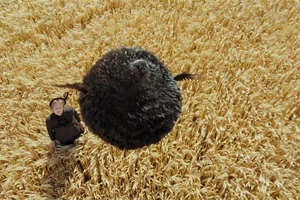
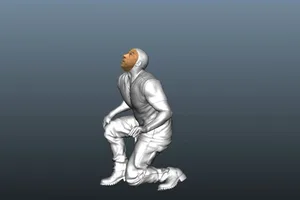
Before project initiation, distinguish the capability differences between still frame tests and dynamic clips.
The starting point for generative video projects is confirming the brand's expectations for dynamic results. Still frame tests can verify style, composition, and subject consistency, but dynamic clips must additionally address motion logic, temporal continuity, physical plausibility, and audio synchronization. During internal discussions, brands should treat still frame tests as style references rather than final video previews. Production teams must clearly inform clients that details visible in stills may be lost during dynamic generation, such as hair movement, clothing fold changes, and frame-by-frame lighting transitions.
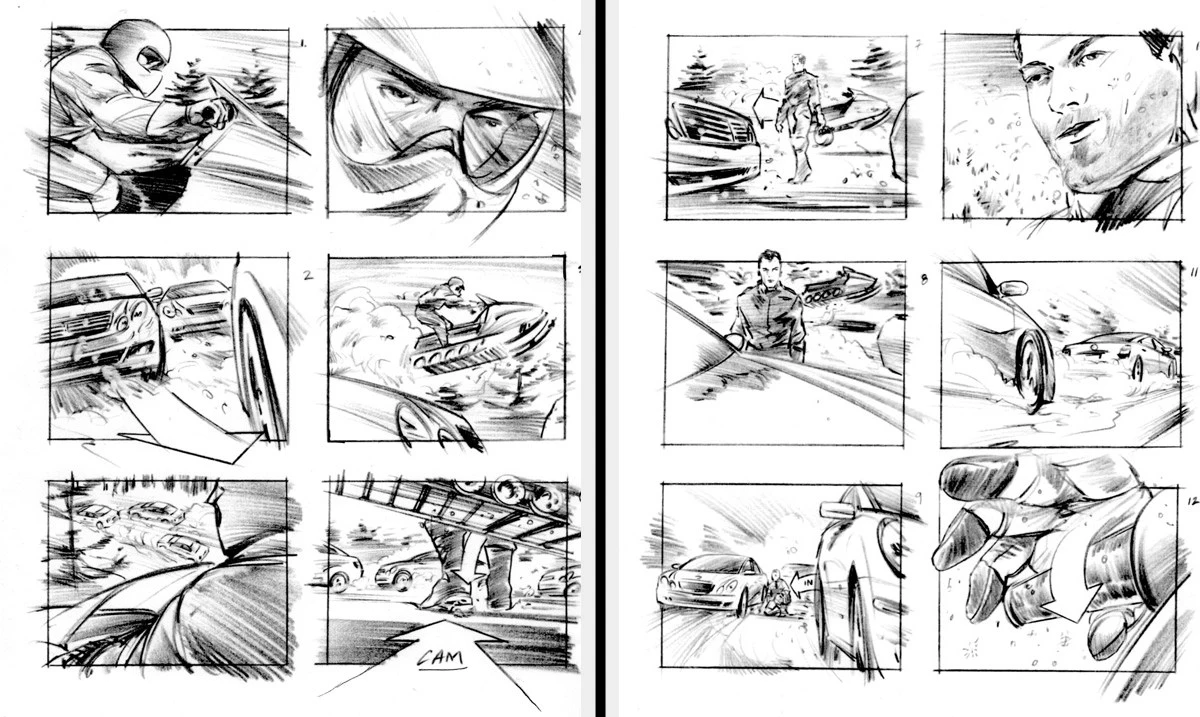
An actionable evaluation standard is to assess key frames from still tests across three dimensions. First is subject consistency: whether the same character or product maintains a stable appearance across different frames. Second is motion plausibility: whether the speed, direction, and acceleration of object movement adhere to real-world physics. Third is environmental continuity: whether background elements shift abruptly during shot transitions. If at least two of these three dimensions cannot be confirmed during the still frame phase, the risk for dynamic clips increases significantly. Brands should require production teams to provide at least two dynamic tests featuring different motion types, rather than relying on a single rendered image.
A key risk is that some teams use frame interpolation or motion tracking to compensate for generative model limitations, which increases post-production workload and may cause visual distortion. Brands should clarify during project initiation whether dynamic clips are purely generative or combined with traditional CGI or live-action compositing. Pure generation suits abstract scenes and conceptual expression, while hybrid approaches are better for product showcases requiring precise control. If core selling points rely on product details like mechanical structures or material reflections, pure generation may be unsuitable, and traditional 3D rendering or live action should be considered.
Brand Preparation Checklist and Decision Criteria
Before project launch, brands should prepare a comprehensive creative brief covering at least communication objectives, audience viewing contexts, visual expression of core selling points, reference imagery or competitor clips, delivery platforms, and licensing scope. Communication objectives determine clip duration and pacing; for example, brand films require 30- to 60-second narratives, while social media shorts may need only high-impact content under 15 seconds. Audience viewing contexts affect aspect ratios and subtitle readability, as vertical mobile framing differs entirely from horizontal TV composition.
Reference imagery is crucial for the production team to understand stylistic intent, but brands should avoid designating a single AIGC ad as the sole standard, as the randomness of generative video prevents exact replication. Brands are advised to provide three to five categories of references, including style, motion, color, and pacing. The production team must translate these references into executable prompts and parameter settings rather than simply imitating them. Meanwhile, brands must prioritize core selling points; if a product has multiple features, they should be ranked, as dynamic clips cannot convey excessive information in a short time.
Licensing scope is the most easily overlooked aspect during project initiation. Brands must confirm whether character likenesses, music, fonts, and assets used in generative videos include commercial usage rights, especially since copyright ownership of AI-generated content varies by region. Production teams should provide written documentation of the generative model's training data sources and the licensing scope of output content, which brands must retain as part of the deliverables. If planning multi-platform distribution, brands must also verify specific platform specifications such as resolution, frame rate, encoding format, and title safe areas, as these directly affect post-production output.
Shooting and Generation Strategies to Confirm During Pre-Production
Pre-production for generative video focuses on prompt engineering and cinematography design. The production team must break the script down into individual shot units, each comprising subject, motion, environment, lighting, and camera movement descriptions. For instance, a product rotation shot requires prompts specifying rotation angle, speed, background blur, and light source position. More specific descriptions yield more stable results, but over-specification can limit creativity, so a balance between control and freedom must be struck.
For projects involving live action or actors, the production team must determine if traditional filming support is needed. Some AIGC ads first film actor performances live, then use generative video to replace backgrounds or enhance effects; this hybrid approach requires advance planning for locations, lighting, and green screen setups. Brands should participate in this decision, as live action increases schedule and budget but ensures subject consistency and performance quality. If brands opt for pure generation, actor likenesses must be locked via still-frame tests beforehand to prevent facial drifting during dynamic generation.
A critical decision point is the relationship between shot count and generation batches. The production team should determine the total number of shots based on the script and plan the batch size for each generation run. Generative video has a high failure rate, typically requiring multiple batches to select usable clips, so sufficient time must be allocated. When reviewing progress, brands should evaluate not just the final cut but also whether intermediate test clips satisfy motion logic. If a specific shot's motion issues remain unresolved after three consecutive generation attempts, consider revising the shot design or adopting an alternative technical approach.
Execution Workflow and Quality Control for Dynamic Clip Production
The production workflow for dynamic segments is divided into four stages, each with specific acceptance criteria. The first stage is shot testing, where the production team generates 2- to 3-second clips for each shot to verify motion, style, and subject consistency. Brands should provide feedback at this stage focusing only on core issues, such as product distortion or motion smoothness, without fixating on lighting details. The second stage is full shot generation, producing clips near final length that may still contain flaws like flickering, frame skipping, or edge artifacts.
The third stage is post-production, covering editing, color grading, sound design, and subtitles. Raw generative video output typically requires color grading to unify colors across shots, as models may produce color variations between batches. Sound design must be created from scratch since generative videos usually lack audio, requiring brands to choose between music, sound effects, or voiceovers. Subtitle styling and placement must meet platform specifications; for example, social media requires subtitles within safe zones using legible fonts.
The fourth stage is version integration, where the production team assembles all shots into complete segments and exports versions for different platforms. Quality control relies on establishing a frame-by-frame inspection mechanism; brands are advised to use professional players for frame-by-frame review during acceptance, focusing on motion blur, object edges, and background stability. If tearing occurs during high-speed motion in a shot, the production team should be asked to regenerate it or apply post-production fixes. The production team must document generation parameters and repair operations for each shot to ensure traceability if issues arise.
Acceptance Checklist and Deliverable Confirmation
When accepting AIGC commercials, brands should not judge solely by the final cut but must verify the script, storyboard, production execution, editing, color grading, sound, subtitles, master files, and source files separately. Script acceptance involves checking narrative logic, highlighting core selling points, and ensuring target audience clarity. Storyboard acceptance requires cross-referencing the script to confirm that composition, motion, and transitions for each shot meet expectations. If the project includes live-action elements, production records must include shooting dates, locations, talent, and a raw footage inventory.
Editing acceptance focuses on pacing and narrative flow; brands must confirm reasonable shot durations, natural transitions, and the absence of repetitive or redundant segments. Color grading acceptance checks for overall color consistency, natural skin tones, and accurate brand colors. Sound acceptance confirms volume balance among music, sound effects, and voiceovers, ensuring there is no distortion or noise. Subtitle acceptance verifies text accuracy, consistent styling, and adherence to safe zone requirements.
Delivering masters and source files is essential for legal compliance and future modifications. Brands must obtain textless masters, subtitled versions, platform-specific adaptations, and all original generated clips and project files. Source files include prompt texts, generation parameters, post-production compositing projects, and color grading nodes, enabling future edits or reuse. Delivery should include technical documentation recording generation methods, repair operations, and version history for each shot. Brands must confirm copyright ownership and usage rights for all files to avoid future disputes.
Applicable Boundaries and Unsuitable Conditions for AIGC Commercials
Generative video is not suitable for every brand project. AIGC commercials are best suited for abstract concepts, dreamlike or fantasy scenes, rapid creative iteration, and social media content requiring numerous variations. For instance, a futuristic brand can use generative video to create surreal environments without building physical sets. Another applicable scenario is pre-launch marketing, where generative video simulates product appearance and usage before mass production begins.
Purely generative video is not recommended for shots requiring precise product details, such as gemstone facets, mechanical gears, or food textures. Generative models often distort fine details, especially in close-ups. Additionally, projects involving real celebrity endorsements or legally sensitive content, such as pharmaceuticals, finance, or medical products, pose compliance risks due to potential inaccuracies in character likeness and messaging. Furthermore, strict brand guidelines regarding specific logo placement, standard color values, and fixed typography may be difficult to meet given the randomness of generative video, necessitating extensive post-production correction.
Hybrid production is a compromise that uses generative video for backgrounds or effects while relying on traditional filming or CGI for main subjects. This approach costs more than fully generative methods but less than full traditional CGI, balancing creativity with control. Brands should evaluate project timelines, budgets, and risk tolerance rather than blindly pursuing new technology. Tight schedules require buffer time, as generative video failure rates may cause delays. Limited budgets may benefit from reduced live-action and prop costs, though post-production fixes could increase expenses.
Next Steps and Internal Testing Pathways
Brands evaluating AIGC commercials should conduct a small-scale internal test before launching a full project. Select a 15-second script with two to three shots covering various movements, such as zooms, rotations, and scene transitions. Use this test to assess whether generative video meets brand tone, product presentation, and platform requirements. Results will help teams understand generative video capabilities and establish budget and timeline expectations for future projects.
During testing, brands should document generation failures and corrections to build an internal knowledge base. Maintain frequent communication with the production team and define feedback standards, specifying which issues require correction and which are acceptable. After testing, decide whether to scale up to a full project or adjust the technical approach based on results. If generative video cannot adequately showcase core selling points, switch to traditional or hybrid production.
Finally, brands must monitor industry trends and platform policies, as technologies and regulations evolve rapidly. Before officially launching a project, consult professional production teams like ONCE, whose public services cover AIGC commercials, AI product videos, and brand AI video workflows to assist with requirement analysis, feasibility assessment, and production planning. Specific collaboration details depend on actual project conditions; this article provides no commitments or data.
If you are preparing an AIGC commercial project, first organize your brief, visual references, product or corporate materials, delivery platforms, and copyright scope, then review theAIGC Video Services pageto translate abstract preferences into actionable production parameters.