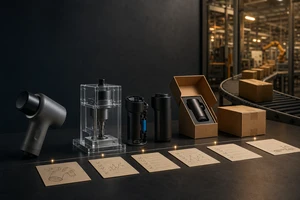
Direct answer: The first job of a looping video for an industrial trade show is not to make the company look “big.” It is to ensure that a buyer who stops for 20 seconds without a salesperson nearby can still understand what you do, why you are reliable, and what to ask next. Once those three things are shown clearly, aerial footage, data walls, and atmospheric music have a place.
A trade-show booth is a noisy viewing environment: products attract people, but competitors sharing their field of view also pull them away. Simply “making the corporate video a little shorter” is therefore usually not enough. A looping video should be treated as an independent information interface that viewers can enter repeatedly—from any second, they should be able to grasp one specific point.
Give the visuals a readable sequence first
We recommend dividing a loop of no more than 90 seconds into four layers instead of forcing in the company’s history:
- Subject: The first screen explains the setting served by the product or solution; do not show only a logo.
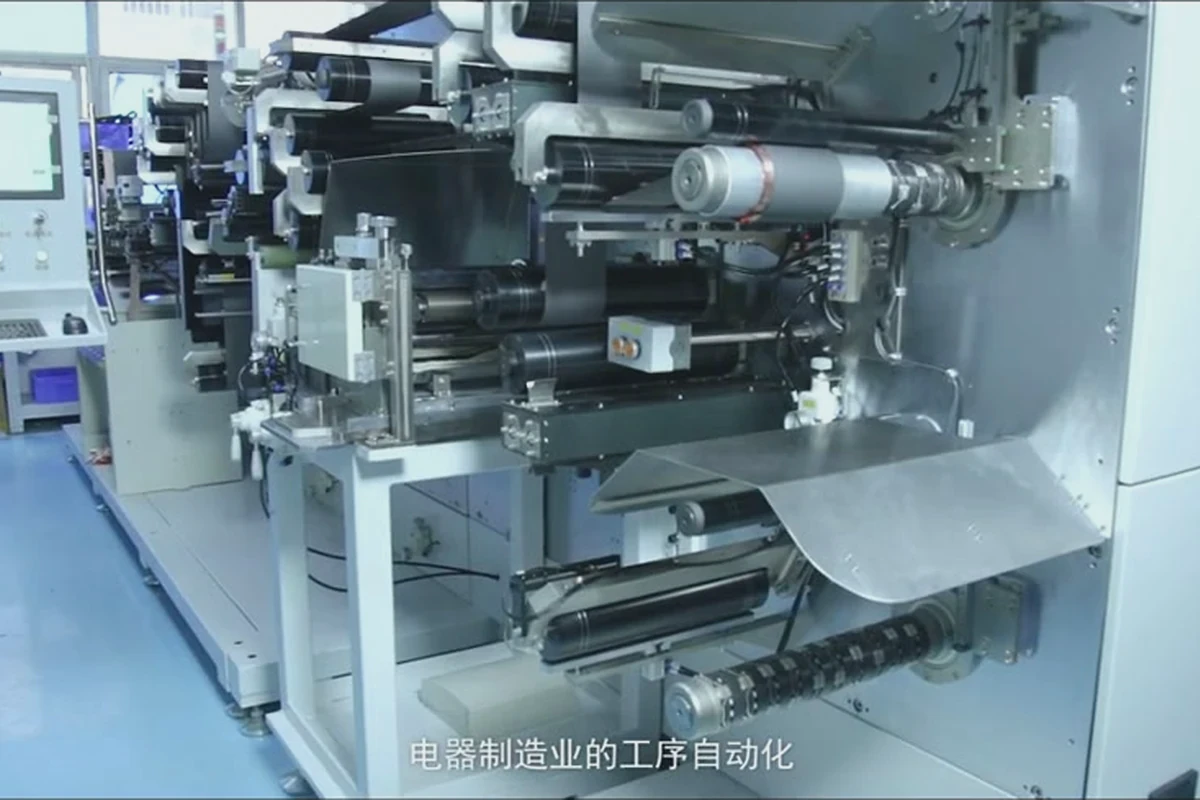
- Action: Use real footage of processing, assembly, inspection, or operation to answer “how does it work?”
- Conditions: Place precision, testing, environmental, or quality-process information beside the corresponding shot, instead of piling parameters into subtitles that cannot be verified.
- Next step: Use a product category, application direction, or QR code to guide viewers to a specific information page; do not make “contact us” the only exit.

Silent does not mean without language
Original audio is often difficult to hear on trade-show screens, so the information must still work when muted: each piece of on-screen copy should communicate only one point and appear in sync with the object in the image; do not make subtitles repeat an entire voice-over. Prerecorded videos published externally should also include captions and text alternatives in the deliverables. W3C’s guidance on captions for prerecorded content identifies captions as part of making time-based media perceivable; they are also one of the most easily overlooked layers in multilingual reviews and content reuse.
For manufacturing, persuasiveness does not come from having more shots, but from each shot answering a procurement question: what equipment is this? Who is operating it? What is being measured? Under what conditions? If the answer can only be supplied verbally by sales staff, the looping video has not yet done its job.
Let the booth video keep working after visitors leave the booth
When publishing the same video on your website, consider creating a dedicated video page for it: add a video description, chapters, a searchable text summary, and stable thumbnail and player URLs. Google Search Central recommends creating dedicated watch pages for videos relevant to the business and supplying metadata through structured data, video sitemaps, or Open Graph; the thumbnail URL for the same video should also remain consistent across different metadata. See its video SEO best practices.
For the Brief for your next trade-show video, begin with four columns: procurement question, filmable evidence, on-screen copy, and destination page. The result will not be a video that finishes at the booth and goes no further, but a set of explanatory materials that sales, website, and overseas teams can continue to use.