Building a Basic Stereoscopic Post-Production Workflow
When producing stereoscopic 3D ads, the core challenge lies in ensuring geometric consistency and color matching between left and right eye images. Ocula provides a toolset specifically designed for stereo post-production, covering color correction, focus adjustment, alignment, and parallax control. These features allow artists to maintain comfortable binocular vision within complex compositing environments. Meanwhile, Nuke, a standard compositing software, bases its stereo workflow on left and right views. Users can configure multi-view environments within projects to process left and right eyes independently and preview final stereo effects by adjusting convergence. This dual approach leverages both Ocula's specialized node advantages and Nuke's powerful compositing capabilities.
Acceptance Criteria for Key Visual Elements
Reviewing stereo footage cannot rely solely on single-eye views; cross-comparison between left and right eyes is mandatory. The following elements are most prone to revealing technical flaws and require close monitoring.
- Product Edges. Parallax misalignment on hard-edged objects causes significant visual fatigue.
- Subtitles and Graphics. Text overlaid on screen will appear to float or distort if it does not correctly follow spatial depth.
- Glass and reflections. Inconsistencies in highlight brightness or position between the left and right eyes on transparent materials compromise realism.
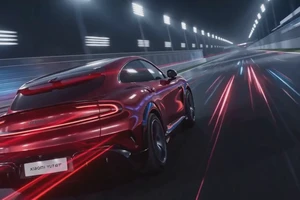
- Fast-moving objects. Viewers readily detect even minor inter-frame jitter or alignment errors in high-speed motion.
These detail issues may be subtle in still frames but quickly accumulate into visual discomfort during playback. Therefore, acceptance must include repeated playback of dynamic shots to ensure consistent motion trajectories across both eye views.
Applicable Conditions and Technical Limitations
Stereo post-production efficiency is constrained by various hardware and software versions. Ocula's specific feature availability, node interaction, and render speed depend directly on the installed Ocula version, Nuke version, operating system, and GPU support. For example, certain advanced disparity correction nodes may be unavailable on older systems or encounter performance bottlenecks with high-resolution footage. Additionally, different camera baselines, display characteristics, lens focal lengths, and viewing distances all affect the final comfort threshold. Consequently, no universal parameter set resolves all stereo issues; adjustments must be tailored to specific shooting conditions and playback environments.
Short Sample Acceptance and Delivery Specifications
To efficiently validate stereo effects, begin testing with static-camera or simple-motion short shots. Establishing dual views with real-time preview allows quick verification of left-right geometric alignment and color matching. Complex scenes should be checked on both cinema-grade previews and standard screens, as brightness and contrast differences across devices affect disparity perception. The delivery package must clearly list left and right eye file paths, view naming conventions, convergence strategy, color management configuration, and final output format. Clear documentation helps downstream teams accurately understand creative intent and prevents rework caused by missing information.