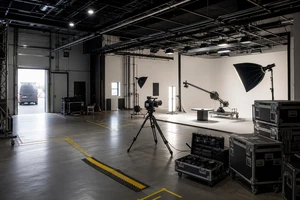
On set, the samples have just been placed on the shooting table: liquid falling, powder rising, surface texture brushed by light. What really matters isn't how expensive the equipment is, but whether the phenomenon can be stably seen, repeatedly captured, and pass post-production review. Without prior testing, macro shots may only yield beautiful close-ups, and high-speed shots may only yield magnified blur and noise.
First, Write “What to See” as an Approvable Shot
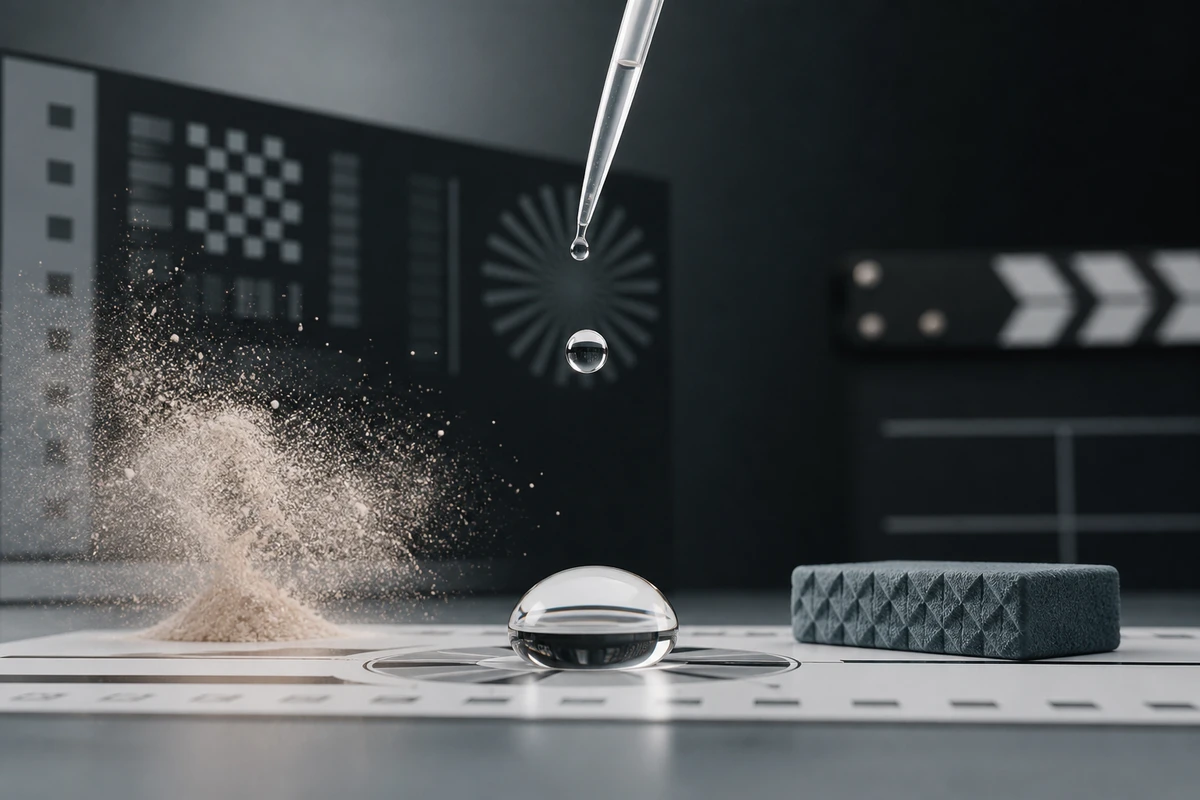
During the brief phase, don't just write “capture premium quality” or “create a set of slow-motion shots.” First break down the goal into four visual questions:
- Subject: Do we need to see droplet edges, powder particles, packaging texture, or the moment the product contacts the liquid?
- Event: Do we need to see falling, impact, dispersion, rebound, or the layers of static materials?
- Scale: Is it a full product, a partial structure, or does it need to enter macro range?
- Delivery: Do the horizontal hero video, vertical clips, and product page shorts share the same test?
These four factors directly affect lens magnification, depth of field, shutter speed, lighting, and cleaning frequency. They also allow the client, producer, and director of photography to discuss on the same test card, rather than arguing on set about whether it “feels impressive enough.”
Use a Three-Stage Test Shoot to Verify Evidence Before Choosing Equipment
An effective test doesn't require shooting the entire ad in advance. It can proceed in three stages: “static detail — single-variable motion — final phenomenon.”
- Static Detail: Lock the product and lighting to confirm whether material texture, liquid reflections, and powder particles form clear layers. First solve “can we see it.”
- Single-Variable Motion: Change only one variable — drop speed, droplet height, or powder amount — while keeping camera position and lighting. This way you know whether failure comes from motion or from exposure and focus.
- Final Phenomenon: Re-shoot the combination that passed, checking whether the action is repeatable, whether cleaning interrupts the rhythm, and whether the same setup can produce horizontal and vertical versions.
The key to macro testing isn't “getting closer,” but making the subject, focal plane, and motion path explainable. ZEISS macro photography resources also focus on the synergy of magnification, focus, and depth of field, rather than pursuing a specific lens name alone (ZEISS Macro Photography Guide).
The Test Card Must Lock Down Five Parameters
Keep a reviewable test card for each test shot, documenting at least the following five items:
| Parameter | Question to Answer On Set | Pass Signal |
|---|---|---|
| Target Phenomenon | Which moment or texture does the client need to see? | Can point out visual evidence at a glance |
| Frame Rate & Shutter | How slow should the action be, and are details still distinguishable? | Speed serves understanding, not just increasing frame count |
| Exposure & Lighting | Do highlights, transparent liquids, and dark powders still have layers? | Key edges are not swallowed by highlights |
| Focus & Depth of Field | As motion passes through the focal plane, does the subject remain consistently readable? | Focus changes can be predicted or controlled |
| Cleaning & Reset | How long does each retake take, and will the product be contaminated? | One failure won't derail the entire process |
Basler's image quality guide treats exposure, gain, lens, and light source as variables that need coordinated adjustment — which is why merely increasing the frame rate without recording lighting and exposure doesn't constitute a completed high-speed test. This article uses that guide as a technical reference in the research package, rather than treating any vendor's settings as a universal shooting promise.
Macro Depth of Field: Don't Treat a Small Aperture as a Universal Solution
Once a product surface enters macro range, depth of field quickly becomes a business issue: a slight focus shift can push droplet edges, texture highlights, or packaging text out of the readable area. A smaller aperture may yield more acceptable focus, but it may also sacrifice light transmission and detail rendition, forcing re-adjustment of lighting, exposure, or motion speed.
Therefore, first define the “area the client must clearly see,” then decide whether single-frame depth of field is sufficient, or whether segmented focus, fixed motion paths, or adjusted product position is needed. Approval should not rely on just one sharp frame, but on whether the subject remains valid throughout the entire action window.
If the same footage will also serve overseas brand Shopify product pages, Amazon product videos, or TikTok vertical clips, the test card must also record horizontal/vertical cropping and the first-frame safe zone; otherwise, passing the hero video doesn't mean the cross-border e-commerce version is ready for delivery.
High-Speed Photography: Higher Frame Rate Doesn't Mean More Information
The value of high-speed photography lies in breaking down changes invisible to the naked eye, not in lengthening the timeline. As frame rate increases, exposure time, light quantity, storage, and post-processing all change accordingly; if lighting is insufficient, the image may suffer from noise, motion blur, or loss of grain detail. Teledyne's Kinetix product materials demonstrate the motion-capture capabilities of high-speed cameras, but equipment capability alone does not guarantee ideal results on a specific product set. Equipment specs can serve as a check-in reference, and Nikon Professional's photography and lens resources are also suitable for cross-referencing basic choices in lens, focus, and depth of field (Nikon Professional Photography Resources).
A more practical approach is to prepare two modes: a baseline mode that ensures stable exposure and clean edges, and a high-speed mode for capturing critical moments. If the high-speed mode doesn't add visual evidence the client can understand, fall back to the baseline mode and allocate the budget to more effective lighting, cleaning, and repeat testing.
Write the Pass Criteria into Quotes and Deliverables
After the test shoot, it's recommended to leave a conclusion of “pass, retest, or abandon” for each shot, along with five pieces of information: test subject, passing settings, failure reason, reusable versions, and on-set risks. This way, the formal production quote is more than just an equipment list — it can also explain why a particular lens, lighting setup, frame rate, or cleaning arrangement is needed.
If you are preparing product videos for liquids, powders, or micro structures, the ONCE VISUAL Product Video Production Solution can accommodate sample status, target phenomenon, delivery dimensions, and test conditions. Submit this information to the production team for a shooting evaluation first, then decide on the combination of macro, high-speed, and formal production — this is usually more effective for controlling budget and approval than locking in equipment first.