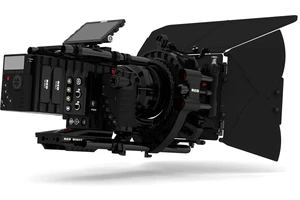
Assessing the feasibility of integrating live-action footage with AI generation during project initiation.
Before launching an AIGC commercial project, brands and production teams must jointly confirm whether live-action footage contains motion logic that AI models can interpret and extend. Not all commercial videos are suitable for generative imagery; if core selling points rely on precise physical interactions or strict compliance displays, forcing AI outpainting may result in visual distortion or legal risks. During project initiation, prepare storyboards with clear motion trajectories, reference motion samples, and product 3D models or high-resolution photos as benchmarks to determine whether AI can correctly parse motion direction.
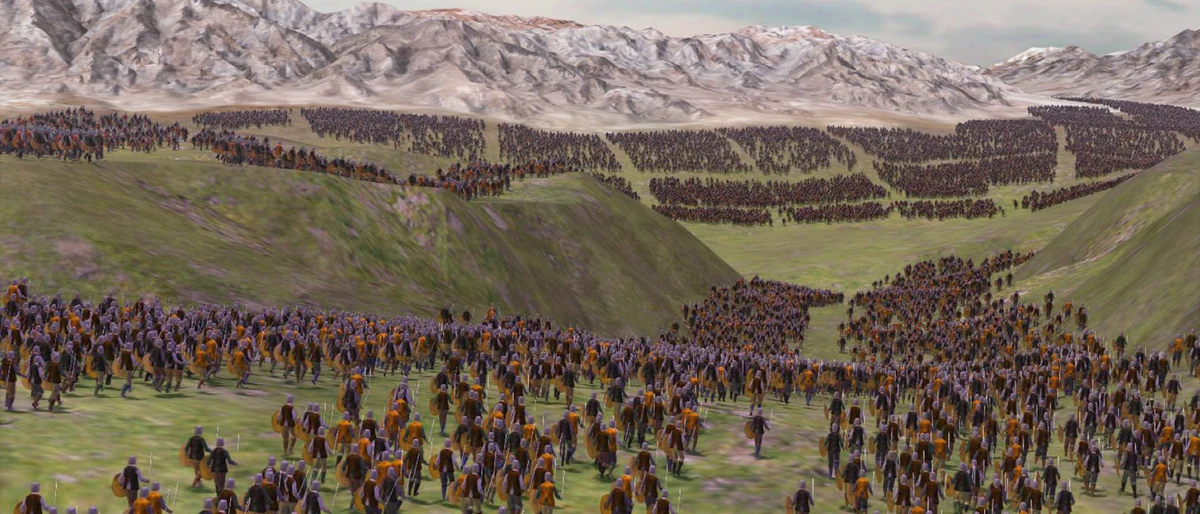
The assessment process should include a small-scale technical validation test. Select the most representative shot for live filming and attempt AI outpainting to observe the continuity of object displacement, lighting changes, and original footage in the generated output. If test results show that AI cannot stably recognize motion vectors or if generated content frequently exhibits structural distortion, adjust the creative plan to use traditional CGI or pure live-action methods. Decisions made at this stage directly impact subsequent budget allocation and scheduling, preventing project stagnation caused by technical misjudgment.
Brands must clearly define communication objectives, audience personas, core selling points, delivery platforms, and copyright scope in project initiation documents. These factors determine precision requirements and compliance baselines for AI-outpainted footage. For example, marketing videos targeting overseas markets must consider regional labeling regulations for generated content, while social media short videos must accommodate motion directionshi pei xing in vertical framing. Missing any element may cause AI-generated content to disconnect from brand strategy, failing internal review even if technically feasible.
Reserving parsable motion information for AI during shooting execution.
The core task during live filming is to provide AI with clear, unambiguous motion direction cues. Cinematographers should avoid handheld shake, rapid zooms, or complex occlusion compositions, as these interfere with AI's understanding of spatial relationships. Stabilizers or dolly shots are recommended to maintain constant camera speed, leaving sufficient negative space at frame edges as a buffer zone for AI outpainting. If a shot includes lateral subject movement, ensure the motion path is fully visible within the frame for at least two seconds to allow algorithms to extract valid temporal features.
Lighting setups must balance live-action texture with AI compatibility. Avoid strobe lights or high-contrast hard lighting, which can cause flickering or artifacts when AI generates transition frames. Soft, even lighting schemes are recommended, along with placing reference objects of known dimensions in the scene to help AI establish accurate spatial scale. When filming product close-ups, additionally record a static multi-angle orbit video as supplementary data to help AI understand product geometry, preventing deformation or detail loss during outpainting.
On-set documentation must not be omitted. For every shot planned for AI outpainting, the script supervisor must simultaneously log camera parameters, movement speed, light source positions, and reference object coordinates. Although this metadata is not directly input into AI models, it enables rapid troubleshooting during post-production. Without such on-set records, post teams must rely on visual estimation of shooting conditions, significantly increasing trial-and-error costs. For multi-camera or long-take shoots, separately mark AI-usable start and end timestamps to prevent invalid segments from entering the generation pipeline.
Motion direction verification and correction mechanisms in post-production workflows.
Upon entering post-production, the first step is preprocessing live-action footage. This includes removing lens distortion, unifying color spaces, denoising, and stabilization to ensure input footage is clean and aligns with model training data distributions. Minor shakes or exposure fluctuations in raw footage must be corrected before AI generation; otherwise, these flaws will be amplified and contaminate generated results. Preprocessing standards should be established early by the post supervisor and AI engineers, documented as a written checklist.
AI outpainting is not a one-click process and requires multiple manual verification checkpoints. After initial generation, prioritize checking whether motion direction matches live footage, object structures remain intact, and lighting transitions appear natural. If deviations occur, do not simply retry; analyze whether the cause is vague prompts, insufficient reference image quality, or inadequate motion information in source footage. Adjust input parameters or reshoot partial footage based on diagnosis rather than blindly increasing generation attempts. Document all changes and effect comparisons for each correction to create a traceable iteration log.
During compositing of generated footage with live-action material, focus on dynamic matching at seam boundaries. Even if individual frames appear consistent, playback may reveal sudden speed changes or broken motion trajectories. Use optical flow or manual keyframes for fine-tuning to achieve seamless temporal fusion. Color grading also requires special attention, as AI-generated areas may have different color response curves than live footage; grade them separately to avoid visual discontinuity. All compositing work should be performed in a monitored environment to ensure consistent motion coherence across various playback devices.
Specialized inspections for motion coherence during delivery acceptance.
Acceptance of AIGC commercials cannot rely solely on subjective perception; objective motion direction verification standards must be established. Acceptance checklists should include: whether subject motion direction in generated footage matches storyboards; whether adjacent frames contain jumps or reverse motion; whether motion speed matches between outpainted and live-action areas; whether motion remains smooth at different playback rates; and whether generated content complies with brand visual guidelines and platform publishing requirements. Each item requires sign-off by a designated responsible party; non-compliant items must not proceed to the next stage.
Beyond final deliverables, source files and process documentation are also part of acceptance. Brands should require delivery of complete AI generation parameter logs, preprocessed live footage, versioned iteration files, and copyright declaration materials. These assets ensure reproducibility of the current project and provide a foundation for future modifications or derivative works. If suppliers cannot provide these materials or refuse to disclose key parameters, delivery is deemed incomplete, and brands have the right to reject or request supplements. Acceptance records should be independent of editing, color grading, and other processes to avoid accountability confusion.
Audio and subtitle synchronization is also an extension of motion direction acceptance. If AI outpainting alters action rhythm, original sound effects or dialogue may no longer match. Verify audio-visual alignment frame-by-frame during acceptance, redesigning audio or adjusting subtitle timing as necessary. Especially for product demonstration videos, operational sound effects must strictly correspond to hand or mechanical movements in generated footage; any delay or misalignment undermines credibility. This check is often overlooked but is critical to perceived realism.
Identifying commercial video scenarios unsuitable for AIGC outpainting.
Although AIGC technology expands creative boundaries, certain commercial video types remain unsuitable for live-action plus AI outpainting workflows. Videos involving precision instrument operation, medical procedure demonstrations, or safety protocol explanations demand extremely high motion accuracy; minor AI-generated errors may cause misunderstandings or legal liability. Such projects should adhere to full live-action or certified CGI production, never sacrificing rigor for efficiency. Failure to identify such risks during project initiation will result in post-production remediation costs far exceeding expectations.
Content heavily reliant on proprietary brand symbols or fixed IP characters also requires caution. AI models struggle to maintain long-term consistency of specific visual elements, especially during multi-shot transitions or serialized production where feature drift commonly occurs. If brand logos, mascots, or product appearances have strict specifications that existing AI tools cannot meet through fine-tuning, abandon outpainting plans. In such cases, consider using AI only for background generation or non-critical elements while securing core subjects through traditional methods.
Copyright-sensitive projects also have applicability limits. If live footage contains third-party licensed content, protected architecture, or individuals without portrait rights clearance, AI outpainting may inadvertently replicate or distort these elements, creating infringement risks. Do not apply generative processing to such footage without confirming complete rights chains. Additionally, some industry regulators now mandate disclosure of AI usage; if brands cannot fulfill labeling obligations or fear negative consumer reactions, they should postpone adopting this technology. Applicability assessments must occur upfront rather than exposing issues mid-production.
Materials and collaboration essentials for brand preparation.
To ensure smooth AIGC commercial production, brands must organize and provide four categories of core materials before project launch. First, a complete creative brief including communication objectives, audience definitions, core messaging, and competitive analysis; second, a visual reference set covering color tones, composition, motion styles, and expected AI generation samples; third, digital assets for products or scenes such as 3D models, high-resolution texture maps, or CAD drawings; fourth, compliance and copyright documents specifying usable material scope, prohibited elements, and platform-specific requirements. Missing materials directly result in insufficient AI input conditions and extended testing cycles.
During collaboration, brands should designate a single point of contact responsible for material updates and feedback confirmation. Avoid dispersed instructions from multiple stakeholders causing repeated AI parameter adjustments. Reviews of AI-generated results must provide specific, actionable revision notes such as 'arm motion direction deviates 15 degrees left at 3 seconds' rather than 'it feels wrong.' Vague feedback traps production teams in ineffective iterations. Brands should also allocate reasonable technical validation time, avoiding schedule pressure that compresses testing phases, otherwise delivery quality cannot be guaranteed.
At mid-project, brands must participate in a technical alignment meeting to understand actual boundaries of current AI capabilities and remaining risk points. This facilitates timely expectation adjustments or resource supplementation, preventing discovery of critical defects near delivery. Meeting minutes should serve as part of subsequent acceptance criteria. If brands lack internal AI video expertise, they may request concise technical documentation from production teams, but this should not replace their own decision-making responsibilities. Material preparation and collaboration quality often determine AIGC commercial success more than technology itself.
Recommended next steps and risk control measures.
If your brand is considering AIGC commercials or AI product videos, start with small-scale validation using non-core marketing materials. Test live-action and AI outpainting integration in scenarios with simple motion logic and higher error tolerance, accumulating internal evaluation experience before expanding to flagship projects. Do not skip technical validation due to industry hype; each brand's visual assets and compliance requirements are unique, and generic case studies cannot replace proprietary testing.
ONCE provides AIGC commercials, AI product videos, generative imagery, and brand AI video workflow services covering corporate promos, TVCs, overseas marketing videos, and more. We help brands clarify communication objectives and technical boundaries upfront, implement motion direction preservation standards during execution, and conduct specialized acceptance upon delivery. If you have preliminary concepts or existing footage, contact us for a feasibility assessment. We provide practical recommendations based on your specific materials rather than generic promises.
If you are preparing an AIGC commercial project, first organize your brief, reference visuals, product or corporate materials, delivery platforms, and copyright scope, then visit theAIGC Video Services pageto translate abstract preferences into executable production boundaries.