How to Assess Hand Interaction Generation Risks During Project Initiation
Before launching an AIGC commercial project, marketing leads must treat hand-tool interactions as a core risk requiring dedicated assessment. Generative models still produce probabilistic errors when handling non-rigid object contact, complex finger articulation, and tool-gripping logic, directly determining whether a project suits pure AI generation or a hybrid workflow. Assessment should not stop at reviewing generic vendor samples; production teams must be required to conduct small-scale tests using the specific tool models and preset gestures for this project. If testing reveals frequent tool deformation, unfixable finger clipping despite prompt adjustments, or hours of screening needed to yield ten seconds of usable footage, the interaction scene should be deemed unsuitable for full AI generation.
Brands must define acceptable tolerance thresholds for interaction precision in project initiation documents. For videos emphasizing product functionality, such as precision instrument operation or medical device usage, physical alignment between hands and tools is an absolute acceptance criterion; any visual flaw risks compliance issues or loss of trust. Such requirements typically warrant retaining live-action hand close-ups while using AI only for backgrounds or auxiliary elements. For emotional or conceptual brand films, audiences focus less on interaction details, allowing slightly relaxed precision standards to improve production efficiency. Initiation documents should include an interaction scene grading table classifying each shot's precision needs as high, medium, or low to guide subsequent budget allocation and technical routing.
Physical Assets and Reference Benchmarks Required from Brands
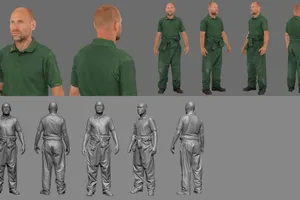
The realism of tools and hands in AIGC commercials depends heavily on the completeness of pre-production assets. Brands cannot simply provide flat product renders or website links; they must supply high-precision 3D assets or multi-angle physical scans to the production team. If the product is not yet mass-produced, full-scale prototypes must be provided for on-set data capture. Asset lists should also include force analysis descriptions for various grip states, such as fingertip depression depth when pressing switches or wrist rotation angles when turning knobs. These non-visual details are critical prompts guiding AI's understanding of mechanical logic; their absence causes generated hand movements to appear floating or stiff.
Beyond product assets, brands must compile a reference video library of real human operations. Reference videos should capture transitional frames and micro-expressions during operation, not just final results. We recommend filming multiple operators with varying hand shapes, skin tones, and nail lengths to build a proprietary hand motion dataset. When submitting materials, simultaneously annotate which actions are prohibited by brand guidelines and which visual symbols competitors have already used. This negative list is as important as positive references, effectively preventing AI-generated content from violating brand taboos or becoming homogenized. All submitted reference materials must undergo copyright clearance to prevent commercialization failures due to training data infringement.
The Decisive Impact of Live-Action Capture on Generation Quality
Even when targeting generative imagery, live-action capture remains the cornerstone of credible hand interactions. When filming hand reference footage, camera crews must use lighting environments and focal lengths consistent with the final generated output. Light direction, color temperature, and highlight positions must be precisely recorded and passed to the post-production team as illumination constraints for AI generation. Conflicting lighting logic between live footage and generation targets creates visible compositing artifacts that color grading cannot fix. High-speed cameras should be used during shooting to capture rapid interaction moments, providing AI with sufficient motion blur and dynamic detail references to prevent physically implausible uniform motion in generated footage.
On-set execution requires dedicated movement directors or hand models. Ordinary actors often struggle to accurately simulate tool weight and resistance without physical props, resulting in generated hand poses lacking tension. Movement directors should design performance plans based on actual product parameters and use weighted props on set to help actors find the right feel. For key interaction shots, we recommend a dual-track approach combining green screen keying with live-location shooting. Green screen footage extracts clean hand masks and motion trajectories, while location footage validates lighting matching. Although this redundant capture strategy increases upfront costs, it significantly reduces rework risks caused by unusable footage in post-production. All live-action footage must undergo technical QC on the same day, confirming focus, exposure, and motion trajectories meet AI processing requirements before wrapping.
Controlling Interaction Consistency in Post-Generation Workflows
Upon entering AIGC production, teams must establish strict process inspection mechanisms. Relying on random single-generation results is insufficient; workflows should combine layered generation with ControlNet constraints. First, extract skeletal points and depth maps from live footage to lock basic hand structure and spatial positioning, then generate textures and details within this framework. For tools, use 3D render sequences as strong constraint base layers, letting AI handle only material blending and environmental reflections; never allow AI to hallucinate tool geometry. Every generated frame must be overlaid against original references for inspection, focusing on finger joint continuity, tool edge stability, and shadow variations at contact surfaces.
Temporal consistency is harder to control than single-frame quality. Teams must establish dedicated temporal coherence checkpoints, reviewing generated clips repeatedly at normal playback speed. Common temporal issues include tool flickering, sudden finger count changes, and grip point sliding. Address these by prioritizing control parameter adjustments or seed value changes rather than attempting post-production fixes. If a segment fails coherence requirements after multiple consecutive generations, trigger a circuit breaker immediately, reverting to live-action solutions or traditional CGI. All intermediate versions, prompt logs, and parameter configurations generated during post-production must be archived as both a basis for review optimization and reusable knowledge assets for future similar projects.
Specific Acceptance Metrics and Rejection Standards for Delivery
Acceptance of AIGC commercials cannot rely solely on subjective aesthetics; quantitative inspections must follow the interaction precision grading table established during project initiation. For high-precision shots, acceptance criteria should include zero pixel-level clipping at hand-tool contact surfaces, geometrically consistent tool forms throughout the video, and biomechanically accurate hand movements. Professional monitoring equipment should be used for frame-by-frame review at final delivery resolution; any obvious defect persisting beyond three frames constitutes failure. Medium and low-precision shots may tolerate some detail blurring or simplification but must not contain counterintuitive errors like reversed joints or floating tools. Acceptance records should detail inspection results, issue descriptions, and revision notes for each shot as proof for settlement and final payment.
Beyond technical metrics, brand safety and compliance acceptance are required. Check whether generated content inadvertently includes competitor logos, sensitive symbols, or inappropriate gestures. Due to AI's uncontrollability, such risks are often hidden and random, requiring designated brand personnel for final review. Audio-visual synchronization is another easily overlooked acceptance point. Generative video often suffers from audio-visual desync due to frame rate fluctuations, requiring strict sync verification tests before master delivery. Issues found during acceptance should be distinguished as technical defects versus artistic disagreements. Technical defects must be fixed unconditionally by the production team, while artistic disagreements are negotiated based on contractually agreed revision limits. Projects failing acceptance must not enter the release pipeline to avoid public backlash or legal disputes caused by quality issues.
Applicable Boundaries for Hand Interaction Scenes in AIGC Commercials
Despite rapid AIGC iteration, clear applicable boundaries remain for hand-tool interactions. The following scenarios are currently not recommended as core deliverables for AIGC commercials: demonstrations with statutory operational standards like medical surgery or precision assembly; interactions requiring visibility of internal mechanical linkages or transparent materials; complex multi-person collaboration scenes with frequent hand occlusion; and cases where brands hold strict patents on tool appearance but cannot provide complete 3D assets. Forcing AI generation within these boundaries may cost more than traditional live action while carrying extremely high legal and reputational risks.
Boundary assessments should also consider audience cognitive habits. Trendy brands targeting Gen Z may embrace AI's surreal texture as a stylistic signature. However, for functional product videos targeting B2B decision-makers or older demographics, any unrealistic interaction detail may be interpreted as product defects or false advertising. Production teams have a responsibility to candidly inform brands of current technological limitations during planning and provide alternatives. When projects fall into ambiguous boundary zones, adopt A/B testing strategies: produce pilot samples for private traffic pools to gather feedback before deciding whether to expand AIGC usage. Technology selection should always serve commercial objectives rather than sacrificing communication effectiveness to showcase technology.
Practical Recommendations and Next Steps for Project Advancement
If your brand plans to try AIGC commercials involving hand interactions, start with technical validation on non-core product lines or internal training videos. Do not bet entirely on untested generative workflows for annual S-tier projects. The next step should be forming a joint evaluation team including brand representatives, directors, and AI technical directors to complete a minimal viable test of a typical interaction scene from asset preparation to sample acceptance. Use this test to calibrate mutual understanding of quality standards and determine actual timelines and cost structures. ONCE offers consulting services covering AIGC commercials, AI product videos, and brand AI video workflows to help you assess project feasibility and develop production plans aligned with commercial realities. Please fully understand the above inspection methods and applicable boundaries before officially launching your project.
If you are preparing an AIGC commercial project, first organize your brief, reference visuals, product or corporate assets, delivery platforms, and copyright scope, then visit ourAIGC Video Services Pageto translate abstract preferences into actionable production boundaries.