Defining Lighting References During the Green Screen TVC Project Initiation Phase
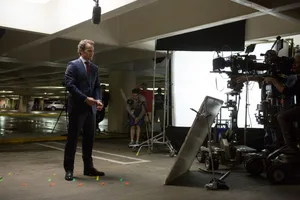
When launching a TVC project, preparing lighting references for green screen shooting is not simply about finding an attractive background image; the core task is establishing a physical match between the virtual environment and the foreground subject's lighting logic. Brands and marketing leads must provide visual references during the creative approval phase that specify light source direction, color temperature tendencies, and shadow texture, avoiding reliance solely on text descriptions or abstract concepts. If the lighting structure in reference materials cannot be replicated by real-world fixtures, or if undefined virtual assets result in missing lighting conditions, subsequent filming will face significant compositing continuity risks. Feasibility must be verified during project review, and the production team should respond with lighting tests or pre-visualization animations to ensure the creative concept has a viable foundation for execution.
- Action Standard, collect at least three sets of location photos taken at different times or under varying weather conditions as a lighting baseline, annotating key light position and ambient reflection intensity.
- Evaluation Criteria, verify whether rim lighting on subjects in reference images matches the background ambient light and whether highlight positions adhere to physical perspective rules.
- Potential Risks, using illustrations or pure CG renders as the sole lighting reference lacks authentic photographic optical characteristics, causing a disconnect between live-action footage and digital backgrounds.
- Delivery Consequences, failing to lock down lighting logic early will force extensive frame-by-frame edge refinement and color grading in post-production, potentially exceeding budget and delaying launch schedules.
Visual Assets and Confirmation Checklist Required from Brands
Green screen compositing quality in TVCs relies heavily on the completeness of pre-production materials; brands cannot assume production teams can infer product or scene lighting details without input. Beyond basic scripts and storyboards, brands must provide high-resolution multi-angle product photos, material texture files, and color space specifications for the final distribution platform. For projects involving specific brand colors or proprietary materials, Pantone codes or spectral reflectance data must be included to prevent green spill from compromising brand identity. All reference materials require version control, and any changes must be communicated in writing to production and post departments; verbal instructions should not serve as execution guidelines.
- Asset Specifications, product photo resolution must be no less than 4K with RAW format retained to ensure sufficient latitude for post-production lighting matching.
- Information Completeness, note lens focal length, aperture value, and lighting diagrams used during shooting to provide technical parameters for on-set replication.
- Exceptions, when products are confidential and physical samples cannot be provided, signed-off 3D models and material sphere render tests are required.
- Liability Definition, rework costs resulting from missing or incorrect reference materials shall be borne by the provider; production teams should explicitly include this clause in contracts.
On-Set Lighting Execution and Real-Time Monitoring Standards
Lighting setup in front of a green screen must ensure clean keying while also embedding necessary lighting data for post-production compositing. Cinematographers and gaffers must complete standardized gray card and color chart captures before filming and use HDRI panoramic cameras to record the complete on-set lighting environment for post use. A real-time compositing monitor system is essential for green screen TVC shoots; directors and client representatives should observe rough composite results with backgrounds directly on monitors rather than relying on imagination. If foreground subject brightness does not match the virtual background on set, lighting must be adjusted or background assets replaced immediately; continuing to shoot with the mindset of 'fixing it in post' is strictly prohibited, as correction options are extremely limited once the lighting ratio of green screen footage is fixed.
- Execution Actions, recapture on-set HDRI and shoot corresponding color charts whenever camera position or shot size changes.
- Technical Standards, maintain green screen illumination uniformity within ±0.5 stops and keep subjects at least 1.5 meters from the screen to minimize spill.
- Risk Warnings, highly reflective clothing or props easily produce green reflections; conduct advance testing and prepare polarizing filters or alternative materials.
- Acceptance Checkpoints, export all daily color charts and HDRI files before wrapping each day for on-site usability verification by the Post Supervisor.
Lighting Matching and Color Grading Workflow in Post-Production Compositing
Post-production compositing for TVCs is not simple layer stacking; physically based lighting reconstruction is critical to final image quality. Compositors should prioritize using on-set HDRI data to drive 3D lighting systems, ensuring virtual elements are lit identically to live-action footage. Color grading must occur after compositing to unify black/white levels, contrast curves, and saturation between foreground and background, paying special attention to residual color casts along green screen edges. For dynamic shots, track camera movement and update virtual light positions in real time to avoid unnatural shadow sliding or highlight drifting. All compositing parameters should remain adjustable to accommodate client feedback or platform adaptation requirements.
- Matching Principles, calibrate live-action footage using on-set color charts as a baseline, then adjust overall tone targeting reference images; subjective color grading without physical basis is prohibited.
- Detail Handling, manually draw specialized masks for hair strands, transparent objects, and motion blur areas; do not rely on one-click automatic keying plugins.
- Version Management, deliver both layered project files and flattened masters to facilitate future partial revisions or cross-platform cropping.
- Exception Handling, if source footage suffers severe overexposure or underexposure, notify the client promptly to negotiate remedial solutions rather than forcing fixes that degrade image quality.
Multi-Dimensional Acceptance System for Green Screen TVC Projects
Acceptance of green screen TVCs should not focus solely on the final output; the integrity of process assets is equally vital to long-term project value. Acceptance should cover two dimensions—technical compliance and artistic expression—requiring sign-off by the Post Supervisor and Creative Director respectively. Technical checks must verify keying edge cleanliness, lighting consistency, color accuracy, and file specifications against latest platform requirements; artistic evaluation assesses emotional conveyance, pacing, and alignment with brand tone. Each acceptance stage must be documented in writing as a basis for final payment and copyright transfer. Projects failing acceptance may not proceed to the next stage to prevent issue accumulation leading to delivery failure.
- Technical Acceptance ItemsAt 100% zoom in 4K resolution, there are no green edges, flickering, or jitter, and audio levels meet broadcast standards.
- Artistic Acceptance CriteriaKeyframe composition deviates less than 5% from approved storyboards, and performance emotions align with the script.
- Document DeliveryA complete package including lighting plots, color charts, project source files, and usage authorization.
- Dispute ResolutionSubjective aesthetic disputes shall be resolved based on reference images confirmed at project initiation, not personal preference.
Applicable Scope and Alternatives for Green Screen Production
Although widely used in TVCs, green screen is not suitable for every concept. When a project demands ultra-realistic natural lighting, performances relying heavily on environmental interaction, or lacks the budget for high-quality compositing, location shooting or LED virtual production may be better options. Green screen is particularly unsuitable for large bodies of water, complex vegetation, or fast-moving objects, where keying costs often exceed physical set construction. Marketing leads should communicate thoroughly with technical teams during planning to balance visual effects, schedules, and total costs, avoiding technical choices that compromise content quality.
- Unsuitable ScenariosDocumentary-style, children/pet-focused, or narrative ads dominated by outdoor natural light.
- AlternativesLED volumes provide real-time WYSIWYG lighting feedback, suitable for medium-complexity scenes like car interiors or indoor dialogue.
- Cost ThresholdRe-evaluate the necessity of green screen if estimated post-production hours exceed three times the live-action shoot days.
- Decision TimingFinalize technical comparisons before storyboard sign-off to avoid costly changes during pre-production.
Practical Recommendations and Next Steps for Project Advancement
Preparing green screen lighting references for TVCs requires deep collaboration between brands and production teams; its rigor directly impacts final credibility and efficiency. We recommend establishing shared asset libraries and regular alignment mechanisms early to translate vague creative intent into quantifiable, verifiable technical metrics. If you are planning a brand video involving virtual compositing, compile your existing visual assets and communication goals, then contact ONCE for a feasibility assessment and execution roadmap tailored to your needs. We offer end-to-end production services for TVCs, brand films, product videos, and AIGC content, helping you realize your creative vision within manageable parameters.
If you are preparing a TVC project, first organize your brief, reference imagery, product or corporate materials, delivery platforms, and licensing scope, then review theTVC Service Pageto ground discussions in executable production parameters rather than abstract preferences.