Project Assessment and Risk Mitigation for Faceless TVC Commercials
When launching a TVC commercial project, choosing a "faceless" approach as a core visual strategy is a business decision requiring strict validation. Brands must clarify during project initiation whether this strategy serves product demonstration, mitigates portrait rights risks, or enhances first-person immersion. Adopting this approach solely due to budget constraints preventing the hiring of professional actors often results in a cheap aesthetic and lack of emotional connection. The production team must assess before creative confirmation whether the product possesses sufficient visual distinctiveness to support faceless storytelling; if the product appearance is generic and relies on facial expressions to convey emotion, forcing a faceless approach will lead to communication failure.
- Applicability Verification Actions,Organize an internal screening session featuring three faceless competitor videos in the same category for a mute test, observing whether viewers can identify product selling points and usage scenarios within three seconds without dialogue.
- Preparation Checklist,The brand must provide complete industrial design drawings, documentation of core interaction mechanics, and text descriptions regarding "tactile feel" and "operational feedback" from past user reviews, as these are critical information sources replacing facial performance.
- Risk Warning,A faceless approach does not lower performance standards; conversely, it demands exceptional control from hand models or body actors. Failing to allocate time for physical casting early on often leads to stiff movements and continuity errors later, causing reshoot costs to skyrocket.
Script Structure and Storyboard Design Based on Product Interaction
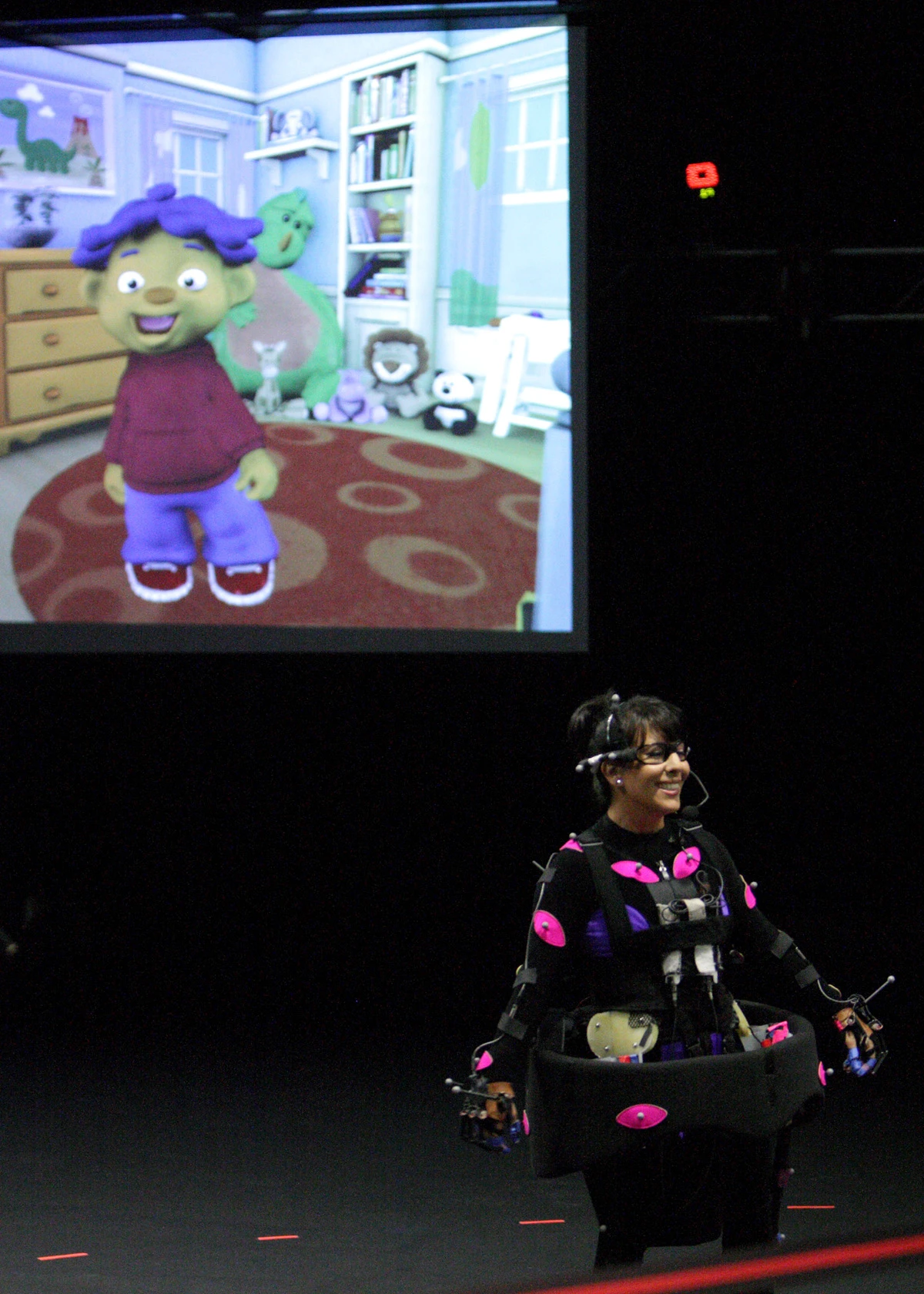
Scripts for faceless TVC commercials must reconstruct narrative logic, transforming traditional "pain point-solution" facial reaction shots into "action-feedback" physical interaction language. Storyboards should not merely note "hand close-up" but must specify finger pressure points, joint angles, and deformation details upon product contact. Drawing from visual construction in children's educational content, when adult faces and their social cues are removed, object trajectories and lighting changes assume full responsibility for guiding attention. Scriptwriting should break down product operation steps into independent visual units, ensuring clear dynamic transitions between shots to avoid sluggish pacing caused by static posing.
- Action Breakdown Standards,Translate each core selling point into at least three consecutive action frames; for example, demonstrating "lightweight" should not just involve holding the product but include one-handed tossing, fingertip spinning, and smoothly sliding it into a bag.
- Gaze Guidance Design,Annotate highlight and shadow movement paths in storyboards, using lighting changes instead of eye contact to direct viewer attention to key product areas.
- Exception Handling Mechanism,If complex functions require facial expressions for comprehension, decisively abandon the purely faceless concept during scripting in favor of partial obstruction or back-view storytelling; never sacrifice informational accuracy for stylistic consistency.
Physical Performance Casting and Hand Model Management
Faceless TVC commercials demand far more from body actors than standard shoots; hand models or body actors are not merely prop users but emotional vessels. Casting cannot rely solely on hand aesthetics; candidates must be tested on-site for stability and rhythm in manipulating the product. Many brands mistakenly believe post-production can fix shaking or replace hands, yet frame-by-frame retouching costs far exceed hiring professional hand models. Production teams should establish specialized physical performance testing protocols where candidates complete designated tasks under simulated lighting, focusing on movement consistency and muscle memory during repeated takes.
- Casting Test Actions,Require candidates to demonstrate the same action at fast, slow, and variable speeds, checking for clean nail edges, natural skin texture under strong light, and unrestricted joint mobility.
- On-Set Management Protocols,Dedicated hand care specialists and movement coaches must be present during filming to inspect hand condition every thirty minutes, promptly touching up makeup, removing shine, and adjusting nail care products to prevent indentations or redness from prolonged gripping that disrupts visual continuity.
- Delivery Consequence Warning,If improper casting causes hand movements to clash with product tone, audiences will subconsciously reject the content even with perfect color grading, directly undermining brand trust.
Execution Control for Cinematography, Lighting, and Micro-Textures
Without human faces, the visual focus of TVC commercials shifts entirely to material rendering and spatial relationships. Cinematography and lighting teams must adopt macro-level thinking for relighting; traditional three-point lighting often fails here because, lacking facial reflectors as reference, highlight transitions on product surfaces easily appear harsh. Cinematographers should customize lighting schemes based on material properties, as metals, glass, and fabrics respond vastly differently to light, necessitating specific lighting ratio charts during test shoots. Camera movement must strictly synchronize with product operation rhythms, as any minor shake becomes amplified visual noise in frames lacking facial anchors.
- Lighting Execution Standards,For highly reflective products, use large softboxes with negative fill to eliminate environmental reflections; for matte products, add rim lighting to separate the subject from the background and avoid flatness.
- Camera Movement Risk Control,All handheld shots must be balanced and calibrated on stabilizers; speed curves for zooms, pans, and tilts must be determined and recorded during pre-production rehearsals, strictly prohibiting on-set improvisation that causes editing discontinuities.
- Technical Exceptions,If internal structures or transparent materials cannot be captured via live action, plan CGI integration points in advance rather than attempting unconventional lighting penetration, which may cause optical distortion and mislead consumers.
Compensation Mechanisms in Post-Production and Sound Design
Post-production for faceless TVC commercials bears the heavy burden of compensating for emotional absence. Editing rhythm should not follow dialogue-driven pauses but build breathing room based on kinetic inertia. Sound design plays a structural role here, with ambient sounds, operational SFX, and musical rhythm forming an invisible "expression system." Post teams must embed temporary audio tracks during rough cuts to verify synchronization rather than waiting for picture lock. For AIGC or digital composite shots, strict asset review processes must ensure generated content matches live-action footage in lighting, perspective, and detail level to avoid artificiality disrupting overall realism.
- Editing Acceptance Criteria,Verify that every transition adheres to physical motion laws, prohibiting unmotivated VFX transitions; check for frame jumps or sudden speed changes at action cuts, utilizing optical flow interpolation only when necessary with manual artifact verification.
- Sound Design Specifications,Operational sound effects must be recorded on location or sourced from high-quality foley libraries; generic SFX packs are prohibited. Ambient noise floors must remain constant to prevent acoustic space jumping between shots.
- AIGC Usage Boundaries,AI-generated content is permitted only for non-core elements like background extensions or texture enhancement; the product itself and key interactions must be live-action or high-fidelity CG, with AI usage clearly marked in deliverables for copyright review.
Multi-Dimensional Acceptance Checklist and Deliverable Specifications
TVC commercial acceptance cannot rely solely on subjective feelings, especially in highly stylized faceless projects; an objective verification system is mandatory. Brands and production teams should define phased acceptance standards in contract appendices, establishing scripts, storyboards, dailies, fine cuts, color grading, and mixing as independent sign-off milestones. Deliverables at each stage must include self-inspection reports listing resolved issues and remaining risks. Final master delivery must include layered project files, SFX asset packs, and copyright certificates alongside the finished video to support future multi-platform adaptation and secondary creation.
- Storyboard Acceptance Standards,Verify that the action description in each storyboard frame corresponds one-to-one with the script's selling points; proceed to filming only after confirming there is no ambiguity, and retain all revision notes in writing.
- Key focus areas for rough cut acceptance:Focus on motion continuity and product accuracy; creative direction adjustments are not accepted at this stage, and only technical defects will be addressed.
- Final delivery checklist:Includes broadcast-quality master, web-compressed version, vertical crop, clean background version, split-track audio files, font license, music license, and talent likeness/body usage release forms.
Scope Identification and Project Stop-Loss Principles
Although faceless TV commercials offer significant advantages in specific scenarios, their applicability has clear boundaries. When a product's core value relies on interpersonal interaction, emotional resonance, or social identity, forcing this strategy will be counterproductive. For subjects such as conveying safety in maternal and infant products, delivering exclusive experiences in premium services, or fostering belonging in social products, faces are irreplaceable mediums of trust. Brands should honestly assess their product attributes during the briefing phase and promptly terminate the creative direction if the faceless concept conflicts with core objectives. The production team also has a responsibility to proactively issue warnings when execution difficulty exceeds reasonable limits, avoiding a forced progression that results in a final video lacking both faces and soul.
- Signals of Unsuitability:Test audience feedback commonly includes "unclear who is using it," "feels like an instruction manual," or "lacks warmth," and these issues persist after two rounds of optimization.
- Stop-Loss Triggers:Hand performance retakes exceed the preset threshold by three times, the gap between the physical product and expected effect is too large to be corrected by lighting, or post-production compositing costs exceed the budget by 50%.
- Alternative Plan Reserves:Prepare compromise solutions in advance, such as partial face, silhouette, or POV shots, to enable quick switching if the purely faceless approach is blocked, preventing project stagnation.
If you are planning a TV commercial project and considering a faceless or other non-traditional visual strategy, we recommend first mapping your product's core selling points to the target audience's actual perception path. ONCE provides end-to-end support from creative validation and filming execution to post-production delivery, covering brand videos, product videos, and campaign video production. When contacting us, please prepare preliminary communication goals, visual references, and existing product materials so we can accurately assess project feasibility and provide practical execution advice.
If you are preparing a TV commercial project, start by organizing your brief, visual references, product or corporate materials, delivery platforms, and licensing scope, then review theTV Commercial Services pageto translate abstract preferences into actionable production parameters.