Assessing the Necessity of Prop Narratives During Project Initiation
Before launching a TVC project, marketing leads must confirm whether prop transformations carry core messaging functions. If product selling points can be expressed directly through voiceover, subtitles, or acting, forcing prop deformation, disassembly, or state changes will only distract viewers. The criterion is whether the prop action replaces at least one key line of copy, and whether removing it breaks the narrative logic. For example, when a product's internal structure is the primary basis for trust, a transparent display is more effective than verbal promises; however, when the selling point is merely emotional resonance or lifestyle advocacy, complex prop mechanisms may become visual noise.
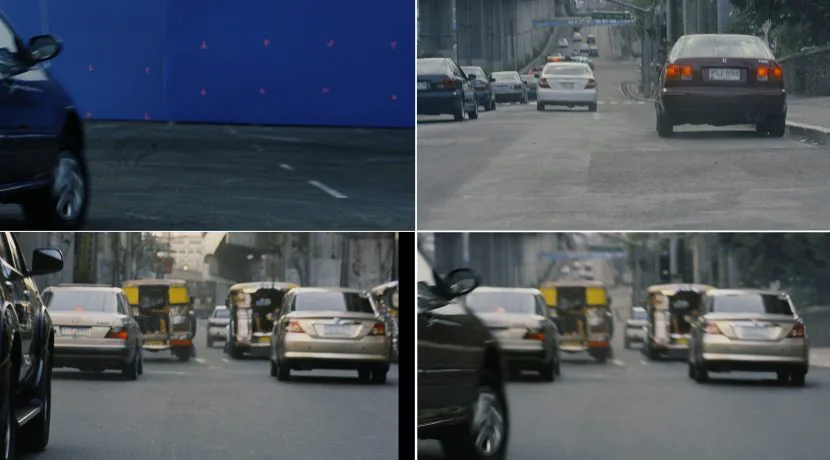
Brands must specify the information priority of prop transformations in the creative brief and provide physical products or high-precision 3D models for the production team to assess feasibility. Providing only concept art without engineering drawings or physical samples prevents the production team from predicting the authenticity of mechanical structures, material reflections, or motion trajectories, leading to continuity errors or pacing issues during filming. In such cases, the prop narrative plan should be paused in favor of safer visual expressions. An exception applies when the prop is the product itself, such as a smart hardware opening demonstration, which must be included in the core shooting plan.
Principles of Prop Action Design in Creative Development
During the script and storyboard phases, prop transformations must be broken down into executable shot language rather than remaining as vague descriptions like 'magical transformation.' Each prop action should correspond to specific camera angles, shot sizes, camera movements, and duration limits. For instance, rotating or unfolding actions require a visual buffer of over 0.8 seconds to avoid jarring cuts mid-motion. Additionally, the information weight of each action in the final film must be noted; high-weight actions should be presented in close-up or slow motion, while low-weight actions can serve as quick transition elements.
The production team must complete prop prototype testing before storyboard confirmation to verify motion fluidity, repeatability, and safety during actor interaction. If testing reveals that a single operation takes over three seconds or has a failure rate above 20%, the action should be simplified or replaced with post-production compositing. Brands often overlook interaction details between props and the environment, such as table reflections, hand occlusion, or cluttered backgrounds, all of which undermine the credibility of prop transformations. Therefore, storyboards must include environment relationship diagrams indicating lighting avoidance zones and cleaning requirements.
Key Control Points for On-Set Prop Execution
During on-set filming, prop transformations require dedicated monitoring involving coordination among the prop operator, camera assistant, and script supervisor. The operator ensures consistency across takes, the camera assistant maintains focus and framing despite prop displacement, and the script supervisor records start/end times, anomalies, and usable take markers for each attempt. Unrecorded improvisational adjustments can lead to insurmountable audio-visual sync issues in post-production. Multi-camera synchronized shooting is recommended for critical prop actions so that secondary angles can salvage the scene if the primary angle fails.
Lighting setups must account for the optical properties of prop materials in advance. Metal surfaces are prone to highlight blowouts, matte coatings may appear dirty under specific color temperatures, and transparent components require backlighting to define their contours. Cinematographers should test visual effects under various light angles with the prop master during the lighting setup phase rather than discovering issues during principal photography. If props contain electronic components or moving joints, adequate space for heat dissipation and maintenance access must be reserved to prevent overheating jams that could halt production for the day. All spare parts, toolkits, and contingency plans must be inventoried and placed within easy reach before filming begins.
Integrating Prop Narratives in Post-Production
During editing, prop actions should serve as rhythmic anchors rather than relying solely on musical beats. When practical footage exhibits slight shake or uneven speed, variable speed, frame skipping, or stabilizer adjustments can enhance the sense of force, but excessive smoothing must be avoided to preserve physical realism. If combining practical footage with CGI, compositing in-points and out-points must be determined during the rough cut to prevent perspective or lighting mismatches discovered after picture lock. Sound design is equally critical; friction, airflow, or mechanical engagement sounds from prop movement must be recorded separately or created via foley, rather than relying exclusively on generic sound libraries.
Color grading must ensure color consistency of props across different shots. The same prop may exhibit color shifts due to lighting changes or white balance drift, especially noticeable in cross-scene narratives. Colorists should create dedicated LUTs or secondary grading nodes specifically to correct prop colors, making this a delivery standard. If props involve brand colors, clients must confirm the tolerance range for Pantone codes within the video color space. Subtitles and graphic elements must not obscure key prop action areas; layout or motion timing should be adjusted if necessary.
Acceptance Checklist for Prop Narratives in TVCs
Acceptance should occur in stages rather than as a one-time evaluation upon final delivery. The script phase must confirm that prop actions accurately convey preset information points; the storyboard phase checks whether action breakdowns are filmable; on-set verification ensures action integrity and technical parameters for every usable take; the rough cut assesses narrative continuity and rhythmic fit; the fine cut confirms audio-visual sync and emotional tension; and final color and sound reviews focus on detail consistency and immersion. Acceptance feedback at each stage must be documented in writing and signed by both parties to avoid uncontrolled costs from repeated late-stage revisions.
Final acceptance should include spot-checking raw footage and project files alongside the finished film to confirm no hidden defects in prop-related shots. Checks should include verifying the absence of uncleared fingerprints, dust, or visible cables; ensuring CGI composite edges blend naturally; and confirming that brand logo placement and scale on props comply with VI standards. For projects requiring multi-version adaptation, test each platform specification individually to ensure prop actions are not cropped or distorted by compression. Source file delivery should include a prop usage guide to maintain visual consistency during future reuse or derivative works.
Applicable Boundaries and Risks of Prop Narrative Strategies
Not all TVCs are suitable for prop transformation narratives. When products are intangible services, abstract concepts, or highly standardized goods, forced visualization creates cognitive burden. Projects with tight budgets and compressed schedules should also exercise caution, as custom prop fabrication, testing, and reshoots far exceed standard production costs. Furthermore, if the target audience has low sensitivity to technical details or doubts authenticity (e.g., medical health products), overly intricate prop mechanisms may trigger associations of fakery, damaging brand trust.
Legal and compliance risks must not be overlooked. Props mimicking competitor designs, using unauthorized IP characters, or implying uncertified functions may constitute infringement or false advertising. Props involving children, food, or medical devices must meet industry safety standards, with compliance personnel present on set to supervise. Overseas campaigns require advance verification of local regulations regarding prop depiction, as certain cultures may associate specific colors, shapes, or actions with negative connotations. The best way to mitigate these risks is to involve legal and compliance review during project initiation rather than making reactive edits during final submission.
Recommended Next Steps
If you are preparing a TVC and considering prop narratives, first compile a list of core product selling points and existing visual assets to clarify which messages must be conveyed via props and which can use alternative methods. Then, hold a dedicated feasibility meeting with the production team to discuss prop prototype testing plans, on-set contingency protocols, and phased acceptance milestones. ONCE offers end-to-end support from creative development to delivery and acceptance, helping you transform prop transformations into precise, effective brand expression. Please refer to our website for service scope and contact us to discuss specific project needs.
If you are preparing a TVC project, start by organizing your brief, reference visuals, product or corporate materials, delivery platforms, and copyright scope, then reviewthe TVC Service Pageto translate abstract preferences into executable production parameters.