How to Evaluate the Optical Realism of AI-Composited Footage During Project Initiation
Before launching an AIGC commercial project, marketing directors must confirm whether generative imagery can accurately reproduce the product's inherent physical texture. Depth of field and motion blur are the core optical metrics for determining the commercial viability of AI video. If these two parameters feel disconnected from live-action footage or brand visual guidelines, viewers will instinctively distrust the content, thereby undermining the communication of product selling points. Project evaluation should not stop at stylistic reference images; optical matching must be translated into verifiable technical specifications.
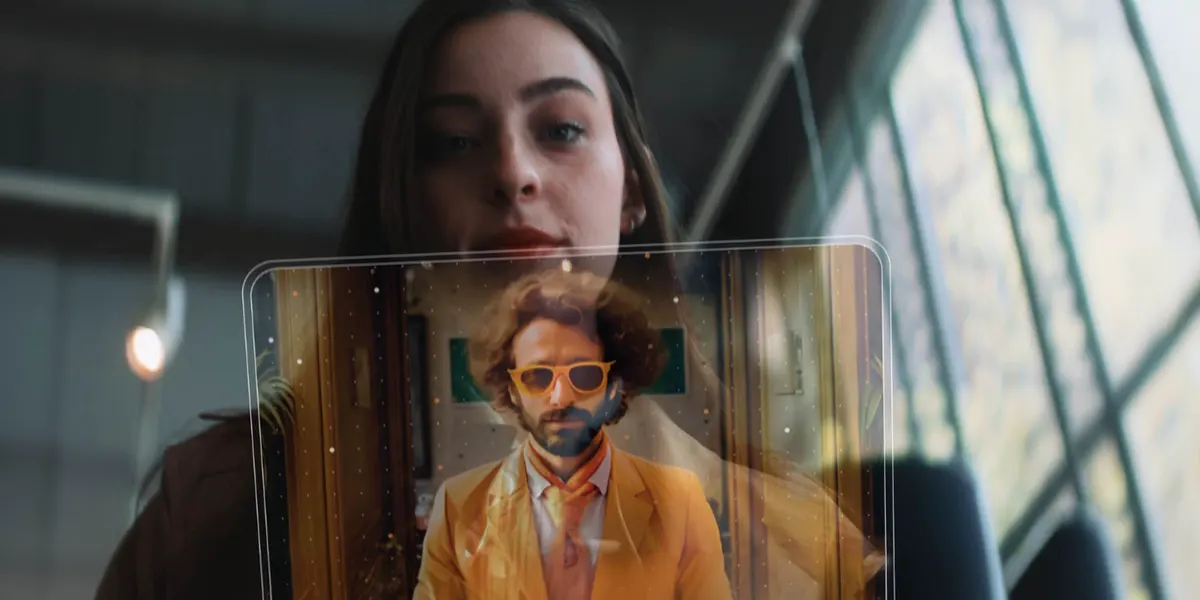
Brands must specify the product's focal plane position, the degree of background blur, and the expected speed for dynamic displays in their requirement documents. These descriptions should not rely on subjective terms like premium feel or cinematic look; instead, they should provide specific focal length ranges, aperture value references, or live-action samples from similar competitors as benchmarks. The production team will use this to determine whether current AI models support the required level of optical simulation accuracy. If existing tools cannot consistently deliver the required depth of field transitions or motion blur trajectories, the project should be shifted to pure CGI or traditional live-action production to avoid the trap of endless, unsuccessful revisions in post-production.
The decision-making risk at this stage lies in overestimating AI's understanding of complex optics. Some generative models produce artifacts or logical errors when handling transparent materials, reflective surfaces, or multi-layered depth of field. It is recommended to arrange a sample test before formal contracting, specifying shots that include product edges, motion trajectories, and background relationships for verification. The test results will directly determine the depth and breadth of AI involvement in the subsequent production process, and provide a factual basis for budget allocation and schedule planning.
Checklist of Optical Reference Materials to Be Prepared by the Brand
The optical consistency of AIGC commercials relies heavily on the reference information input during pre-production. The more specific the materials provided by the brand, the greater the controllability of post-production compositing. In addition to standard high-resolution product images, brand color values, and logo files, three types of optical-specific assets must be supplemented. The first is live-action reference of the product at different focal lengths, used to anchor the sharpness range and bokeh shape of AI-generated frames. The second is frame sequences or slow-motion video of the product in motion, used to define the direction, length, and decay curve of motion blur. The third is lighting probes or HDR maps of the scene environment, ensuring that AI-generated lighting and depth of field conform to real-world spatial logic.
If the brand lacks these professional assets, the production team should proactively intervene to capture them. Use standard lenses to shoot static and dynamic samples of the product, record camera parameters, and retain RAW format files. These raw data will serve as a common baseline for post-production color grading and AI compositing. Never use generic materials downloaded from the internet as substitutes, as their optical characteristics often deviate from the brand's actual product, leading to an unfixable sense of incongruity in the final video.
A common oversight in the material preparation phase is ignoring the uniqueness of product materials. For example, mirrored stainless steel, frosted glass, or liquid contents respond to depth of field and motion blur very differently than ordinary objects. The brand must highlight such details in the material package and provide corresponding close-up material references. Upon receiving the materials, the production team should conduct a completeness check; any missing key optical information must be immediately recaptured or the creative direction renegotiated, rather than assuming AI can automatically infer the correct effect.
Optical Interfaces Reserved for AI Compositing During Shooting Execution
Even if the main subject is AI-generated, AIGC commercials typically still require live-action elements as a compositing base or frame of reference. The Director of Photography must preset technical interfaces for AI compositing during lighting and camera movement. Depth of field matching requires the focus position and aperture value of the live-action portion to maintain mathematical consistency with the AI-generated layer. On set, rangefinders or monitor aids should be used to accurately record the focus distance and depth of field scale for each shot, and this data must be simultaneously logged on the camera report for post-production use. Arbitrarily changing the aperture or focus without updating the records will result in double imaging or bokeh discontinuities when compositing the AI and live-action layers.
Motion blur matching relies on strict correspondence between shutter angle and frame rate. If planning to embed AI-generated products into live-action handheld shots, the camera must adopt the same shutter rules as the AI rendering settings. In high-speed motion scenes, shooting at high frame rates is recommended to retain more dynamic details, providing sufficient information for post-production AI frame interpolation or blur reconstruction. Lighting setups must also consider AI's sensitivity to light source direction, avoiding mixed color temperatures or non-standard lighting effects that are difficult for AI to parse; otherwise, the composited shadows and highlights will not blend naturally into the depth layers.
The execution risk in this phase lies in on-set personnel underestimating the error tolerance threshold for AI compositing. Traditional post-production can use masks or color grading to hide slight optical mismatches, but AI-generated content is more sensitive to input conditions. Any unrecorded parameter changes could force an entire segment to be reshot or regenerated. Therefore, a dedicated technical monitoring position must be established on set to verify the optical parameter log in real time and back up all metadata before wrapping each day. Exceptions apply only to purely AI-generated shots with no live-action elements, where on-set constraints can be relaxed, though optical standards must still be unified in post-production.
Parameter Calibration Process for Depth of Field and Dynamics in the Post-Production Compositing Phase
Once in post-production, the optical integration of AIGC commercials must follow a standardized calibration workflow. First, establish a project-level optical profile to unify the lens parameters, sensor sizes, and AI rendering settings of all live-action footage. Depth of field compositing should not rely on the AI model's default output; instead, manually control the focus transition curves via the depth channel. For critical areas like product edges, inspect frame by frame for blur bleed or missing details, applying rotational or radial blur tools for local corrections when necessary to ensure in-focus sharpness and out-of-focus softening comply with physical laws.
Motion blur calibration is even more precise. AI-generated motion often lacks the blur gradients caused by real-world inertia. Post-production artists must analyze the blur patterns in live-action references, extracting velocity vector maps as guide layers to overlay onto the AI footage. If the AI's original motion trails are too smooth, manually add micro-jitters or acceleration changes to enhance realism. During color grading, pay special attention to color consistency across depth layers, ensuring that chromatic aberration and contrast falloff at different focal planes sync with the live-action footage to prevent the overall spatial depth from being compromised by oversaturation or abnormal contrast in the AI layers.
The outcome of this workflow directly impacts the final production quality. Skipping parameter calibration can make the product appear to float or look plastic in the video, with defects amplified especially when played at 4K resolution or higher. The production team should establish a dedicated optical quality control checkpoint during internal reviews, where supervisors with cinematography backgrounds verify depth of field continuity, motion blur direction and intensity, and the logical consistency of light and shadow. When systematic deviations are found, adjustments must trace back to the generation parameters or live-action source footage rather than merely patching issues at the compositing stage.
Tiered Acceptance Standards for Optical Effects in AIGC Commercials
When accepting AIGC commercials, marketing directors and production teams should discard subjective aesthetic judgments and adopt tiered, quantifiable standards to evaluate optical effects. Tier-one acceptance focuses on basic compliance, including whether the depth of field matches the script, whether motion blur shows obvious tearing or flickering, and whether product outlines remain intact in focus transition zones. Such issues are technical defects that must be fully resolved before delivery. Tier-two acceptance focuses on sensory harmony, evaluating the depth of field integration, dynamic rhythm matching, and material reflection realism between AI-generated layers and live-action elements under identical lighting conditions. Minor discrepancies are allowed at this level, provided they do not distract the audience from the product's core selling points.
Tier-three acceptance targets brand tone alignment, examining whether the optical language serves the communication goals. For instance, high-end skincare may require an extremely shallow depth of field to create a sense of intimacy, while industrial equipment needs a deep depth of field to emphasize structural precision. During acceptance, compare the footage against the previously established optical benchmarks and competitor references to confirm that the AI-composited shots meet expectations in emotional delivery and information density. All acceptance feedback must be logged by shot number and categorized as mandatory revisions, suggested optimizations, or acceptable deviations to prevent vague feedback from causing rework loops.
A potential risk in the acceptance phase is misidentifying AI-specific generation artifacts as artistic style. Phenomena such as unnatural bokeh shapes or motion trails that violate physical laws must be treated as non-compliant unless the creative script explicitly designates them as visual symbols. In addition to the final master, deliverables must include an optical parameter report and source project files to facilitate quick adjustments during future iterations or cross-platform adaptations. If systematic optical issues are found during acceptance and cannot be fixed within the agreed timeframe, the downgrade delivery or compensation mechanisms stipulated in the contract should be triggered rather than waiting indefinitely for a perfect result.
Typical Scenarios Where AI Optical Synthesis Is Not Applicable
Although AIGC commercials offer advantages in efficiency and creative expansion, not all product videos are suitable for AI optical synthesis. When a product features extremely complex optical properties, such as multi-refractive gemstones, dynamic liquid splashes, or high-precision mechanical linkages, current AI models struggle to ensure that the depth of field and motion blur in every frame remain physically accurate. Forcing AI synthesis on such projects can lead to extensive post-production patching, ultimately extending the schedule and increasing costs. It is recommended to revert to traditional CGI or high-speed live-action solutions to ensure baseline quality.
Another unsuitable scenario is product presentation in heavily regulated industries. Medical devices, pharmaceuticals, and safety-certified products have statutory requirements for visual accuracy, and any AI-generated optical distortion could be interpreted as false advertising. Even minor deviations in background blur can trigger compliance risks. Furthermore, when brand visual assets are not yet digitized or lack reliable optical benchmarks, AI synthesis lacks an anchor point, resulting in highly random outputs that are unsuitable for formal commercial delivery. In such cases, priority should be given to building a foundational asset library before considering the integration of an AIGC workflow.
Identifying these boundary conditions helps prevent mid-project failures or delivery disputes. Marketing leads should organize technical pre-reviews at the project's outset, inviting the production team to conduct feasibility diagnostics based on the physical product and creative drafts. If the AI-generated optical solution is deemed too risky, the technical approach should be adjusted promptly rather than forced forward. The AIGC commercial and AI product video services publicly listed on the ONCE website include such preliminary assessments, helping brands clarify applicability before committing resources and ensuring the chosen solution truly serves business objectives rather than mere technical experimentation.
Practical Next Steps for Advancing AIGC Product Video Projects
If you are evaluating whether an AIGC commercial suits your current brand project, it is advisable to first compile the product's optical baseline data and core communication objectives before engaging in targeted technical discussions with the production team. The focus should be on confirming whether the depth of field and motion blur matching solutions have a verifiable execution path, rather than relying solely on stylistic promises. ONCE provides comprehensive services covering corporate videos, brand videos, TV commercials, product videos, overseas marketing videos, social media short videos, and AIGC video production, and can assist in outlining optical requirements and acceptance criteria during the early stages. The next step should be submitting specific product information and creative direction to obtain a project suitability assessment based on actual conditions, rather than directly requesting a quote or a generic case study portfolio. This approach helps establish reasonable expectations before resource commitment, ensuring AIGC technology genuinely supports brand content rather than creating new uncertainties.
If you are preparing an AIGC commercial project, you can first compile the brief, reference visuals, product or company materials, delivery platforms, and copyright scope, and then review theAIGC video services pageto shift the conversation from abstract preferences to actionable production boundaries.