Chapter Logic and Project Assessment for Global Brand Videos
When preparing YouTube product videos for overseas markets, marketing leads must first determine whether the content is a pure functional demonstration or a brand narrative. The logic for structuring chapters differs fundamentally between these two content types. Functional demonstration videos typically use a linear structure, arranging segments according to the user operation sequence or pain-point resolution path to emphasize information density and clarity. Brand narrative videos lean toward cinematic expression, where chapter divisions serve the emotional arc and value delivery, allowing for non-linear editing and visual breathing room. During the project assessment phase, the video's position in the marketing funnel must be clearly defined, as this directly dictates the duration weight and information load of each segment during scriptwriting.

The criteria for determining whether a project is suitable for a complex chapter structure depend on the audience's baseline knowledge and viewing context. If the target audience is unfamiliar with the product category and viewing in fragmented mobile scenarios, excessive chapter transitions will increase the bounce rate, and the content should be simplified into a single-thread short video. If the audience has prior knowledge and is primarily conducting in-depth research on desktop, multi-chapter navigation can be implemented to support non-linear browsing. During the kickoff meeting, the production team must require the brand to provide clear audience profiles and channel placement data, and should not blindly apply high-specification chapter templates without this evidence.
The risk lies in directly applying domestic short-video pacing habits to overseas long-form video platforms. Audiences from different cultural backgrounds have varying tolerance thresholds for information density, and some viewers in European and American markets prefer a more measured buildup and complete logical progression over high-frequency visual stimulation. Project proposals should include completion rate analyses of competitor or benchmark videos as a reference, rather than setting the pace based solely on subjective intuition. If valid benchmark data is unavailable, it is recommended to produce test clips for small-scale validation, confirming the pacing model before rolling out full production.
Pre-Production Research and Core Selling Point Extraction
The brand must submit a structured product information package to the production team, rather than a scattered list of features. This package should include third-party validation reports for core technical specifications, statistical analysis of high-frequency keywords from authentic user feedback, and a compliance review checklist. For overseas projects, it must also specifically provide guidelines on cultural taboos in the target market and a localized language style guide. Based on these materials, the production team will extract three to five core selling points and rank them by importance. This ranking will serve as the direct basis for script chaptering, ensuring the most critical information appears during the period of peak audience attention.
The collection of visual references must be actionable. Visual references provided by the brand should not be limited to mood boards; they must also include specific camera movements, lighting styles, transition logic, and subtitle typography. The production team needs to technically break down these references, noting which effects can be achieved through live-action shooting, which require post-production VFX or AIGC assistance, and which need to be scaled back due to budget or schedule constraints. Unvalidated visual expectations are a primary cause of post-production rework, and both parties must reach a written consensus on the difficulty of visual execution before the script is finalized.
Exceptions involve intellectual property and portrait rights. When reference materials include copyrighted music, fonts, or specific artistic styles, the legal department must intervene early to assess infringement risks. The copyright environment for overseas videos is more complex, and certain materials commonly used domestically may face litigation abroad. If the core concept heavily relies on specific copyrighted elements that cannot be licensed, the plan must be adjusted promptly in the early stages to avoid forced takedowns or re-edits due to legal issues after completion. Complete authorization documents for all confirmed music, fonts, and stock assets must be retained for final verification.
Trade-off Principles for Script Structure and Storyboard Design
Chapter design during the scripting phase should follow the principles of front-loading the hook and progressive value delivery. The first five seconds of a YouTube video determine viewer retention, so the opening segment must immediately present the core suspense or strongest benefit, rather than a lengthy brand introduction. Subsequent chapters should be arranged in order of increasing cognitive load, first demonstrating intuitive usage effects before explaining the underlying technical principles. Natural transition anchors must be designed between each chapter, such as recurring visual motifs, guiding questions in the voiceover, or rhythmic changes in sound effects, to prevent viewer drop-off during segment transitions.
Storyboard design requires trade-offs between aesthetic pursuit and information delivery efficiency. For product videos, the primary task of the visuals is to accurately present details, with atmosphere creation being secondary. If a flashy shot obscures or misrepresents key product features, it must unconditionally yield to informational clarity. The production team should annotate the core information point of each shot in the storyboard script and self-check whether the visual alone allows non-native viewers to understand the intent. Visuals that rely excessively on voiceover explanation have an inherent disadvantage in overseas distribution, as many users watch with the sound off.
Risk control requires building in flexibility. Even after the script is finalized, unexpected situations such as location changes, poor actor performance, or product prototype iterations may arise. The storyboard should include backup plans, such as indoor alternative compositions when outdoor weather is uncontrollable, or CGI contingency plans when physical props are damaged. These alternatives do not need to match the refinement of the primary plan, but they must ensure the integrity of the narrative logic. Rigid execution without backup plans often leads to on-set downtime or forced splicing in post-production, severely compromising the coherence and professionalism of the final video.
On-Set Execution Standards and Footage Management
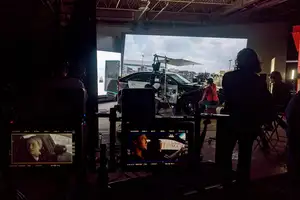
On-set shooting must strictly follow the storyboard while establishing a real-time monitoring and feedback mechanism. The director and brand representatives must immediately confirm whether each shot meets expectations upon completion, focusing on product texture, operational accuracy, and background compliance. Overseas videos often suffer from continuity errors due to overlooked local cultural details, such as gesture meanings, wardrobe choices, or environmental signage, which are extremely costly to fix in post-production. On-set confirmations should be documented in writing to serve as a basis for subsequent acceptance.
Asset management must follow international collaboration standards. All raw footage should be systematically named by scene, shot, and version, with proxy files generated simultaneously for remote review. Script supervisor logs must detail the technical parameters, performance notes, and director's evaluations for each take, specifically marking generic B-roll and transition shots usable across different sections. For shots requiring VFX compositing, HDRi environment maps and gray balls should be captured on set to ensure lighting matches between virtual elements and live-action footage. Disorganized asset management leads to inefficient post-production retrieval and may even result in missing key shots, forcing reshoots.
Audio capture quality is often underestimated. In product videos, operational sound effects, ambient noise, and dialogue all serve informational purposes. The on-set sound mixer should independently record clean product interaction sounds and ambient room tone rather than relying entirely on production audio. These isolated tracks provide greater flexibility during post-production mixing, especially when creating multilingual versions, where clean dialogue tracks and separated background audio are prerequisites for efficient dubbing. If the on-set acoustic environment is poor, a timely decision should be made to use Foley in post-production, avoiding the compromise of overall quality by forcing the use of subpar production audio.
Pacing Control and Multi-Version Adaptation in Post-Production Editing
Editors must focus on audio continuity when handling section transitions. Visual hard cuts paired with abrupt audio dropouts cause strong discomfort, so cross-section transitions should incorporate audio lead-ins or tail extensions. Color grading and VFX work should begin only after the rough cut is locked to prevent timeline shifts caused by visual adjustments. For product videos containing extensive text and graphics, motion graphics design must balance readability with aesthetics, ensuring text duration aligns with the reading speed habits of the target language, and involving native speakers for proofreading tests when necessary.
Multi-version adaptation is a standard requirement for overseas projects. Beyond the main long-form YouTube video, deliverables typically include vertical Shorts, social media teasers, and muted looping versions for trade shows. These versions focus on secondary creation tailored to each platform's specific characteristics. The vertical version requires restructuring the compositional focus and information hierarchy, the teaser must extract highlight moments and strengthen the call to action, and the muted version relies on subtitles and visual motion graphics to convey the narrative. The production team should plan asset reuse strategies for all versions at project kickoff to avoid redundant post-production work.
Anticipating delivery outcomes is crucial. If post-production reveals sluggish pacing in a section but reshoots are impossible, decisive remedial measures like jump cuts, speed ramping, or voiceover overlays should be applied rather than retaining dead air. For segments involving sensitive content, safe replacement versions should be prepared to mitigate platform review risks. All revision notes must be collected through standardized feedback tools to avoid misunderstandings from verbal communication. Every major adjustment during post-production should be evaluated for its impact on the delivery schedule and signed off by both party leads to prevent endless revision cycles from draining project resources.
Final Video Acceptance Checklist and Delivery Standards
Acceptance should be conducted in tiers rather than solely on the final video. Script and storyboard approvals constitute creative acceptance, focusing on verifying information accuracy and narrative logic. Rough cut acceptance centers on image quality, performance, and initial pacing, where structural adjustments can still be proposed. Fine cut acceptance focuses on detail refinement, including color consistency, audio sync, subtitle spelling, and formatting standards. Master delivery acceptance requires checking whether file encoding, bitrate, and color space meet platform technical requirements, and verifying the alignment of multilingual audio tracks with subtitle files. Each acceptance stage must have clear pass criteria and revision limits.
Archiving source and project files is an often-overlooked deliverable. The brand should explicitly require the production team to hand over organized project files, raw footage, licensing proofs, and font packages. These assets are irreplaceable for future version updates, multilingual adaptations, or legal dispute evidence. A completeness check must be performed before handover to ensure no missing links and plugin compatibility. If AIGC-generated assets are involved, the generation prompts and model versions must be separately documented for future reproduction or iteration. Projects lacking comprehensive archives become difficult to maintain after personnel changes.
Liability for acceptance failures must be determined based on previously confirmed documents. If the final video deviates from the signed storyboard or script, the production team is liable; if the brand introduces new requirements beyond the original scope during acceptance, it must be treated as a change request with reassessed timelines and costs. Clear boundaries of rights and responsibilities help maintain a healthy partnership. Disputed quality issues should be evaluated against industry-standard technical specifications or mutually agreed reference videos, not personal aesthetic preferences. Signing the acceptance report officially concludes the production phase and begins the warranty period.
Scope of Application and Recommended Next Steps
The chapter structuring methods described here primarily apply to brand globalization video projects with clear physical products or service vehicles. For purely abstract concept promotions, experimental art shorts, or viral videos heavily reliant on real-time trends, a standardized chapter structure may become a constraint. Additionally, if the project budget cannot support a basic multi-round acceptance process, or if the brand cannot provide necessary product materials and compliance guidelines, forcing a structured production will only amplify risks. In such cases, it is advisable to first resolve these missing prerequisites or pivot to a more lightweight content format.
Marketing leaders are advised to hold a cross-departmental alignment meeting before project kickoff, inviting product, legal, overseas operations, and production teams. The goal is to align on video objectives, confirm material preparation deadlines, and identify potential cultural or compliance risks. The meeting should produce a concise project charter to serve as the baseline for all subsequent decisions. If you are planning brand globalization videos, overseas commercials, or social media short-form content and seek professional production support and process management, visit the ONCE website to explore our services in corporate videos, TV commercials, and AIGC video production, where we will provide tailored communication and assistance based on your needs.
If you are preparing a brand globalization video project, start by organizing your brief, reference visuals, product or company materials, delivery platforms, and copyright scope, then review theOverseas Marketing Video Services pageto translate abstract preferences into actionable production boundaries.