How to Assess the Voice Communication Risks of Product Names During the Project Initiation Phase
Before launching a brand global expansion video project, marketing directors must stress-test the vocal acceptance of the product name in the target market. Many expanding brands habitually use domestic Pinyin or coined words as their overseas names, which easily causes cognitive disconnects on audio-driven, fast-paced platforms like TikTok. Project evaluation cannot rely solely on internal discussions; native speakers or localization consultants should be brought in for blind testing. Testing criteria include whether the syllable count aligns with local spoken habits, whether there are negative homophonic associations, and the accuracy rate of non-native speakers reading it aloud for the first time. If blind tests show that over 30% of respondents cannot pronounce it correctly or encounter ambiguity, a name optimization plan must be initiated before scriptwriting begins.
Risk assessment must also consider the characteristics of the video distribution channels. TikTok users typically browse feeds on mute, turning on sound at random. This means product name pronunciation must serve not only audibility but also visual comprehension. If the name is inherently complex to pronounce, visual aids such as animated phonetic symbols, close-ups of mouth movements, or associative memory visuals must be planned during project initiation. The production team needs to allocate time for this creative development in the quote and schedule to avoid rework caused by pronunciation issues later. For brands that have not yet finalized their overseas names, it is recommended to integrate voice testing into the naming decision process rather than forcing a fix during video production.
Specific Methods for Integrating Pronunciation Guidance into Scripts and Storyboards
When a product name presents a pronunciation barrier, scriptwriting should educate users rather than simply listing selling points. Writers must design natural pronunciation integration segments and avoid rigid, recitation-style teaching. Effective methods include using rhyming mnemonics to embed the product name in short phrases, correcting mispronunciations through character dialogue, or breaking the name down into concrete visual symbols. Storyboard design must align with these linguistic strategies by allocating sufficient screen time for key pronunciation moments. For example, the instant a difficult root word is spoken, the visual should simultaneously feature emphatic motion graphics or highlighted subtitles to ensure unified audiovisual cues.
The storyboard review phase must specifically check the pacing density of pronunciation guidance. The first three seconds of a TikTok short video determine the completion rate, and opening with lengthy pronunciation instruction easily triggers swiping away. It is recommended to place core selling points upfront and intersperse pronunciation guidance after emotional peaks or functional demonstrations. For multi-version deployment plans, scripts should mark which pronunciation segments are replaceable modules. If A/B testing reveals that a certain guidance method underperforms, the team can quickly switch to alternatives in post-production without reshooting. All dialogue involving pronunciation must undergo trial recordings with native voice actors during the storyboard phase to confirm that pacing, stress, and emotional tone match the platform's style before entering formal production.
Execution Standards for Ensuring Pronunciation Accuracy on Set
Even with a polished script, execution deviations on set can still ruin the pronunciation design. The director and dialect coach must conduct specialized pronunciation training for actors before filming and record standard reference audio for on-set playback comparison. For non-native actors, phonetic annotations alone are insufficient; slow, broken-down demonstrations and liaison technique guidance must be provided. The on-set sound mixer must wear monitoring headphones to check pronunciation details in real time, immediately halting and re-recording if vowel shifts or stress misplacements occur. Do not rely on post-production fixes, as ambient noise and subtle differences in performance emotion are difficult to perfectly restore technically.
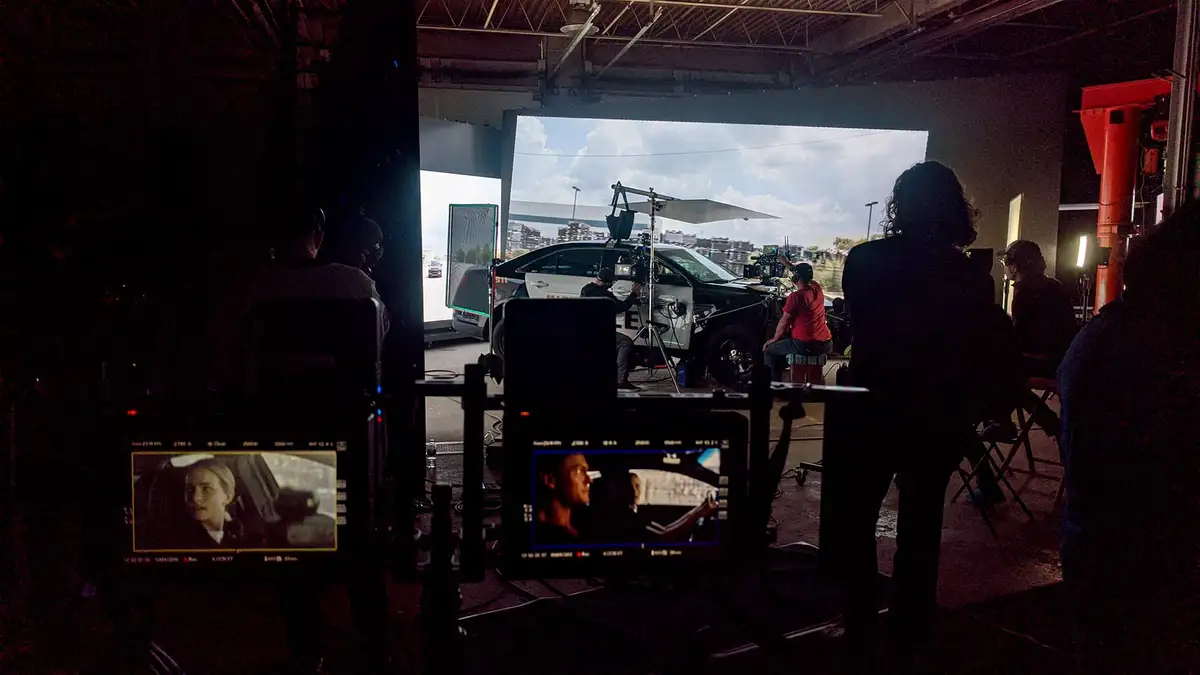
The lighting and camera departments must accommodate the visual needs of pronunciation guidance. If the script includes lip close-ups or mouth movement demonstrations, lighting should avoid casting distracting shadows on the face, and the lens focal length must ensure lip shapes are clearly distinguishable. When using teleprompters to assist actors, the prompt text must include IPA transcriptions or phonetic cues rather than just the original spelling. On-set monitors should display waveform or spectrum analysis tools to visually track whether vocal energy distribution matches design expectations. All pronunciation-related shots must be captured in multiple takes with varying speeds and emotions to leave adjustment room for post-production editing. Continuity reports must detail the pronunciation quality rating for each take to avoid redundant audio reviews during post-production selection.
Editing and Sound Strategies for Reinforcing Vocal Memory in Post-Production
When editing footage containing pronunciation guidance, the editor's primary task is to maintain rhythm rather than pursue flawless articulation. TikTok users have extremely low tolerance for mechanical instruction, so edit points should fall on natural breathing pauses or action transitions to blend pronunciation segments into the overall narrative flow. If the original footage still has pronunciation flaws, prioritize using sound effects or jump cuts to mask the defects rather than over-relying on AI voice replacement. While manual voiceover patching ensures accuracy, it easily loses the impact of a live performance and should only be used for key terminology or legal compliance requirements.
Sound design is an invisible tool for reinforcing pronunciation memory. A custom audio logo can be created for the product name and triggered simultaneously every time the name is mentioned, establishing a conditioned auditory anchor. Background music should be dynamically ducked in the vocal frequency range to ensure pronunciation clarity is not compromised. Subtitle styles must differentiate regular dialogue from pronunciation instruction, using larger fonts, contrasting colors, or dynamic pop-in effects for the latter. Multilingual subtitle versions must be proofread separately to avoid pronunciation misguidance caused by literal translation. Color grading also requires attention; if the frame contains text-based pronunciation cues, color grading must not reduce their readability. All audio and visual enhancement techniques should be tested during the rough cut phase to prevent detail loss from platform compression algorithms after final mastering.
Delivery and Acceptance Checklist for Pronunciation Handling in Global Brand Videos
The acceptance phase must go beyond subjective impressions and establish objective verification standards. First, native-speaking QA specialists must review the final video frame by frame to verify pronunciation accuracy, focusing on whether connected speech, reduced forms, and intonation align with local conversational habits. Second, cross-device playback testing must be conducted to verify pronunciation clarity and audio balance across different scenarios, such as smartphone speakers, headphones, and car audio systems. Third, subtitle synchronization must be verified to ensure that the in and out points of all pronunciation cue text strictly match the audio, with no delayed or premature disappearances. Fourth, copyright compliance must be confirmed, ensuring that all sound effects, fonts, and voiceover materials used have commercial licensing for overseas use.
In addition to the final video, deliverables should also include a pronunciation processing guide. This document must record all pronunciation guidance strategies used in the video, an index of backup materials, and notes on known limitations. If the project involves multi-region distribution, differentiated versions and corresponding localization adaptation notes must be provided for each region. When archiving source files, clean vocal tracks and subtitle-free video versions should be saved separately to facilitate future responses to platform rule changes or secondary creation needs. Before the final sign-off, the marketing team should organize a small-scale preview with target users and collect authentic feedback as the basis for final version approval. Any substandard pronunciation issues must be resolved before delivery to avoid damaging brand trust due to negative backlash after launch.
When Not to Force Complex Pronunciation in Short Videos
Not all product names are suitable for pronunciation tutorials in TikTok short videos. When a name exceeds four syllables and cannot be simplified, forced instruction will severely eat into the time needed to convey selling points; in such cases, a smarter approach is to use a nickname strategy or focus on visual symbols. If the target market has cultural taboos or sensitive associations with a specific pronunciation, continuing to emphasize the original name may trigger PR risks, and a localized alternative name should be adopted immediately. When the core goal of the video is immediate conversion rather than brand awareness building, complex pronunciation guidance will only lengthen the decision-making path, making it better to directly highlight price, features, or promotional information.
Technical limitations are also an important consideration. If the pronunciation quality of existing materials fails to meet basic usability standards and reshoot costs exceed the budget, it is better to adjust the communication strategy toward graphics or other formats rather than delivering subpar content that damages the brand image. Certain highly specialized B2B product names are inherently unsuitable for mass entertainment platforms, and forcing them into the TikTok context will only seem out of place. The key metric for deciding whether to abandon pronunciation processing is the return on investment; when the estimated production costs and time consumption are clearly disproportionate to the potential communication benefits, cutting losses promptly is the mark of professionalism. Brands need to understand that video is just one marketing tool, and not all communication tasks should be loaded onto this single medium.
Next Steps and Material Preparation Guidelines
If you are preparing an overseas brand video project, it is recommended to first compile the following basic materials for the production team's evaluation: the current overseas name and its registration status, target market user profiles and language preferences, competitors' pronunciation handling on similar platforms, an inventory of existing brand audio assets, and the core KPIs for this video. This information will help the production team quickly assess the necessity and feasibility of pronunciation processing. The ONCE website offers services covering corporate videos, brand videos, TV commercials, product videos, overseas marketing videos, social media short videos, and AIGC video production, and can assist in defining communication goals and delivery standards in the early stages.
Please remember that commercial video projects require clear definition of communication goals, target audience, core selling points, visual references, shooting conditions, delivery platforms, and copyright scope in the pre-production phase. Scripts, storyboards, shooting execution, editing, color grading, audio, subtitles, masters, and source files belong to different acceptance stages and should be documented separately. Specific clients, quotes, schedules, equipment performance, venue conditions, final video effects, and distribution data cannot be stated as confirmed facts without current project documentation. It is recommended that you use the evaluation framework provided in this article as a foundation, develop a customized plan based on your actual business situation, and fully communicate expectations and boundaries with the production team before project launch. Pragmatic preparation ensures final delivery quality far better than flashy promises.
If you are preparing an overseas brand video project, you can first compile your brief, visual references, product or company materials, delivery platforms, and copyright scope, and then view theOverseas Marketing Video Services page, translating communication from abstract preferences into actionable production boundaries.