How to define the visual correspondence between pain points and solutions during the project initiation phase.
Cross-border e-commerce product video production must complete an accurate visual translation of pain points and solutions in the early stages of project initiation, which determines the direction of all subsequent production resource investments. Brands cannot simply provide a text-based list of selling points, but must submit a visual reference document that includes specific usage scenarios, user emotional states, and product intervention timing. This document should clearly distinguish the visual tone of the "problem presentation" and "solution demonstration" phases, such as what lighting and composition are used in the problem phase to convey a sense of distress, and what camera movements are used in the solution phase to showcase a seamless experience. Without this upfront definition, the filming set can easily fall into an inefficient cycle of repeatedly adjusting performance intensity or lighting atmosphere.
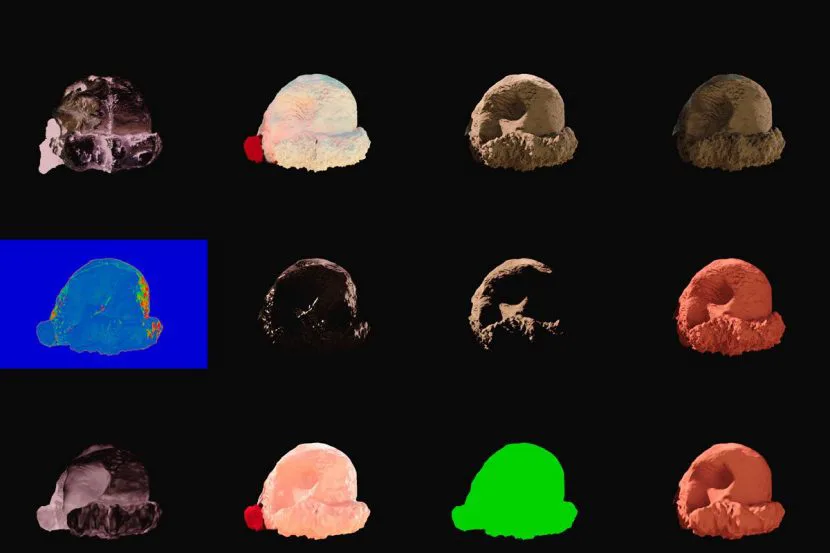
The production team must verify the feasibility of the visual plan before script confirmation. For demonstrations involving liquid flow, mechanical operation, or micro-texture changes, technical tests must be conducted in advance rather than relying on post-production fixes. Testing includes whether props support multiple repeated takes, whether product details are clearly visible in close-up shots, and whether the actor's operational movements can fully convey the functional logic within a limited frame rate. Unverified creative concepts should not enter the formal storyboard phase, otherwise it will lead to on-set downtime or deliverables that fail to meet platform review standards.
The project initiation document must also specify the scope of video copyright usage and platform adaptation requirements. Different platforms have varying content compliance standards for product demonstration videos, and certain markets prohibit exaggerated comparisons or specific types of pain expression acting. The brand is responsible for providing a summary of the latest content policies for the target market, and the production team must adjust the performance scale and editing pace accordingly. Ignoring this verification may result in the final video being removed or restricted, rendering all prior production investments invalid.
Shooting execution standards and risk control for the problem presentation segment
The core function of the problem demonstration segment is to allow the audience to recognize their own situation within three seconds, so shooting must enhance the authenticity and immersion of the context. Actor selection should avoid being overly model-like, and their physical features, clothing style, and body language must align with the target customer profile. Performance direction should focus on capturing natural reactions rather than dramatic exaggeration, such as subtle physical signs like the degree of frowning, hesitant hand movements, or breathing rhythm. The director must judge in real-time on the monitor whether the performance crosses the line between "genuine distress" and "deliberate misery," as the latter easily triggers audience aversion and platform content safety mechanisms.
Scene construction must serve the efficiency of problem recognition. Background elements should be simplified to retain only necessary environmental clues, avoiding cluttered items that distract attention. Lighting design can use slightly lower illumination or a cooler color temperature than standard commercial videos to imply discomfort, but the product outline and key operational areas must remain clearly distinguishable. Camera angles should use perspectives close to human eye level, paired with slight handheld shaking to enhance presence, but the shaking amplitude must be controlled within the comfort zone for mobile small-screen viewing. Any attempt to sacrifice information readability for artistic effects should be rejected.
A common risk in this segment is that overly generalized problem descriptions lead to audience misalignment. For example, if a cleaning product only shows ordinary dust, it may fail to resonate with core users facing stubborn stain issues. The solution is to collect high-frequency pain point keywords from real user feedback before shooting and translate them into concrete visual symbols. At the same time, backup performance plans must be prepared to allow quick switching if the main plan is blocked due to cultural differences or platform reviews. Shooting plans without reserved flexibility are extremely fragile when facing the uncertainties of cross-border content.
Camera language and information density management for solution demonstrations
Upon entering the product demonstration segment, the camera language must shift from emotion-oriented to function-oriented. Camera movements should remain steady and smooth, using fixed positions or constant-speed dolly tracks to convey reliability. Close-up shots must be precisely aimed at the key areas where the product takes effect, such as the brush contact surface, liquid penetration points, or button feedback locations. The duration of each functional demonstration shot must be calculated through rehearsal to ensure the audience can understand the operational steps without pausing. Editing that is too fast will weaken credibility, while a pace that is too slow will lead to an increased bounce rate.
Information density control is the technical challenge at this stage. A single shot should not carry more than one functional point, and complex processes should be broken down into multiple coherent short shots rather than piled up in long takes. Voiceovers or subtitle copy must be strictly synchronized with the on-screen actions to avoid audio-visual disconnection or text obscuring key operations. For abstract effects such as antibacterial properties or quick drying, visual aids like timecode overlays, thermal imaging simulations, or cross-section animations should be used, but all special effects must comply with platform requirements for authenticity labeling. Undeclared CGI compositing may be judged as false advertising.
The production team must establish a self-check mechanism for shot effectiveness. After completing each set of demonstration shots, they should immediately play it back to check whether the main product is always in the visual focus, whether the operational logic can be understood without additional explanation, and whether the image brightness and contrast remain recognizable in the strong light environment of mobile screens. Reshooting on the spot when problems are found is far more efficient than post-production fixes. If a certain function is indeed difficult to convey clearly through live-action shooting, forced demonstration should be decisively abandoned in favor of alternative formats like graphic cards or third-party certification logos to avoid the suspicion of misleading the audience.
Technical points for narrative transition from problem to solution in post-production
Editing is not just splicing footage, but reshaping the cognitive path. Transitions between problem and solution segments require clear visual anchors, such as state changes within identical compositions, action continuity through match cuts, or gradual shifts in color tone. Hard cuts to black or flash whites can create a sense of transition, but they easily disrupt the purchasing decision flow in e-commerce scenarios. It is recommended to use the product entering the frame as a transition opportunity, making the solution appear as a natural result of problem alleviation rather than an abrupt insertion. Transition duration should be dynamically adjusted based on product complexity; simple features can switch quickly, while products with a high learning curve require cognitive buffering time.
Color grading in such videos serves a dual purpose: maintaining brand visual consistency and enhancing narrative contrast. The problem segment can moderately reduce saturation or add grain, while the solution segment should restore a bright, clear commercial texture. However, the color difference between the two segments must not be too extreme to avoid a disjointed feel, and the final output must meet the platform's basic requirements for color accuracy. Sound design is equally important; ambient sound effects can appropriately emphasize interference in the problem segment, but should quickly recede into background white noise once the demonstration begins, ensuring voiceover clarity remains the priority. The musical emotional curve must strictly align with the visual rhythm to avoid misplaced climaxes that weaken persuasiveness.
The handling of subtitles and graphic elements directly impacts cross-cultural communication effectiveness. Multilingual versions should not simply replace text, but must re-evaluate layout positioning to align with local reading habits. The display duration of key data or certification marks should meet the decoding needs of non-native viewers. All motion graphics must be exported as independent layers with alpha channels to facilitate rapid adjustments for different markets later. In addition to the final video, post-production deliverables should also include layered project files and a clean version without subtitles, leaving room for future asset reuse. Neglecting these details will significantly increase long-term operational costs.
Brand Asset Checklist and Collaboration Interface Standards
Efficient collaboration begins with complete assets. The brand must provide a legally reviewed product claim compliance list, specifying which terms are permitted, which expressions are prohibited, and the required supporting materials. Additionally, at least two sets of high-definition 3D product models or physical samples must be submitted: one for shooting wear and tear, and one as a baseline reference for post-production color grading and CGI. Raw user research data is more valuable than refined insights, including customer service records, return reason analyses, and screenshots of competitor negative reviews, all of which help the production team recreate the context of real pain points.
Visual references must be actionable rather than merely aesthetic. Recommended reference videos should include specific notes on what to borrow, such as "the hand close-up angle at 0:15" or "overall warm tone with shadow details preserved." Avoid sending multiple references with vastly different styles to prevent directional confusion. Regarding locations and props, if the brand specifies a special shooting environment or custom rig, its availability and technical parameters must be confirmed in advance. Schedule delays and cost increases caused by temporary changes to shooting conditions shall be borne by the party initiating the change.
Communication mechanisms must be clearly defined in the contract. It is recommended to establish a single point of contact system to avoid conflicting instructions from multiple departments. Key milestones, such as script finalization, rough cut approval, and fine cut feedback, should have a written sign-off process, and verbal opinions will not serve as a basis for revisions. Feedback must be specific to timestamps and revision requests, rejecting vague expressions like "it feels wrong." The brand's internal approval cycle should be factored into the project schedule, allowing reasonable buffer time for unexpected situations. Projects lacking a structured collaboration framework struggle to guarantee delivery quality, even with excellent creative concepts.
Tiered Checklist for Final Video Acceptance and Delivery Consequences
Acceptance work should be divided into three independent dimensions: technical, content, and commercial. Technical acceptance focuses on whether file format, resolution, bitrate, color space, and audio loudness comply with the platform's latest upload specifications, as any failure may result in automatic compression distortion or review rejection. Content acceptance focuses on narrative completeness and information accuracy, requiring frame-by-frame verification that product appearance, operational steps, and claim wording match the physical product and compliance list. Commercial acceptance verifies copyright authorization scope, portrait rights validity, and asset ownership clauses to ensure no legal risks for future distribution and secondary creation.
Each acceptance phase must generate a written record signed and confirmed by both parties. Technical issues should be resolved before delivery, content deviations dictate rework or exemption based on severity, and commercial flaws must be supplemented with proof before going live. If hidden defects are discovered after acceptance, liability is handled according to the contract. The brand may not reject a finished product that has passed objective standard inspections based on subjective aesthetic preferences, nor can the production team use industry conventions to evade delivery requirements explicitly written in the contract. Clear acceptance boundaries are the final line of defense against disputes.
In addition to the final video, deliverables should also include a project process asset package, raw footage, project files, font and music licensing certificates, actor portrait release forms, and version iteration records. These assets are crucial for future footage updates, multi-platform adaptation, and legal audits. Delivering without process assets places the brand in continuous risk. The production team has an obligation to organize and archive, and the brand has a responsibility to store them properly. The joint maintenance of asset integrity by both parties is the true mark of a complete project process.
Applicable boundaries and alternatives for the problem-to-solution demonstration model
Not all products are suitable for a linear problem-to-solution narrative. For highly homogenized basic consumer goods like tissues and batteries, user pain points are already entrenched, making repeated demonstrations redundant. In such cases, lifestyle placement or pure aesthetic display strategies are more appropriate. Luxury or emotion-driven products should also use this model with caution, as overemphasizing functionality may dilute the brand's perceived value. If B2B industrial products have a long decision-making chain and the user is separated from the purchaser, content must be produced separately for different roles, as a single demonstration video cannot cover the complete process needs from pre-sales to delivery.
When the product solution itself has a cognitive threshold or is controversial, forcing a simplified demonstration may trigger a trust crisis. For example, products involving chemical mechanisms or medical auxiliary functions should prioritize more credible formats such as expert testimonials, laboratory recordings, or user testimonials. If the target market has extremely strict regulations on advertising authenticity, the comparative techniques in problem demonstrations may cross the line, making positive value propositions or scene integration a safer alternative. The production team has a responsibility to issue model warnings based on professional experience, rather than unconditionally executing the client's initial vision.
Resource constraints are also an important consideration. High-quality problem-to-solution demonstrations have high requirements for actor performance, scene recreation, and post-production precision; forcing execution with insufficient budget or schedule will only produce mediocre or even negative content. In such cases, it can be downgraded to lightweight solutions such as static image-text combinations, UGC-style short videos, or AIGC-generated content. Honestly evaluating your own conditions is more important than blindly following popular templates. The ONCE official website publicly offers services covering cross-border e-commerce product videos, Amazon and Shopify product videos, and commercial ad content production, and can assist in evaluating model suitability and resource matching before project launch.
Next steps and expectation management
After completing the above preparations, it is recommended that the brand first select a core SKU for small-scale trial production to verify the actual conversion effectiveness of the problem-to-solution demonstration in that category before a full rollout. During the trial phase, focus on user dwell time, click-through rates, and the frequency of mentions regarding the demonstration content in the comment section, rather than simply pursuing view counts. When data performance is poor, it is necessary to trace back and analyze whether the pain point was missed, the demonstration was unclear, or the model itself was inapplicable, avoiding attribution errors that lead to subsequent strategy deviations.
Expectations for production results should remain rational. Product videos are a link in the conversion process, not a panacea, and their effectiveness depends on the coordination of multiple factors such as listing optimization, pricing strategy, review management, and traffic acquisition. Even if the video is well-produced, it will be difficult to meet expectations if there are shortcomings in other areas. Conversely, a product with a solid foundation may still achieve natural growth through word-of-mouth even if the video performance is mediocre. Viewing the video as part of a systematic project is the only way to avoid misjudging the return on investment.
If you are preparing a product video shooting project, you can first organize the brief, reference visuals, product or company materials, delivery platforms, and copyright scope, and then view theE-commerce product video service page, grounding communication from abstract preferences into actionable production boundaries.