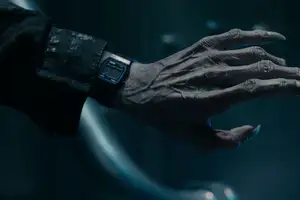
The Narrative Function and Project Approval of Hand Close-Ups in TVC Commercials
In TVC commercial production, hand close-ups are not mere visual decorations; their core function is to replace lengthy voiceovers to convey precise operational logic or product texture. When brands consider using such shots, they must first confirm whether the action carries irreplaceable informational value. If the operation can be shown in a wide shot without affecting comprehension, or if the product's selling points rely primarily on appearance rather than interactive experience, forcing hand close-ups will only increase production costs and slow the narrative pace. During the project approval stage, it is necessary to evaluate the match between the complexity of the operation and the audience's cognitive threshold. Only when the action details are directly linked to the conversion of core selling points is it necessary to include them in the script.
The standard for judging the effectiveness of hand close-ups lies in information delivery efficiency. If the audience needs to rewatch repeatedly to understand the operation steps, or if the close-up lacks causal connection with the preceding and following context, the design is invalid. The production team must provide animatics or detailed storyboards during the creative pitch stage to verify action continuity. For TVC commercials in categories such as precision instruments, beauty and skincare, or food cooking, hand close-ups are often key visual anchors for building trust. However, for brand image films emphasizing grand scenes or emotional resonance, excessive focus on details may weaken the overall momentum. Decision-makers should be wary of the misconception that equating "showing details" with a "premium feel"; all cinematic language must serve clear commercial communication goals.
Operational guidelines and visual reference materials required from the brand
To ensure the hand movements in the TVC are accurate, the brand cannot advance the project relying solely on verbal descriptions or written scripts, and must provide standardized operational SOP documents and physical references. The SOP document should include the start and end states of each key step, the direction of applied force, the contact area, and prohibited movements. For example, skincare application must specify whether to use the fingertips or the palm, and electronic product assembly must mark the safe areas where fingers can block the view. These details directly determine the execution efficiency on set and the compliance of the final video. If the product is in a confidential R&D stage and the actual device cannot be provided, a scale model or high-precision 3D render must be provided as a stand-in, and the dimensional and material reflectivity differences between the model and the mass-production version must be confirmed in writing.
The collection of visual reference materials should go beyond static images. It is recommended that the brand record first-person perspective operation videos for the directing team to break down, highlighting easily overlooked micro-movements that affect realism, such as the rebound feedback after pressing a button or the gravity trajectory of flowing liquids. At the same time, material samples of the product under different lighting conditions must be provided, as hand close-ups are extremely sensitive to light and shadow, and incorrect lighting can make plastic look cheap or metal lose its luster. All reference materials should be confirmed by all parties and signed off before shooting to avoid on-set temporary adjustments due to a feeling that something is wrong, which is usually the main cause of schedule delays and budget overruns.
Hand model selection criteria and key points for on-set execution
The requirements for hand models in TVC close-ups are much higher than those for regular actor casting. In addition to basic conditions such as even skin tone, neat nails, and smooth joint lines, the most critical factors are movement control and muscle memory. During the audition, candidates must be required to operate the product under simulated lighting to observe whether their movements are natural and relaxed, and whether there is any unconscious trembling or stiffness. For scenes that require a display of professionalism, priority should be given to non-professionals with relevant occupational backgrounds rather than professional hand models, because muscle reactions formed through long-term training are difficult to replicate through acting. If the product operation is high-risk or irreversible, professional technicians should be arranged as hand doubles, with seamless transitions achieved later through editing or digital restoration.
A strict monitoring mechanism must be established during on-set shooting. Because the depth of field in close-up shots is extremely shallow, a focus shift of just a few millimeters will result in a ruined take, so the director of photography and the focus puller should develop multiple backup plans, using high frame rate shooting when necessary to leave room for speed adjustments in post-production. Lighting setups must balance the three-dimensionality of the hand with the restoration of the product's texture, avoiding overly hard light sources that cause highlight blowouts on nails or skin. The props department needs to prepare ample backups of consumables and cleaning tools to prevent continuity errors from fingerprints, oil stains, or wear and tear. After completing each shot, the brand representative must confirm the standardization of the movement and the presentation of the product on the spot, and should never rely on post-production fixes. Flaws left unresolved on set will be infinitely magnified when output at 4K resolution or higher, becoming a fatal hidden danger during the delivery stage.
Coordination strategies for post-production editing rhythm and sound design
The persuasiveness of hand close-ups in TVCs comes not only from the visuals but also relies heavily on the precise coordination of editing rhythm and sound design. Editors must determine shot duration based on operational logic rather than purely aesthetic principles, giving key steps enough visual dwell time for the audience to digest the information, while transition movements can be appropriately compressed to maintain a sense of flow. When splicing multi-camera footage, attention must be paid to the consistency of the action axis to avoid spatial confusion caused by angle jumps. If there are minor flaws in the live-action footage, digital matte painting techniques can be used cautiously for restoration, but the upper limit of restoration must be agreed upon in advance, as over-reliance on post-processing will significantly increase costs and may lead to image distortion.
Sound design is the core means of enhancing the immersion of hand close-ups. Foley artists should customize exclusive sound effects based on the on-screen actions, such as the damping sound of a turning knob, the viscosity of pouring liquid, or the texture of fabric friction; these auditory details can compensate for insufficient visual information and stimulate the audience's sensory associations. Sound effect volume and timbre must undergo fine mixing to be clearly distinguishable without overpowering the voiceover or background music. When delivering versions for different platforms, attention must be paid to the attenuation of high-frequency details in mobile playback environments, appropriately enhancing the mid and low frequencies to ensure tactile feedback when viewing on small screens. The synchronization accuracy of sound and picture should reach the frame level, as any slight delay will destroy the authenticity and credibility of the operation.
Tiered acceptance checklist for hand close-ups in TVCs
Accepting hand close-up shots in TVC commercials should establish a tiered inspection mechanism to avoid generalized subjective evaluations. The first tier is factual accuracy verification, checking frame by frame against the brand's SOP documents to ensure operational steps, product orientation, and logo exposure comply with specifications; this is a veto item. The second tier is technical quality review, including focus clarity, exposure consistency, color reproduction, image stability, and audio synchronization accuracy, which must be completed by professional technicians in a standard monitor environment. The third tier is narrative effectiveness evaluation, inviting target audience samples who did not participate in the project to watch and testing whether they can correctly recount the operational process without voiceover assistance; if the misunderstanding rate exceeds the preset threshold, rework is required.
Acceptance records must be specific to timestamps and problem descriptions, refusing vague feedback such as "feels unnatural" or "not refined enough." Standards for acceptable minor flaws versus major defects requiring modification must be defined in advance; for example, slight noise in background blur is tolerable for social media distribution but unacceptable in a theatrical master. All revision requests should be submitted collectively after the first screening to avoid fragmented feedback causing version confusion. In addition to the final video, final deliverables should also include raw footage, project files, and operational annotation documents to facilitate the brand's subsequent secondary creation or regulatory review. The acceptance signature is deemed final confirmation of content compliance and technical quality, and any post-acceptance non-structural adjustments should be renegotiated as new requirements.
Applicable boundaries and risk warnings for hand close-up narratives
Although hand close-ups are highly expressive in specific scenarios, their application has clear boundaries. When product operation involves complex internal structures or abstract principles, relying solely on external hand movements cannot convey complete information, and the approach should shift to cross-section animation or CG demonstrations. For brand stories emphasizing interpersonal interaction or emotional connection, excessive use of partial close-ups will fragment character integrity and alienate the audience. Furthermore, cross-cultural communication projects require special attention to regional differences in gesture symbols, as actions indicating professionalism in a local context may be offensive in other markets, making cultural compliance review mandatory during the project initiation phase.
Production teams must also be vigilant about legal and safety risks. Operational demonstrations involving medical devices, pharmaceuticals, or children's products must strictly comply with advertising laws and relevant industry regulations, as any shot that simplifies or beautifies the actual usage process may constitute false advertising. If dangerous props such as high-temperature items, sharp objects, or chemical reagents are used during filming, professional safety measures must be equipped and corresponding insurance purchased; personnel safety must never be sacrificed for visual effects. When product iteration is fast, overly specific operational close-ups may cause the final video to become outdated quickly, so it is recommended to retain a certain degree of universality or modular replacement space at the creative level to extend the lifecycle of the TVC commercial.
Pragmatic preparation suggestions before project launch
If you are preparing a TVC commercial project featuring hand close-ups, it is recommended to prioritize organizing the core information hierarchy of product operations, distinguishing which details must be filmed live and which can be presented with alternative solutions. Compile a complete SOP document and visual reference package, and clarify acceptance standards and revision rights with the production team during the quoting phase. The ONCE website publicly offers services covering TVC commercials, brand commercials, product TVCs, and campaign video production, assisting brands in executing the entire process from creative breakdown to delivery and acceptance. Before officially launching, be sure to verify the latest platform specification requirements and copyright authorization scope to ensure all production decisions are based on currently valid project materials rather than past experiential assumptions.
If you are preparing a TVC commercial project, you can first organize the brief, reference visuals, product or corporate materials, delivery platforms, and copyright scope, and then view theTVC commercial service pageto ground communication from abstract preferences into executable production boundaries.