Project Approval and Risk Mitigation for Dialogue-Free TVCs
Before launching a dialogue-free TVC project, the brand must verify the purity of its communication goals. If the core selling points rely on complex parameter explanations, legal disclaimers, or abstract concept definitions, forcibly removing dialogue will lead to communication failure. During the project approval phase, it must be confirmed whether the product features possess intuitive physical feedback or emotional resonance points; this format is only viable when visual actions themselves can replace verbal explanations. Marketing directors should prepare a "visual conversion test sheet" listing all information points that must be conveyed, and evaluate one by one whether they can be understood by non-target audiences through a single shot or continuous action. Information points that fail the test must be replanned as supplementary graphics or a separate narrated video.
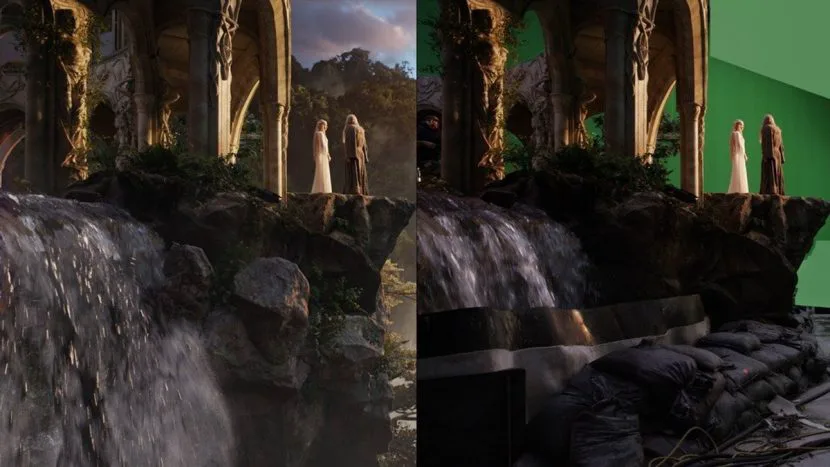
The budget and schedule structure will shift significantly in dialogue-free projects. Although dialogue recording and lip-syncing are eliminated, the precision requirements for art direction, actors' physical performances, lighting atmosphere, and post-production sound design increase substantially. The production team must clearly inform the client during the quoting phase that the costs saved on dialogue will be redirected toward refining visual details and sound engineering. If the client's budget only supports the production standards of a conventional dialogue-based TVC, it is recommended to retain a concise voiceover as a safety net to avoid compromising campaign effectiveness due to insufficient visual expression. The project approval document must note that this format has an extremely low tolerance for on-set errors, and any performance flaws or prop continuity issues cannot be covered up by post-production dubbing.
Construction of the Visual Narrative System and Storyboard Acceptance Standards
The script for a non-dialogue TVC commercial cannot be a dialogue script with deleted lines; it must be reconstructed into a visual manual centered on action. Writers and directors must translate every information point into specific object interactions, spatial blocking, or micro-expression changes. Storyboards in such projects serve a communication function at the level of legal validity, and every single frame must clearly indicate the start and end states of actions, line of sight, key prop positions, and emotional pacing. When reviewing storyboards, the brand should invite third-party personnel who did not participate in the planning to conduct blind tests; if they cannot accurately recount the core selling points without prompts, the storyboard has not yet met the standard.
The collection of reference images must focus on "action logic" rather than purely aesthetic styles. Visual materials in case studies are used solely to deconstruct shot transitions, how lighting guides attention, or object motion trajectories, and directly copying scene designs or character styling from specific IPs is strictly prohibited. The production team should establish an exclusive dynamic reference library, breaking down abstract concepts like "premium feel" or "tech feel" into executable focal length choices, camera movement speeds, and editing nodes. The storyboard acceptance phase must include an animatic, using temporary assets to splice together a complete timeline to verify whether the narrative pacing remains smooth without sound. Skipping the animatic and going straight to live-action shooting is the most common cause of losing control in non-dialogue projects.
Performance Control and Visual Redundancy Management on Set
Actor selection criteria undergo a fundamental shift in non-dialogue TVC commercials. Dialogue skills take a backseat, while physical control, layered micro-expressions, and instinctive reactions to props become core considerations. Auditions should feature mime or pure action tasks to observe whether actors can convey accurate emotions without verbal assistance. When directing on set, the director must avoid using adjectives to guide performances, switching instead to specific action commands or physical stimuli. For example, use "touch the cup wall with your finger, pause for two seconds, then pull back" instead of "show a feeling of cherishing." After every take, playback on the monitor must be immediately confirmed by non-core crew members for communication effectiveness, and alternative shots must be filmed immediately if any ambiguity is found.
Visual redundancy is a key strategy to ensure safety in post-production editing. Due to the lack of dialogue as a narrative anchor, an excessive amount of information in a single shot will lead to cognitive overload for the audience. The cinematography and art departments must collaborate to design multi-layered frames, ensuring the main action is clear while background elements provide environmental hints or emotional supplements without stealing focus. Every key action must be shot in at least three different shot sizes and angles to leave room for narrative restructuring in post-production. Lighting design must assume part of the narrative function, using changes in lighting ratios, color temperature shifts, or beam directions to imply the passage of time, psychological states, or product features. A dedicated continuity supervisor must be present on set to record prop positions, wardrobe details, and lighting parameters for every take, avoiding the disruption of the silent narrative's immersion due to visual inconsistencies.
Execution Standards for Sound Engineering as an Implicit Narrative Layer
Non-dialogue does not mean silent; in such TVC commercials, sound design assumes the pacing control and emotional guidance functions originally handled by dialogue. The sound team must be involved in the creation from the pre-production stage, rather than fixing things in post-production. Ambient sound, foley, music, and silent segments must be arranged as independent narrative elements. Foley artists should customize an exclusive sound effects library based on the storyboard, avoiding the use of generic assets that result in a cheap auditory texture. Sound effects for key actions must be exaggerated to compensate for the attenuation of visual impact, but over-rendering will destroy realism, requiring repeated calibration during the mixing stage. Music selection should avoid lyrical interference, prioritizing purely instrumental works with clear emotional arcs and rhythmic nodes, and the copyright licensing scope must cover all planned distribution platforms.
Sound acceptance must be conducted in a professional monitoring environment, as ordinary headphones or phone speakers cannot expose issues like low-frequency loss, phase cancellation, or dynamic range compression. Before delivering the master, multi-device listening tests must be conducted to ensure narrative integrity is maintained on small phone speakers, car audio systems, and cinema systems. Sound files should be delivered in layers, including the full mix, music-only version, sound-effects-only version, and separated track project files, reserving adjustment space for subsequent adaptation editing across different platforms. Brands often overlook the territorial and temporal limitations of sound copyrights, so the scope of use must be clearly stipulated in the contract to avoid infringement claims during overseas distribution or long-term use.
Pacing Calibration and Version Adaptation Strategies in Post-Production
Editing is a process of secondary creation for dialogue-free TVC commercials, not simply assembling footage. Editors must perform precision cuts based on the rhythmic framework established by the animatic, while maintaining sensitivity to unexpected highlights in the original footage. Due to the lack of dialogue as natural edit points, shot transitions must rely on action matching, eye-trace guidance, color transitions, or audio beats. Color grading in such projects goes beyond beautification, becoming a crucial tool for unifying visual language and enhancing emotion. Colorists should collaborate with the director to establish color narrative rules, such as using warm and cool contrasts to distinguish reality from memory, or using saturation gradients to imply a deepening product experience. All visual effects and CGI elements must serve narrative clarity; showy additions will only distract the audience from the core selling points.
Multi-version adaptation is the standard delivery practice for dialogue-free projects. The same TVC commercial must output differentiated durations and compositions for various channels, such as television, social media, and elevator screens. Vertical versions are absolutely not just cropped horizontal versions; the subject position and information density must be readjusted. Short video platform versions may require a faster pace or added text prompts to compensate for distractions in the mobile viewing environment. All modifications for derivative versions must trace back to the original high-resolution footage for re-export; secondary processing on low-bitrate files is prohibited. AIGC tools can be used to expand aspect ratios, generate transition frames, or fix continuity errors, but generated content must undergo manual review to ensure stylistic consistency and copyright compliance. Source file archiving should include prompt records and authorization credentials for all AI-generated assets.
Delivery Acceptance Checklist and Copyright Ownership Confirmation Points
The acceptance of dialogue-free TVC commercials should be split into independent stages for item-by-item sign-off to avoid rework after overall delivery. The acceptance focus in the script and storyboard stages is on information delivery accuracy and visual feasibility; the shooting stage acceptance focuses on performance quality, visual continuity, and footage completeness; the rough cut stage accepts narrative pacing and emotional tone; the fine cut stage accepts visual details, sound design, and multi-version adaptability; and the final acceptance stage verifies technical specifications, copyright documents, and deliverable completeness. Modification feedback for each stage must be recorded in writing, and verbal communication does not serve as an acceptance basis. The brand's internal decision-making process should align with production milestones to avoid overturning previously confirmed creative directions in the post-production stage.
Copyright ownership must be listed item by item in the contract, especially concerning music, fonts, stock footage, actor likenesses, and AIGC-generated content. Dialogue-free projects have a stronger reliance on audio and visual elements, and any rights defect in a single asset could lead to the entire film being taken down. Actor likeness authorization should clearly define the territory, medium, duration, and whether AI face-swapping or digital resurrection is permitted. Music licensing must distinguish between synchronization rights and mechanical reproduction rights, as streaming platforms usually require additional permissions. Deliverables, in addition to the final master, should also include split-track audio, textless versions, project files, and a complete rights proof document package. After receiving the deliverables, the brand should complete technical testing and legal review within the agreed objection period; overdue is deemed as default acceptance.
Applicable Boundaries of the Dialogue-Free Format and Alternative Solution Suggestions
Not all brand demands are suitable for dialogue-free TVC commercials. The following situations should be approached with caution or use a hybrid format: product usage instructions involve safety warnings or legally mandated disclosures; the brand story relies on specific historical backgrounds or cultural allusions; the target audience age group has low acceptance of pure visual storytelling; the placement environment has excessive noise or the screen size is too small, leading to a loss of visual details; or the project timeline is insufficient to support refined sound design and visual polishing. In these scenarios, consider retaining minimal voiceover, kinetic typography, or off-screen narration as assistance to maintain visual dominance while ensuring accurate information delivery.
When a brand is unsure whether to adopt a dialogue-free format, it is recommended to first produce a low-cost concept test video. Use existing footage or simple shooting to verify the communication efficiency of the core idea in a silent state before deciding whether to invest in full-scale production. The ONCE official website publicly covers services for TVC commercials, brand promotional videos, product videos, and AIGC video production, and can provide format adaptability assessments and visual conversion testing support for clients in the project hesitation period. Commercial video projects must clarify communication goals, audience profiles, core selling points, reference visuals, shooting conditions, delivery platforms, and copyright scope in the early stages, as the completeness of these basic materials directly determines the success or failure of the dialogue-free solution. If your company is preparing a TVC commercial project and wishes to explore the feasibility of a dialogue-free format, you can submit a project brief through the ONCE official website to get targeted advice.
If you are preparing a TVC commercial project, you can first organize the brief, reference visuals, product or company materials, delivery platforms, and copyright scope, and then view theTVC Commercial Service Page, grounding communication from abstract preferences into actionable production boundaries.