Publishing for both horizontal and vertical screens is about pre-production planning, not cropping.
TVC commercials are traditionally seen as horizontal productions, but today most brands require a vertical version within the same project for social media feeds, short-video platforms, or offline vertical ad placements. The problem is that if you simply crop the horizontal frame into vertical in post-production, characters' heads and product packaging can easily be cut off, and the visual center will shift. The truly viable approach is to treat horizontal and vertical as two separate composition systems from the project initiation stage, rather than viewing vertical as an accessory to horizontal.
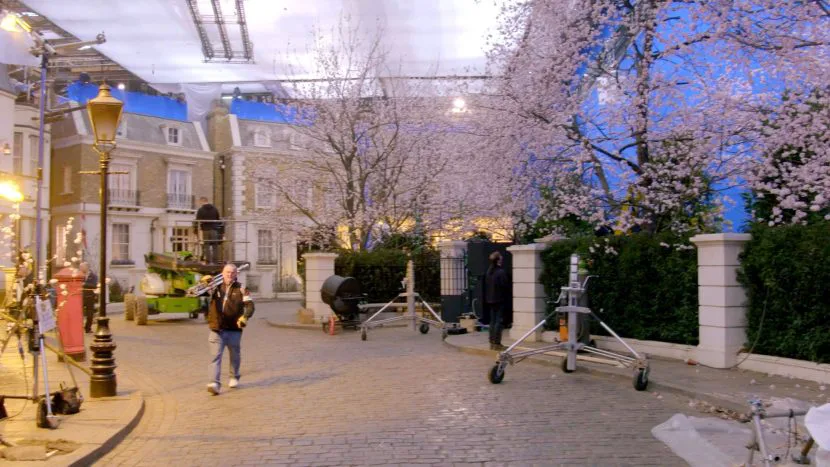
The first thing a brand needs to do is clarify each platform's placement and playback duration. Different platforms have different requirements for safe areas, subtitle placement, and regions obscured by interactive buttons, all of which affect how composition margin is reserved. After receiving the brief, the production team should produce a horizontal/vertical composition comparison chart, marking each shot's subject position, gaze direction, and negative space under both aspect ratios. This chart should be incorporated into the storyboard and serve as a reference on set, rather than being decided on the fly in post-production.
If the project budget is limited and dual-camera coverage for every shot is not possible, then at least for key shots—such as product close-ups, faces, and brand logo appearances—use looser framing so the subject takes up less of the frame than in a standard horizontal composition. This way, when cropping to vertical in post, the subject remains within the safe area. The rule of thumb is that on a horizontal monitor, there should be blank space on each side of the subject equal to at least half the subject’s width before there is enough cropping margin.
A common risk is that the crew, aiming for a cinematic feel, places the subject near the edge of the frame and uses negative space to create tension. This composition works well in horizontal format, but after cropping to vertical, the subject may be cut off entirely. Therefore, mark the vertical safe frame for each shot during the storyboard stage, and display both horizontal and vertical guide lines on the monitor during shooting. If on-set conditions do not allow this, at least clarify in discussions between the director and director of photography which shots must preserve a safe area for both aspect ratios and which shots can accept reframing in post.
The exception is when a project is only being delivered to horizontal platforms, or the vertical version is only supplementary material to the horizontal version and does not carry full narrative weight. In that case, you do not need to reserve excessive margin for vertical, and can focus energy on the visual impact of the horizontal version. However, this situation must be clearly stated in the contract or project brief to avoid disputes during final review.
Composition parameters and deliverables to confirm during project initiation.
At the kickoff meeting for a TVC commercial project, the brand and production team should jointly confirm a set of composition parameters that directly affect every subsequent stage. First is the aspect ratio: horizontal usually uses 16:9, and vertical uses 9:16 or 4:5, with the platform’s latest official requirements taking precedence. Second is the safe area range, including title safe area, action safe area, and subtitle safe area; these values differ for horizontal and vertical format and must be marked separately.
Materials the brand side needs to prepare include screenshots of each platform's publishing specifications, frame grabs of horizontal and vertical versions from competitor or reference videos, horizontal and vertical logo files, and product packaging dimensions plus key information positions. These materials help the production team understand which elements must remain fully visible in every aspect ratio. Deliverables the production team needs to output include a horizontal/vertical framing comparison chart, a vertical safe-area reference image for each scene, and a post-production cropping plan explanation.
One easily overlooked detail is that vertical-version subtitles and graphics packages cannot directly reuse horizontal templates. Horizontal subtitles are usually placed at the bottom of the frame, while vertical subtitles may be placed in the lower-middle or on the side, and font size and leading need adjustment. Therefore, adaptation rules for subtitles and packaging must be set during the project initiation stage, such as whether covering the subject is allowed, and whether scaling or reflowing is permitted. Otherwise, post-production will require repeated revisions, increasing time and cost.
The standard for judging whether project planning is sufficient is whether the production team can use storyboards or diagrams to show the visual effect of both horizontal and vertical versions before shooting. If it can only be described verbally, it means the composition margin has not truly been designed. The brand should require the production team to provide dual-aspect previs images for at least three key shots as a basis for project review.
The risk is that some production teams, in order to win the bid, will promise that both horizontal and vertical versions will be perfectly delivered, but during actual execution only guarantee horizontal quality. The brand needs to specify vertical-version acceptance criteria in the contract, including subject integrity, composition balance, and subtitle readability, and agree that if the vertical version fails to meet quality standards, the production team must revise or re-edit it free of charge.
How to use dual reference lines to control composition on set
On a TVC shoot, the director and DP must enable both horizontal and vertical framing guides on the monitor. This requires prepping a monitor with dual-aspect markings in advance, or using monitor software that supports custom safe areas. If the device doesn't support this, you can tape two vertical lines on the monitor to mark the vertical crop boundaries. But taping lines has limited accuracy and is better suited to low-budget projects; for brand TVCs, a professional monitor is recommended.
Before each shot, the DP should confirm the subject's position in both horizontal and vertical frames. If the subject is a person, make sure the eyes and mouth stay within the vertical safe area, because after vertical cropping, medium close-ups or head shots are common framings. If the subject is a product, ensure key information such as the logo, model number, and selling-copy text is not cropped out in vertical. At the same time, watch horizontal lines in the frame—such as the horizon or table edge—to make sure they remain straight after vertical cropping, avoiding a tilted feel.
During the shoot, lighting and set dressing must also account for the vertical crop. Decorative objects on the left and right of the horizontal frame may disappear entirely in vertical, affecting the image's visual layers. Therefore, place important elements in the upper-center area of the frame, which remains visible in both aspect ratios. At the same time, the key light direction should avoid creating unnatural shadows after vertical cropping—for example, a shadow on the right side of a face in horizontal may be cut in half when cropped to vertical, causing uneven facial lighting.
A practical step is to immediately capture a monitor grab or a phone photo of the screen after each shot, generating horizontal and vertical still frames to check composition on set. If the subject looks too small or off-center in the vertical version, adjust the camera position or lens focal length and reshoot. This adds some shooting time, but prevents rework in post. It's recommended to budget about half an hour per day in the shooting schedule for these checks.
An exception is when a project uses a one-take or complex moving shot; dual-aspect safe frames may be hard to satisfy simultaneously. In this case, prioritize narrative integrity in the horizontal version; the vertical version can accept a certain amount of cropping, which should be compensated in post with motion tracking or reframing. If the movement is too extreme, the vertical version may be unusable. This scenario needs to be discussed with the brand early on to clarify how the vertical version will be delivered—for example, whether a cropped enlargement of horizontal footage is allowed.
How to create both versions non-destructively in post-production
In post-production for TVC commercials, horizontal and vertical versions should be based on the same set of original source materials, not edited separately. This ensures consistency in color, sound, and editing rhythm. In editing software, it is recommended to use nested sequences or smart objects, making the horizontal sequence the master sequence, and reusing the master sequence's footage in the vertical sequence through scaling and panning. This way, when the horizontal version is modified, the vertical version updates automatically, reducing duplicated effort.
However, note that automatic linking does not mean the vertical version's composition will be automatically optimized. The vertical version requires manually adjusting each shot's position and scale, usually done in the editing software's motion properties. The key principle is to keep the scale value as small as possible to avoid image quality loss. If the original footage is 4K or higher, cropping to vertical can still maintain sufficient clarity. If the original footage is 1080p, cropping to vertical may leave only about 720p of effective pixels, so this needs to be evaluated in advance.
During color grading, horizontal and vertical versions should use the same color grading nodes and LUTs, though minor adjustments may be needed. Because after cropping the vertical frame, the subject's brightness distribution may change; for example, highlight areas originally at the frame's edge may be cut off, making the subject's exposure feel different. The colorist needs to compare both versions to ensure the appearance of skin tones and product colors remains consistent. It is recommended to open horizontal and vertical previews simultaneously in the color grading software and adjust in real time.
For audio, horizontal and vertical versions use the same audio track, but note that when the vertical version is played back on a phone's speaker, low and high frequencies may perform differently than in the horizontal version. If the vertical version is intended for social media, it is recommended to standardize loudness during the master output to meet platform requirements. Subtitles and graphic packaging should be produced separately for the vertical version; horizontal subtitles cannot simply be scaled down, because their width would exceed the vertical safe area.
A common post-production mistake is to save time by simply cropping the horizontal sequence, which causes the vertical version to jump or the subject to shift unstably. The correct approach is to set keyframes for each shot individually, ensuring the subject always stays in the visual center of the vertical frame. If the shot moves—such as a pan or follow shot—you need to dynamically adjust scale and position, which requires frame-by-frame checking.
At delivery, output separate master files for horizontal and vertical versions, and keep the project source files, including editing sequences, color-grading versions, and subtitle files. This way, if a platform requires spec changes later, you can modify them quickly. When the brand reviews the deliverables, it should check that both versions match in color, sound, and editing rhythm, and that the vertical version shows no obvious image-quality loss or composition issues.
The acceptance checklist should cover picture, sound, and version management.
When accepting a TVC commercial project, do not only look at the final playback; verify the completeness of the horizontal and vertical versions item by item. Picture acceptance includes whether the subject is within the safe area, whether product information is complete, whether cropping has caused missing parts of the frame, and whether scaling has produced blur or jaggies. Sound acceptance includes whether dialogue and music are clear, whether loudness meets the standard, and whether there are pops or noise. Version-management acceptance includes whether all required formats and resolutions were provided, whether subtitle files are included, and whether source files are fully archived.
Specifically, the brand should prepare a checklist and check off each item. The checklist should include screenshots of every shot in both horizontal and vertical versions, comparing subject position and size. Check whether the vertical version contains elements unique to the horizontal frame—for example, decorative objects on either side of the frame—and whether cropping them affects the narrative. Check whether subtitles are within the safe area and do not block key information. Check whether colors are consistent, especially brand and product colors, with no deviation.
A practical acceptance method is to play both versions on a phone and a computer to simulate real viewing environments. When playing the vertical version on a phone, check whether the image fills the screen, whether there are black bars, and whether subtitles are readable. When playing the horizontal version on a computer, check whether the image is clear and colors look natural. If any issues are found, record the specific timecode and problem description, and feed them back to the production team for revision.
During acceptance, also note that the durations of the horizontal and vertical versions may differ. Some brand clients may ask to shorten the vertical version to suit social media attention habits. If durations differ, confirm whether the editing rhythm is consistent and whether cuts cause narrative incoherence. If the vertical version is an edited cut of the horizontal version, clarify what content has been removed and whether it affects message delivery.
The risk is that some production teams only provide the horizontal version during acceptance, while the vertical version is simply cropped without optimization. Brand clients should firmly require the vertical version to meet the same quality standard; otherwise, it should not be approved. If the contract does not specify acceptance standards, a written confirmation can be added before acceptance to avoid later disputes.
Scenarios Where It Does Not Apply and Alternative Solutions
Not all TVC commercials need to preserve composition safe areas for horizontal and vertical versions. If a project is only distributed on horizontal media such as cinemas or television, and the vertical version is only for internal archiving or non-public use, there is no need to reserve safe areas for vertical; the composition can be designed entirely around horizontal aesthetics. Likewise, if the project is pure CGI or AIGC-generated content and visual elements can be freely controlled, both aspect ratios can be rendered directly without later cropping, so the issue of composition safe areas does not arise.
Another situation where it does not apply is when the project budget is extremely low and shooting equipment is limited, making it impossible to guarantee dual-aspect safety frames. In this case, AI reframing tools in post-production can be considered, but their results are unstable and may produce distortion or artifacts, making them unsuitable for brand TVCs. A more feasible alternative is to produce only the horizontal version and use a cropped enlargement of the horizontal footage for the vertical version, but the brand must accept image quality loss and compositional compromises.
Another situation is when the creative concept relies on extreme framing, such as strong symmetry or asymmetry, which is difficult to satisfy in both horizontal and vertical formats. In this case, priorities must be clarified. If vertical is the primary distribution channel, horizontal headroom can instead be reserved for vertical, meaning the shot is composed vertically during filming and later cropped to horizontal. However, this is uncommon because horizontal remains the mainstream format for brand TVCs.
If the project is a series of commercials with multiple TVCs, the framing strategy should remain consistent, and different safety standards should not be used for each spot. The brand should establish unified framing guidelines to ensure visual continuity across the series when switching between horizontal and vertical formats. If certain shots in the series require special handling, such as fast motion or large scenes, they should be marked in advance and corresponding solutions should be developed.
Next Steps
Before launching a TVC commercial project, brands should first map out their distribution matrix to clarify which platforms require vertical versions and which only need horizontal. Then communicate with the production team and ask them to present horizontal and vertical framing plans in the proposal, rather than only providing horizontal storyboards. If the production team cannot provide dual-aspect previsualization, choose carefully.
If a project has already entered post-production and the vertical version's composition is found to be poor, you can try reframing or motion tracking to fix it, but the results are limited. The most effective approach is to return to the production stage and reshoot the key shots. Therefore, it is recommended to reserve reshoot time in the production schedule, just in case.
Finally, regardless of project size, the acceptance criteria for horizontal and vertical versions should be clearly defined in the contract, including image quality, composition requirements, and subtitle standards. This can prevent post-production disputes and ensure the final video meets all delivery requirements. ONCE provides production services for TVC commercials, brand commercials, product TVCs, and campaign videos, and will confirm communication goals and delivery platforms with the brand at the early stage of the project, ensuring consistent quality standards for horizontal and vertical versions from project initiation to delivery.
If you are preparing a TVC commercial project, you can first organize the brief, reference visuals, product or company materials, delivery platforms, and copyright scope, then visit theTVC Advertising Service Page, turning communication from abstract preferences into executable production boundaries.