Logo placement is a key decision that must be addressed during the project initiation phase.
When preparing a TVC project, brands often treat logo placement as a minor post-production task, simply overlaying a standard logo after the picture lock. While acceptable for quick social media videos, this approach poses two direct risks in TVC commercials. First, mismatches between the logo and the scene's lighting, motion, or pacing make it look like a sticker, diminishing brand quality. Second, the logo's position and duration affect viewer attention on key selling points; without early planning, forced adjustments can compromise composition or narrative flow.

Therefore, brands and production teams must jointly answer three questions during project initiation. First, what function does the logo serve in the TVC: reinforcing memory, acting as a transition element, or serving as an end credit? Second, what is the emotional state of the scene when the logo appears: a climactic freeze-frame, a dynamic transition, or a quiet conclusion? Third, what is the relationship between the logo and the main visual elements: overlay, juxtaposition, or integration into the scene? The answers directly determine whether clean backgrounds must be reserved during filming, whether dedicated logo shots are needed, and whether 3D tracking markers are required.
During project initiation, the production team must deliver a Logo placement guide detailing the visual description, duration, motion type, and transition logic for each appearance. This guide need not be frame-accurate but must clearly show the brand the visuals corresponding to each Logo placement. The brand should review and approve each instance individually, rather than approving only the end-card Logo. If the brand questions a specific placement, the production team must explain why that position is suitable and what narrative value would be lost without the Logo.
A common guideline is to limit Logo appearances to no more than three, each with a clear communication objective. If the brand requests a Logo in every transition, the production team should warn that this causes visual fatigue and recommend consolidating placements at key moments. Another criterion is that the main subject must not have high information density when the Logo appears; for example, combining facial close-ups, subtitles, and animated charts makes the Logo distracting. In such cases, the production team should propose alternatives, such as reducing Logo size, lowering opacity, or deferring placement to the next shot.
Risk alert: Failing to define Logo placement during project initiation may require re-rendering shots if additions are requested during post-production, especially for 3D compositing or motion tracking. This increases the project timeline and costs while potentially compromising image quality. Therefore, clearer decisions during initiation ensure a smoother post-production process.
Reserve visual space for the Logo during filming rather than relying on post-production cleanup.
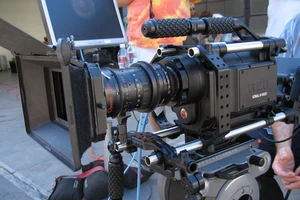
In TVC production, Logo placement directly influences shot design. If a Logo is intended for a specific shot, filming must account for its suitability for overlay. Suitable shots typically feature three characteristics: first, sufficient negative space around the subject, such as sky, walls, or solid backgrounds; second, moderate camera movement, as excessive speed or stillness hinders stable Logo presentation; third, even lighting to avoid highlights or shadows that reduce Logo contrast.
Before filming, the production team must create a Logo reservation list specifying the shot number, visual content, reserved area location, and recommended Logo size and motion for each placement. This list must be distributed to the Director of Photography, Production Designer, and Director to ensure on-set execution does not compromise reserved areas through framing issues. For example, if the Logo is placed in the top-right corner, actor blocking, prop placement, and lighting setup must avoid that zone.
For Logo placements requiring 3D tracking, tracking markers must be established within the frame during filming. Markers can be fixed scene elements like wall corners, lamp posts, or table edges, or temporarily placed targets. The production team must confirm marker positions and quantities with the Director of Photography before shooting to ensure stable matching during post-production compositing. If natural tracking points are unavailable, reflective spheres or grid boards may be used, provided these aids are removed in post-production and do not appear in the final cut.
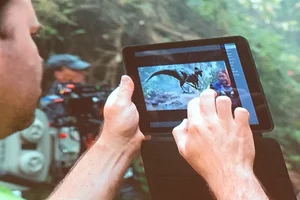
If the Logo is integrated into the scene, such as on mirrors, glass, water, or screens, reflection and refraction effects must be considered during filming. In these cases, simple overlay is insufficient; 3D projection based on scene materials and lighting is required. The production team must record light direction, reflection intensity, and material properties during the shoot, as this data is critical for post-production compositing. Without on-set records, post-production relies on estimation, potentially resulting in unrealistic effects.
A risk during filming is sacrificing visual aesthetics to reserve space for the Logo, such as shrinking the subject for negative space or adding unnatural objects for tracking. The production team must balance Logo requirements with visual storytelling; if a shot cannot satisfy both, it is better to omit the Logo placement than to produce a mediocre image. When reviewing dailies, the brand should closely inspect actual conditions in reserved areas and immediately flag any obstructions or lighting anomalies rather than waiting for post-production fixes.
Another risk is overlooking Logo copyright issues during filming. If the Logo appears on screens, posters, or products, these elements may involve third-party copyrights. The production team must verify ownership of all on-screen elements before shooting to prevent footage from becoming unusable due to copyright issues. The brand must provide official Logo source files, including vector and transparent background formats, and confirm usage guidelines for different backgrounds, such as version differences for dark versus light backgrounds.
Three basic methods for compositing a logo in post-production, and the conditions for each
In the post-production stage of a TVC, the way a logo appears usually falls into three basic methods. The first is direct overlay, where the logo is placed as a flat element over the image, suitable for static or slow-moving footage. The advantage of direct overlay is that it is simple and low-cost; the disadvantage is that if the footage has texture or movement, the logo can look stiff. The second is tracking compositing, where the logo follows a moving object or spatial position in the footage, suitable for shots with a clear motion path. Tracking compositing requires point or planar tracking in post-production software; if the motion is complex, manual keyframing may be needed. The third is 3D projection, where the logo is integrated into the scene as a three-dimensional object, suitable for footage with perspective changes or reflective effects. 3D projection requires building a scene model, demands higher-quality footage, but delivers the most realistic visual result.
Which method to choose depends on the type of motion in the shot and how the logo relates to the scene. If the logo only appears briefly, such as for two seconds in the opening, direct overlay is sufficient. If the logo needs to follow a moving object, such as a vehicle or person, tracking compositing is more appropriate. If the logo is to be placed in a scene with strong perspective, such as a corridor or street, 3D projection maintains the correct perspective relationship. The production team should evaluate the compositing difficulty of each logo appearance and develop a corresponding technical plan before post-production begins.
A key step in post-production compositing is matching color and light. The logo's brightness, contrast, and color temperature must match the background footage, or it will look like a sticker. The production team should use color-grading tools to adjust the logo's color properties, while also considering the logo's shadows and edge softening. If the logo is to blend into the scene, environmental light reflections and lens flares also need to be added; these details determine the realism of the final result.
Another key step is handling the relationship between the logo and foreground elements. If the logo appears behind a person or object, an occlusion relationship must be created, meaning foreground elements cover the logo. This requires the post-production artist to perform depth estimation or manual rotoscoping on the footage. If the logo appears in the foreground, its transparency must be considered to avoid completely obscuring background information. The production team should confirm the layer order for each logo appearance with the director before compositing.
A common mistake in post-production compositing is making the Logo too large or placing it off the visual center. When reviewing the cut, the brand side should check whether the Logo blocks key information or conflicts with other text elements in the frame. The production team should provide versions in different sizes and positions for the brand side to choose from, rather than offering only one fixed version. At the same time, the post-production team should keep the project files for Logo compositing so that future revisions are easier.
If the project involves AIGC video production, the method of Logo compositing may differ. AIGC-generated footage may lack clear tracking points, which need to be manually specified in post-production. The production team should evaluate the stability of AIGC assets; if the footage distorts or flickers, Logo compositing becomes significantly harder. In such cases, it is recommended to place the Logo in a static area of the frame or use a simple overlay method to avoid complex tracking.
Controlling the rhythm of Logo exposure time affects audience recall strength.
In TVC commercials, the duration of Logo exposure is mainly related to narrative rhythm and the audience's attention cycle. Audience attention to on-screen elements usually peaks within 2 to 3 seconds and then begins to decline. Therefore, a Logo exposure of 1 to 2 seconds is appropriate: it can be clearly perceived without causing visual fatigue. If the Logo appears too briefly, viewers may not notice it; if it exceeds 3 seconds, viewers may become impatient, especially when the Logo has no dynamic movement.
The production team should adjust the duration based on the function of the Logo's appearance. If it is an opening Logo used to build brand recognition, it can be slightly longer, for example 2 to 3 seconds, but it needs to match the music and the mood of the visuals. If it is a closing Logo used to reinforce memory, it can be slightly shorter, for example 1 to 2 seconds, and paired with a brand slogan or sonic logo. If it is a transition Logo used to bridge two scenes, the duration can be even shorter, for example 0.5 to 1 second, with dynamic effects such as scaling or rotation.
The motion style used when the logo appears also affects perceived duration. Static logos suit short durations because viewers can read them quickly. Animated logos can last slightly longer since movement naturally draws attention. However, animated logos should not be overly complex, or viewers will focus on the animation rather than the brand itself. Production teams should design simple logo animations, such as fades, slight scaling, or repositioning, to avoid overdesign.
Pacing control must also consider the intervals between logo appearances. If two logo placements are too close, viewers may find them repetitive; if too far apart, they may forget the brand. A minimum interval of five seconds between logo appearances is recommended to allow viewers sufficient time to process the visual content. Production teams should use the timeline view in editing software to mark each logo placement and verify that spacing is appropriate.
During review, brands should ensure logo duration aligns with the musical rhythm. If the music features a strong beat or climax, the logo can appear on the beat to enhance impact. If the music is gentle, the logo should appear softly. Production teams must synchronize music and logo timing during editing to prevent misalignment. If the brand has specific duration requirements, such as displaying the logo for over three seconds, the production team should assess any impact on narrative flow and provide adjustment recommendations.
The semantic relationship between the logo and visual content determines the accuracy of brand communication.
Logo placement is not just a visual issue but also a semantic one. The relationship between the logo and on-screen content influences audience perception of the brand. For example, placing a logo within a high-tech scene leads viewers to perceive the brand as technologically advanced, while placing it in a warm lifestyle scene conveys approachability. Production teams must ensure logo placements align with the brand tone conveyed by the visuals to avoid mismatches.
Brands should define key tonal keywords during project initiation, such as professional, innovative, warm, or vibrant. Production teams should select visual content for logo placements based on these keywords. If the brand tone is professional, the logo should appear in clean, orderly visuals; if vibrant, it can appear in dynamic, colorful scenes. Production teams must avoid placing logos in visuals that conflict with the brand tone, such as positioning a premium brand logo in a chaotic street scene.
The relationship between the logo and the main subject is also critical. When the logo and product appear together, their hierarchy must be clear. If the product is the primary focus, the logo should serve as a supporting element placed in a corner or edge; if the logo is primary, the product can be positioned beside it as support. Production teams should establish this relationship during storyboarding and reserve appropriate space during filming.
The logo must also coordinate with on-screen text. If other text elements like subtitles, taglines, or data are present, the logo must not overlap or conflict with them. Production teams should plan the text hierarchy to ensure the logo remains a key visual focal point without dominating entirely. Brands must provide finalized copy for all on-screen text to prevent layout issues during post-production.
A common mistake is displaying the logo while actors or subjects are speaking or moving, causing viewers to focus on the person and overlook the logo. Production teams should avoid this by introducing the logo during brief pauses after actions or by placing it along the subject's line of sight. During review, brands should adopt the viewer's perspective to verify that the logo receives adequate attention.
Acceptance checklist: Confirm the quality of logo presentation item by item.
Before TVC delivery, the brand must verify Logo usage against an acceptance checklist. First, check if the Logo's position, size, and opacity at every appearance comply with brand guidelines and use official source files. Second, ensure the Logo harmonizes with the background in color, brightness, and contrast, without noticeable color shifts or hard edges. Third, confirm that Logo animation is smooth, matches the footage movement, and is free of jitter or abrupt jumps.
Fourth, verify correct occlusion between the Logo and foreground elements, avoiding visual errors or incorrect layering. Fifth, ensure the Logo duration meets expectations, fits the pacing, and syncs with the music. Sixth, confirm the Logo's semantic meaning aligns with the visual content and conveys the correct brand tone. Seventh, ensure Logo consistency across all deliverables, including horizontal, vertical, and various resolution versions.
During acceptance, brands must use professional monitoring equipment rather than casually viewing on phones or computer screens. Because color and brightness vary by device, the Logo's visual effect will differ accordingly. The production team should provide reference files specifying recommended viewing conditions, such as brightness, color temperature, and viewing distance. Brands must confirm the final master meets publishing platform specifications—including file format, codec, bitrate, and resolution—based on the latest official requirements prior to release.
Acceptance must also cover Logo copyright issues. Brands must confirm Logo ownership and usage rights; if third-party elements like fonts, graphics, or photos are included, licensing must cover the TVC's distribution channels and duration. The production team must provide a copyright list for all assets used, including Logo source files, fonts, images, and music, to ensure no infringement risks exist.
If issues arise during acceptance, brands must provide specific feedback, such as timecodes and descriptions, rather than vague comments like "the Logo looks bad." The production team must address each point and resubmit. Upon completion of revisions, the brand must re-evaluate until all issues are resolved. After final approval, the production team must deliver the final master and source files, including editing projects, compositing projects, color grading files, and audio files, to facilitate future modifications or reuse.
Exclusions: When Logo Treatment Is Not Suitable for TVCs
Not all TVCs require integrated Logo treatment within the frame. In the following cases, brands and production teams should consider simplifying Logo placement or relying solely on an end card. First, for extremely short TVCs (e.g., under 5 seconds), limited screen time means a Logo may displace product showcases or key selling points. It is recommended to show the Logo only at the end for no more than one second.
Second, for TVCs driven by strong emotional narratives, such as PSAs or brand stories, Logo appearances may disrupt the emotional flow. In this case, place the Logo at the end as a signature following the emotional conclusion, rather than frequently throughout the video. Production teams must respect narrative integrity and avoid sacrificing emotion for the sake of Logo visibility.
Third, for TVCs featuring heavy VFX or rapid editing, such as action or gaming ads, maintaining a stable Logo is difficult. Forced tracking may cause visual chaos. It is recommended to overlay a static Logo in a stable area or use an end card. Production teams must assess the stability of VFX shots; if stability cannot be guaranteed, do not take the risk.
Fourth, for TVCs targeting professional audiences, such as B2B sectors, viewers focus more on specs and features than visual branding. In this context, Logo placement should be subtle to avoid distracting from information delivery. Brands may request a small Logo in the corner or limit it to the end card only.
In the fifth scenario, TVCs must be adapted for multiple platforms such as television, online video, and social media, each with different aspect ratios and viewing environments. If a logo is cropped or obscured on any platform, brand image may suffer. Production teams should provide platform-specific logo versions or use safe-area design to ensure visibility across all channels. Brands should confirm publishing requirements for each platform in advance to avoid discovering issues after delivery.
Under these constraints, brands and production teams should adjust their strategy rather than force logo placement within the frame. A practical approach is to prioritize logo usage before the project begins; if communication goals rely more on product demonstration or emotional storytelling, the logo should take a secondary role. The production team should explain this trade-off in the proposal to prevent later disputes.
Next steps: Recommended actions from project initiation to delivery
When launching a TVC project, brands are advised to hold a dedicated discussion with the production team regarding logo placement. This meeting need not be lengthy but must cover the decision points outlined here. Prepare a brand logo usage guideline document that includes official source files, background variants, minimum sizes, safe areas, and prohibited uses. This document will serve as the foundation for filming and post-production.
During the proposal phase, production teams should proactively provide a logo placement plan rather than adding it after storyboards are complete. Brands must review this plan and validate the rationale for each placement. If the production team fails to provide one, the brand should request it, as this serves as an indicator of the team's professionalism.
During filming and post-production, the brand should designate a single point of contact to handle logo-related communications with the production team, avoiding confusion caused by multiple feedback sources. The production team must document the reason and outcome of every revision to maintain version history for traceability. Upon delivery, the brand should verify items against an acceptance checklist, inspecting not only the final video but also source files and copyright documentation.
Finally, brands should recognize that logo placement is only one aspect of overall TVC quality and should not over-invest at the expense of communicating core selling points. If budget or timeline is limited, prioritize a clear and compliant end-card logo while simplifying in-frame logos. Production teams should transparently inform brands of the execution difficulty and effectiveness differences among options to facilitate informed decision-making.
If you are preparing a TVC project, start by organizing your brief, visual references, product or corporate materials, target platforms, and licensing scope before reviewing theTVC Service Pageto translate abstract preferences into actionable production parameters.