Why Delivery Naming Should Be Defined During Project Initiation
At the start of a TVC project, teams often focus on creative scripts, casting, and shooting schedules, treating delivery naming as a post-production task. When editing is complete, client revisions arise, and multi-platform needs emerge, chaotic filenames can lead to version overwrites, missing assets, and unclear accountability. Delivery naming is not a trivial file management issue; it determines whether every step from raw footage to final deliverables can be accurately traced.
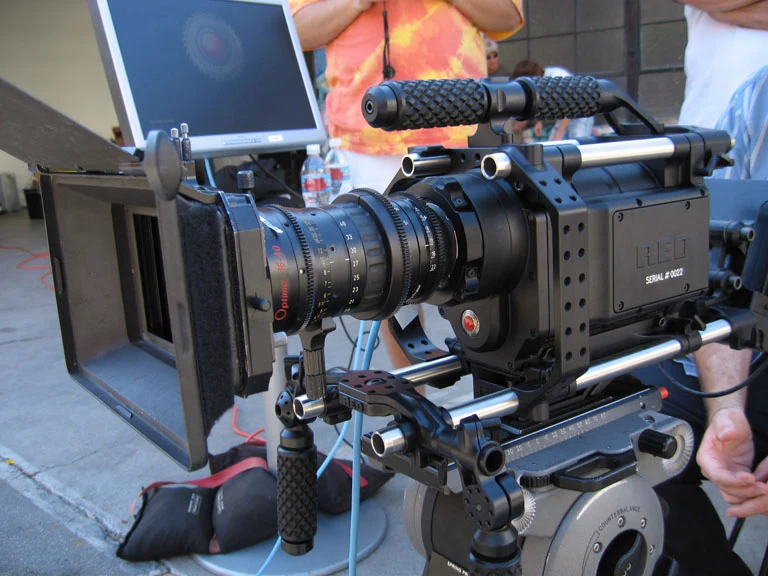
Brands should require the production team to provide a draft naming convention during project initiation, covering raw footage, edit projects, VFX composites, color grading versions, audio mixes, subtitle files, masters, and deliverables. The criterion is that any new team member should be able to identify a file's stage, version, and purpose solely from its name. If understanding the naming rules requires internal communication, they are not clear enough.
Specific actions include adding a dedicated delivery naming agenda item to the project kickoff meeting, led by the producer and confirmed jointly by the editor, colorist, sound designer, and project manager. The brand must confirm whether the naming convention includes the project code, client abbreviation, title abbreviation, date, version number, platform identifier, and status indicator. The risk is that if the naming convention is too complex, staff will name files arbitrarily to save time; therefore, rules must be simple enough to apply without consulting documentation.
An exception applies to small projects consisting of a single TVC with no anticipated revisions, where naming can be simplified but must still retain the project code and version number. If a project involves multi-language versions, multi-platform crops, or a campaign series, naming conventions must be defined in advance; otherwise, future extensions will be incompatible.
Checklist of materials the brand must prepare during project initiation
During project initiation, the brand must provide a complete project brief, which directly determines the hierarchy and fields used in delivery naming. Core materials include communication objectives, target audience, key selling points, visual references, shooting conditions, delivery platforms, and rights scope. Communication objectives determine the type of final deliverable, such as brand image films, product feature videos, or promotional clips, each requiring distinct identifiers in the filename.
Target audience and key selling points influence editing structure and copy, but these are reflected in version descriptions rather than directly in filenames. Visual references help the team understand style but should not serve as the basis for delivery naming because their external origin creates unclear copyright and sourcing. Shooting conditions cover locations, talent, equipment, and weather; this information is logged in camera reports, while filenames need only retain the shoot date and scene number.
Delivery platforms represent the most critical external constraint in naming conventions. Different platforms have varying requirements for video format, duration, aspect ratio, subtitles, and bitrate, necessitating multiple delivery versions. The brand must list all planned distribution channels, including broadcast TV, video websites, social media, OOH screens, and international markets, noting the latest official specifications for each. Note that platform specs change frequently; the production team should verify current requirements at project kickoff rather than relying on past experience.
Rights scope defines usage boundaries for assets, such as whether the production team may use footage in personal portfolios or whether the brand has international usage rights; these terms belong in the contract, but naming conventions can use permission tags to distinguish public from restricted assets. The brand must also provide a signed script and storyboard as the baseline for post-production acceptance; any creative deviations from the script must be reflected as version changes in the naming.
A key risk is incomplete information from the brand, such as providing only a tagline without clear communication objectives, which forces the post team to guess based on experience and results in deliverables that miss expectations. The litmus test is whether the production team can directly extract the necessary naming fields from the provided materials; if not, additional information is required.
How to lay the groundwork for asset naming during production
Asset naming during production directly determines post-production efficiency. Cameras typically auto-generate filenames, but default names lack project context, so camera file prefixes or slate records must be configured before shooting. Specific actions include confirming the camera naming protocol before rolling, ensuring it includes at least the project code and shoot date—for example, using a project abbreviation plus date—so footage can be quickly identified even if mixed with other projects.
A dedicated script supervisor must be assigned on set to maintain continuity logs. Each log entry must correspond to the specific filename of every shot, recording the scene number, take count, content description, usability status, and notes. These logs serve as an index for post-production editing; if they do not match the filenames, editors will waste significant time reviewing footage. The standard is that every shot listed in the log can be located in the asset library within one minute.
Production generates various asset types, including raw video, audio recordings, reference materials, behind-the-scenes footage, and stills, all of which must be organized into folders following project naming conventions. A recommended structure is Date_Scene_ContentType, such as Date_SceneNumber_Video or Audio. Due to the risk of on-set chaos causing missed entries, the producer must verify daily backups and log completeness.
When using high-speed cameras or specialized equipment, file formats and naming may differ, requiring prior testing and rule adjustments. For multi-camera shoots, filenames must include camera identifiers; otherwise, syncing footage in post-production will be impossible.
Core Logic for Version Naming in Post-Production
Post-production is the most critical phase for delivery naming, as frequent iterations and disorganized naming lead to revision errors. Editing generates multiple versions, including rough cuts, fine cuts, client revisions, and director's cuts. Naming logic must include version type and number, e.g., RoughCut_V01, FineCut_V03, ClientRev_V02. Version numbers must increment sequentially without gaps, and each revision must create a new file rather than overwriting previous ones.
Color grading generates versions indicating status, such as Uncolored, Grade1, or FinalGrade. Sound design produces mix versions labeled with audio status, e.g., DialogueOnly, Mix_V01, or FinalMix. Subtitling creates versions specifying language and format, e.g., ChineseSubs, EnglishSubs, or NoSubs. All stage-specific versions must link back to the corresponding edit version for traceability.
VFX compositing generates CGI versions named with elements and version numbers, e.g., ProductVFX_V02 or SceneReplace_V01. AIGC content requires unique naming citing tools and parameters to ensure reproducibility. The standard is that any version’s filename must allow retrieval of its project and source files while clearly identifying its upstream parent version.
When collaborating across multiple software platforms, filenames may be automatically altered by adding render prefixes or timecodes. Use unified output templates during rendering to ensure consistency between deliverables and project files. On cloud collaboration platforms, prevent sync conflicts by including operator initials or timestamps in filenames.
If a client requests changes after archiving, the specific version must be retrieved to generate a new iteration. Therefore, archives must include project and source files for every version, not just final deliverables, with the archive date included in the filename.
Delivery Phase Naming Rules and Multi-Platform Adaptation
The delivery phase is where naming conventions are finalized. Deliverables must meet platform-specific requirements while maintaining clear naming. Each platform requires a separate deliverable version named with platform identifiers and specifications, such as platform name, duration, aspect ratio, and bitrate. Platform specifications must follow the latest official pre-release guidelines; do not use outdated data, as platforms update frequently.
Deliverables typically include master files, platform-adapted files, subtitle files, cover images, and asset files. Master files are the highest-quality versions and should be named with a master identifier and resolution, e.g., Master 4K or Master HD. Platform-adapted files are converted from the master and should be named with the platform name and format, e.g., TikTok Vertical, Bilibili Horizontal, or TV Broadcast. Subtitle files must be named separately, indicating language and format, e.g., Chinese Subtitles SRT or English Subtitles ASS.
Clients must confirm whether deliverables include source files, which comprise editing projects, color grading projects, audio projects, VFX projects, and all raw footage. Source file names must correspond to deliverables to facilitate future revisions. Copyright scope must be clarified during delivery; clients should verify they have obtained perpetual usage rights for all assets, including music, fonts, likeness rights, and third-party materials.
A key risk is inconsistent naming, such as labeling the master 'final' and the platform file 'final_v2,' leaving clients unable to identify the latest version. The standard is that every file in the delivery list should be identifiable by name regarding its purpose and version, matching contractually agreed deliverables. Production teams are advised to provide a delivery guide listing each file's function and usage, though this document does not replace proper naming conventions.
Exceptions occur when clients request additional formats, such as GIFs or vertical trailers; these new files must also adhere to naming conventions and cannot be named arbitrarily.
Acceptance Checklist and Common Issue Resolution
During acceptance, clients must inspect items against the checklist rather than reviewing only the final video. The checklist covers script fidelity, visual quality, audio quality, subtitle accuracy, version completeness, naming compliance, and copyright documentation. Script fidelity requires comparing the original script and storyboard to verify that every shot was filmed and edited as planned. Visual quality checks include resolution, frame rate, color, noise, focus, and stability.
Audio quality checks cover dialogue clarity, music mixing, sound effect synchronization, and loudness standards. Subtitle accuracy involves verifying text content, timecodes, and translations. Version completeness requires confirming that all delivered versions exist and are playable. Naming compliance should be verified through random spot checks to ensure adherence to agreed standards. Copyright documents, including music licenses, font licenses, likeness releases, and asset purchase receipts, must be archived separately.
Common issues include version overwrites causing data loss, non-standard naming making files unfindable, mismatched platform specs causing upload failures, and missing copyright documents preventing publication. Solutions include establishing version control to save new versions without overwriting old ones. Non-standard naming should be corrected uniformly before delivery, with all stakeholders notified of changes. Mismatched platform specs require re-exporting adapted versions with updated names. Missing copyright documents must be promptly obtained from the production team; otherwise, publication is prohibited.
The risk lies in reviewing only the final video during acceptance while neglecting source files and naming, complicating future revisions. The criterion is whether, after acceptance, the client can independently locate source files for any version and hand them to a third party for editing. If not, the acceptance process is incomplete.
Applicability and Exclusions of Delivery Naming Conventions
Delivery naming conventions apply to most TVC projects, but not all require complex systems. For simple projects with a single deliverable, no revisions, and single-platform distribution, simplify naming to just the project code and version number. For campaign series, multi-language versions, multi-platform distribution, or long-term brand projects, strict naming conventions are essential to ensure manageability in post-production.
Excluded scenarios include internal creative tests, draft script explorations, and temporary footage; these do not require formal naming and can be stored in a drafts folder. Additionally, projects generating significant AIGC assets require special naming protocols to record parameters and prompts in filenames, ensuring reproducibility.
Brands can determine if standard naming conventions are appropriate by assessing whether the project involves multiple deliverables, multi-person collaboration, anticipated revisions, or multi-platform distribution. If two or more criteria apply, full naming conventions are recommended; otherwise, a simplified approach suffices.
Over-engineering naming conventions risks high execution costs and reduced efficiency. For example, adding excessive fields per shot hinders quick on-set logging. Keep conventions concise with no more than five core fields, documenting other information via continuity sheets or separate documentation.
Next Steps and Execution Reminders
At project kickoff, brands and production teams should jointly confirm delivery naming conventions and include them in the contract or SOW. Start with a simple template covering project code, phase, version, date, and platform, adjusting for complexity. Test naming rules before shooting to ensure all devices generate compliant filenames. During post-production, audit compliance weekly to correct deviations promptly. Before final delivery, use an acceptance checklist to verify full adherence to naming standards.
Naming conventions require ongoing maintenance throughout the project lifecycle, not just initial setup. Update conventions and notify all stakeholders whenever significant changes occur, such as new platforms or creative pivots. Remember that naming conventions aim to facilitate efficient collaboration, not create burden; simplicity and practicality remain the core principles.
If preparing a TVC project, first organize your brief, visual references, product or corporate materials, delivery platforms, and licensing scope before reviewing theTVC Services Page, translating abstract preferences into actionable production boundaries.