Why Inner Frustum Shots Require Special Acceptance
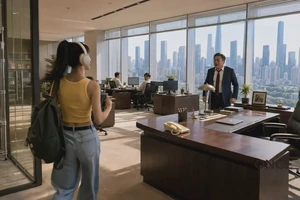
In the virtual production workflow, an inner frustum shot refers to a shot where the background is entirely presented by an LED screen. These shots rely on In-Camera VFX technology, requiring the real-time rendering engine to dynamically generate the background based on camera position. For commercial and short film teams, directly applying scenes from a workstation often leads to on-set incidents. The core of acceptance first looks at the balance between real-time performance and optical consistency; visual fidelity should be evaluated after stability. If it cannot be completed through in-camera shooting, a green screen switching plan must be arranged in advance.
Base Configuration Requirements for Hardware Clusters
Building an LED studio that supports inner frustum shooting requires far more than just focusing on screen size. The system must include a master clock sync, a protected high-throughput LAN, and dedicated render nodes. The Live Link interface is used to receive camera, lighting, and transform data, ensuring the timestamps of the virtual world and physical space are aligned. Any network latency or clock drift will cause screen tearing or flickering, directly affecting the feasibility of post-production compositing.
Camera Tracking and Lens Calibration Details
Camera calibration is the first checkpoint for inner frustum acceptance. The tracking system must precisely match the real lens's position, orientation, and distortion parameters. If the calibration data is off, the perspective in the virtual background will disconnect from the foreground objects. The art team must conduct lens tests before the actual shoot to verify frustum matching at different focal lengths. Although the outer frustum does not display a specific background, it still needs to provide accurate ambient light and reflections to maintain unified lighting logic.
Physical Limitations of Moiré and Visible Pixels
The LED screen's pixel pitch, camera sensor characteristics, and shooting distance collectively determine the final image quality. When the camera is close to the screen or a large aperture with shallow depth of field is used, moiré and visible pixel grids are easily exposed. This is a physical hardware limitation that cannot be fixed purely through software. During acceptance, it is necessary to check for interfering fringes at specific focal lengths. If the optical purity requirements cannot be met, the shot should be marked as unsuitable for inner frustum shooting.
nDisplay Distribution and Performance Stress Testing
nDisplay is responsible for distributing the scene to multiple display terminals, and its stability directly determines whether shooting can continue. Epic Games' best practices emphasize that smooth operation on the workstation does not mean the LED wall can output stably. The on-set team needs to work with the art department to conduct performance tests, monitoring frame rate and latency metrics. If the rendering load is too high and causes dropped frames, the motion blur of the virtual background will lose its realism, thereby breaking the audience's immersive experience.
Screening Strategy for Applicable Shot Types
- Wide-angle shots with a fixed camera position or slow movement usually perform best, because the field of view changes little and the rendering pressure is low.
- Fast zooms or complex tracking shots require a preliminary assessment of the accuracy limits of the tracking data.
- Close-up shots are extremely sensitive to pixel density, and it is necessary to confirm whether the screen resolution meets the needs for close-up viewing.
Trade-off logic of hybrid shooting solutions
- Determine which shots must maintain virtual background consistency within the camera's field of view.
- Identify transition shots that only require ambient light reference and do not need specific background content.
- Develop a green screen replacement plan to ensure that outer frustum lighting remains continuous when the inner frustum fails.
Pre-delivery checklist
Before delivering the footage, the team must verify the following technical metrics item by item. First, confirm that the camera metadata for all inner frustum shots has been fully recorded and synced to the post-production pipeline. Second, check for any screen jitter or color banding caused by rendering latency. Finally, verify whether the outer frustum reflection layer perfectly matches the lighting direction of the live-action foreground. Any missing item may result in rework during the compositing phase.
Limitations and next-step resources
This guide is written based on general virtual production principles and does not include measured data for specific brand equipment. In actual projects, different models of LED walls and tracking systems may have variations. It is recommended that teams refer to official documentation to obtain the latest technical specifications. Below are the relevant official resource links,
Execution standards and fault tolerance mechanisms for sample testing
Before officially entering the high-intensity shooting cycle, establishing a rigorous sample testing process is a critical step to mitigate risks. Sample testing must undertake the stress simulation task for the full pipeline of virtual shooting. The primary goal of the testing is to verify the distribution stability of the nDisplay cluster under different loads. Technical personnel need to deploy optimized scene files to the actual render nodes and connect real camera tracking signals via Live Link. During this process, it is essential to monitor the end-to-end latency from camera movement data input to LED wall image updates. Any latency exceeding the industry tolerance threshold will cause visual misalignment, creating a disjointed feeling between the actors and the virtual background. Testers should simulate various extreme conditions, including high-speed camera movements, complex track navigation, and frequent lighting changes. These operations will significantly increase the GPU computational load, thereby exposing potential performance bottlenecks. For example, when a scene contains a large number of high-polygon models or complex particle effects, the render frame rate may fluctuate. At this point, the art team needs to adjust asset precision based on the test results, or optimize shader complexity, to ensure stable high-frame-rate output on the LED wall. In addition, sample testing must cover the color management verification process. Due to the differences between the self-emissive characteristics of LED screens and the photosensitivity curves of film or digital sensors, professional colorimeters must be used during testing to measure screen brightness, contrast, and color gamut. By comparing the reference monitor in the monitoring pipeline with the actual output of the LED wall, color deviations can be promptly detected and corrected. This process ensures that the color saturation of the virtual background matches the physical lighting of the real world, avoiding difficult-to-correct color discrepancy issues during the post-production color grading phase. Meanwhile, the testing should also include the verification of the master clock synchronization system. In a multi-node parallel rendering environment, clock drift may lead to screen tearing or audio desync. By injecting a standard sync pulse signal, it can be verified whether all render nodes strictly follow a unified time base. Only when all technical metrics meet the predetermined standards is the sample testing considered qualified, and the project can proceed to the official shooting phase. This proactive verification mechanism greatly reduces the probability of on-site sudden failures, ensuring the controllability of the production schedule.
Delivery and playback quality control system
The delivery of virtual production is not just about providing the final image files; it also includes a complete set of data assets and metadata records so that the post-production team can seamlessly take over. The quality control process before delivery includes a playback review of the raw footage. The playback process aims to verify the integrity and technical compliance of every frame. First, it is necessary to check whether the camera metadata of the inner frustum lens is accurately embedded into the video file. This data includes the camera's position coordinates, rotation angles, focal length, and lens distortion parameters. Accurate metadata is the foundation for reconstructing the 3D scene in post-production compositing; any slight error may lead to a failure in aligning the virtual elements with the live-action foreground. Second, during playback, close attention must be paid to whether there are artifacts in the image caused by rendering delays or network fluctuations. For example, flickering at the edges of the image, color banding, or geometric distortion. These issues may not be fully exposed during the sample testing phase, but they may accumulate and appear during long, continuous shooting. Technical personnel need to scan the footage frame by frame and mark any segments that do not meet the optical consistency requirements. For the outer frustum, although its main function is to provide environmental light and reflections, the delivery must still ensure that its lighting logic is consistent with the inner frustum. If certain shots use a green screen replacement solution, the green screen footage and its corresponding lighting reference information must be additionally provided so that the post-production team can perform keying and lighting matching. In addition, the delivery package should include a detailed shot log, recording the shooting parameters of each shot, the asset versions used, and any technical issues encountered on set. This information is crucial for the post-production team to understand the creative intent and resolve potential technical problems. The playback team also needs to verify the synchronization of audio and video, especially in scenes involving real-time sound effect feedback; the accuracy of audio-visual synchronization directly affects the audience's immersive experience. Finally, all delivered files must be archived according to the established naming conventions and directory structure to ensure data security and traceability. By establishing a standardized delivery and playback process, the overall quality of virtual production projects can be effectively improved, rework costs in post-production can be reduced, and the visual standard of the final product can be ensured to meet the expected goals.