Why Virtual Production Cannot Start Immediately
When receiving client briefs, many production teams rush to build LED stages and import assets. This approach overlooks the inherent complexity of virtual production. Unreal Engine's In-Camera VFX relies on LED displays, real-time rendering, and camera tracking to sync virtual backgrounds with physical camera perspectives. Without rigorous prototyping, on-set issues like screen tearing, latency, or color shifts are likely. Therefore, the correct strategy is to prototype before finalizing the toolchain, using low-cost validation to mitigate high risks.
Technical Coupling of Core Components
Virtual production is not simply playing video on a screen; it is a complex systems engineering task. nDisplay distributes scenes across display clusters, while Live Link receives camera, lighting, and transform data. Camera calibration must match the physical lens's position, orientation, and distortion. This means 3D environments created by art teams must align perfectly with the optical characteristics of the physical camera. Even minor parameter discrepancies are magnified on LED walls, causing viewer discomfort or breaking immersion.
Hidden Costs of Infrastructure
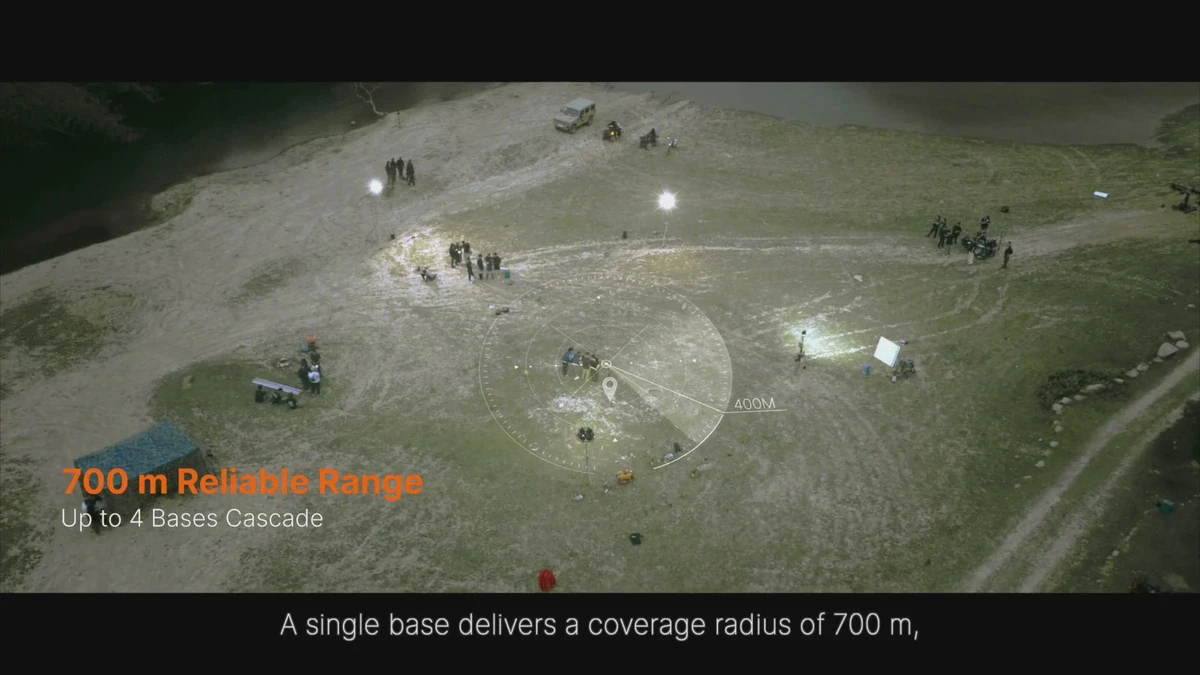
Beyond software algorithms, the hardware environment is equally critical. LED stages also require a master clock, a protected high-throughput LAN, render nodes, and monitoring chains; screen size alone is not enough. Network latency can cause image lag during camera movement, breaking visual continuity. A master clock ensures all render nodes stay synchronized, preventing flicker caused by frame misalignment. This infrastructure is often underestimated, yet it determines whether the system can operate reliably under high-pressure shooting conditions.
Optical Pitfalls and Moiré Control
Screen pixel pitch, camera sensor, shooting distance, and angle all affect moiré and visible pixels, so lens tests are essential before principal photography. When the camera is close to the LED wall or uses wide-angle lenses, the pixel grid may interfere with the sensor's sampling frequency, creating unsightly artifacts. Production teams must test performance across various focal lengths and apertures to determine the optimal shooting distance. This is not just an aesthetic concern but a strict technical constraint.
Flexible Application of Frustum Technology
The inner frustum displays backgrounds matching the camera’s perspective, while the outer frustum continues to provide ambient light and reflections. This design saves computing power and delivers realistic diffuse lighting. For shots that cannot be completed in-camera, green screen can be applied only within the camera’s field of view while retaining outer frustum lighting. This hybrid approach allows more elements to be composited in post-production while preserving the authenticity of on-set performances.
The Necessity of Performance Testing
Epic’s best practices emphasize that art and on-set teams must conduct joint performance testing, as scenes running smoothly on workstations may not perform reliably on LED walls. Workstations have powerful GPU resources, whereas LED wall render nodes may be limited by thermal management, bandwidth, or specific optimizations. Stress testing must be conducted in the on-set environment to ensure stable frame rates of 60 fps or higher, avoiding motion blur deficiencies that can cause viewer discomfort.
Execution Steps for Previs Production
Establishing a previs workflow should follow this checklist:
- Set up a minimal LED cluster and single-node rendering environment.
- Import base assets and test Live Link connectivity.
- Conduct multi-angle shot tests using physical cameras.
- Document moiré thresholds and optimal shooting distances.
- Verify frame rate stability under high-load scenarios.
Pre-delivery checks.
Strict acceptance checks are mandatory before principal photography. Confirm all camera tracking data is correctly mapped in the engine. Verify LED wall color temperature and brightness uniformity, with no dead pixels or color shifts. Ensure LAN bandwidth supports multi-stream video transmission. Confirm backup systems are ready in case of primary render node failure. These details determine production success.
Limitations and further resources.
This document covers general technical principles only, excluding specific client cases or budget constraints. Actual projects require adjustments based on venue size, asset complexity, and brand requirements. Refer to official documentation for the latest technical specifications.
In-depth validation logic for prototype testing.
Prototype testing is not merely a functional demonstration but a stress test of the entire virtual production workflow. Before finalizing the toolchain, the team must build a miniature feedback loop that reflects the actual production environment. The core of this phase is validating the performance of the Unreal Engine In-Camera VFX pipeline under real hardware conditions. Since nDisplay distributes scenes across the display cluster, prototype testing must focus on synchronization accuracy between nodes. As the central hub for data transmission, Live Link stability directly determines the real-time performance of camera, lighting, and transform data. Testers must use physical cameras to record motion trajectories over extended periods to check tracking data for jitter or packet loss. Camera calibration is the top priority in prototype testing, ensuring virtual camera parameters perfectly match the physical lens's position, orientation, and distortion. Even minor optical discrepancies can cause perspective errors that compromise visual realism. Additionally, prototype testing must cover system response under extreme conditions. For example, when the camera moves rapidly or zooms, rendering nodes must update frames promptly without noticeable latency. Both art and on-set technical teams must participate, as ideal workstation scenes often fail to run stably on LED walls. Prototype testing helps identify potential bottlenecks such as memory leaks, shader compilation stutters, or insufficient network bandwidth. Resolving these issues during prototyping ensures smooth operations during principal photography. It also helps determine optimal rendering resolution and quality settings to balance visual fidelity with system load. Although this phase increases pre-production time, it effectively prevents major rework risks during shooting and serves as an indispensable quality control step in virtual production projects.
Delivery Standards and Playback Verification Mechanisms
Virtual production delivery involves more than just outputting final video files; it includes comprehensive technical documentation and data assets for subsequent playback and review. Playback verification is a critical step in the quality assurance feedback loop, requiring systematic review of raw data immediately after shooting. First, camera tracking data must be analyzed to confirm continuity and accuracy throughout the shoot. Any data gaps or jumps could affect post-production compositing and must be identified and corrected on set. Second, playback of LED content requires checking color consistency and brightness distribution. Due to the physical characteristics of LED screens, luminous efficiency may vary across zones, so playback checks must detect visible color banding or uneven brightness. Signal quality within the monitoring chain is also a key focus, ensuring no compression artifacts or color distortion are introduced during transmission from render nodes to monitors. Furthermore, the playback process should include audio track checks to ensure on-set recordings sync perfectly with the visuals. For scenes using the outer frustum for ambient light reflections, playback must verify the realism of reflected content and its coordination with subject actions in the inner frustum. If green screen and virtual backgrounds are combined, playback must validate matte edge smoothness to prevent keying artifacts. Delivery documentation should detail toolchain versions, nDisplay configurations, Live Link status, and all calibration data used during the shoot. This data provides valuable references for future projects and helps shorten preparation cycles. Through strict delivery standards and meticulous playback verification, production teams can establish standardized workflows that continuously enhance virtual production technical capabilities and artistic expression. This mechanism ensures every frame meets the highest quality standards while providing clear accountability and technical specifications for team collaboration.