Why Screen Size Alone Is Insufficient for Virtual Production
The core of Unreal Engine's In-Camera VFX technology lies in synchronizing virtual backgrounds with the physical camera's perspective. This requires simultaneous verification of green screen replacements and relies on LED displays, real-time rendering, and precise camera tracking systems. Many production teams mistakenly believe that a large screen is sufficient to begin work; in reality, while the inner frustum displays backgrounds matching the camera view, the outer frustum must still provide ambient lighting and reflections. For shots that cannot be completed entirely in-camera, teams must switch to green screens within the camera's field of view while retaining outer frustum lighting. This hybrid strategy requires a clear understanding of hardware limitations.
Camera Calibration Is the Foundation of Visual Realism
Live Link can receive camera, lighting, and transform data, but data accuracy depends on prior physical calibration. Camera calibration must precisely match the real lens's position, orientation, and distortion. Calibration errors will cause incorrect perspective in virtual backgrounds, creating a strong sense of visual dissonance for viewers. Lens tests must be conducted before principal photography to confirm whether pixel pitch, camera sensor specifications, shooting distance, and angles affect moiré patterns or visible pixels. These parameters directly determine image clarity.
How nDisplay Distributes Scenes to Display Clusters
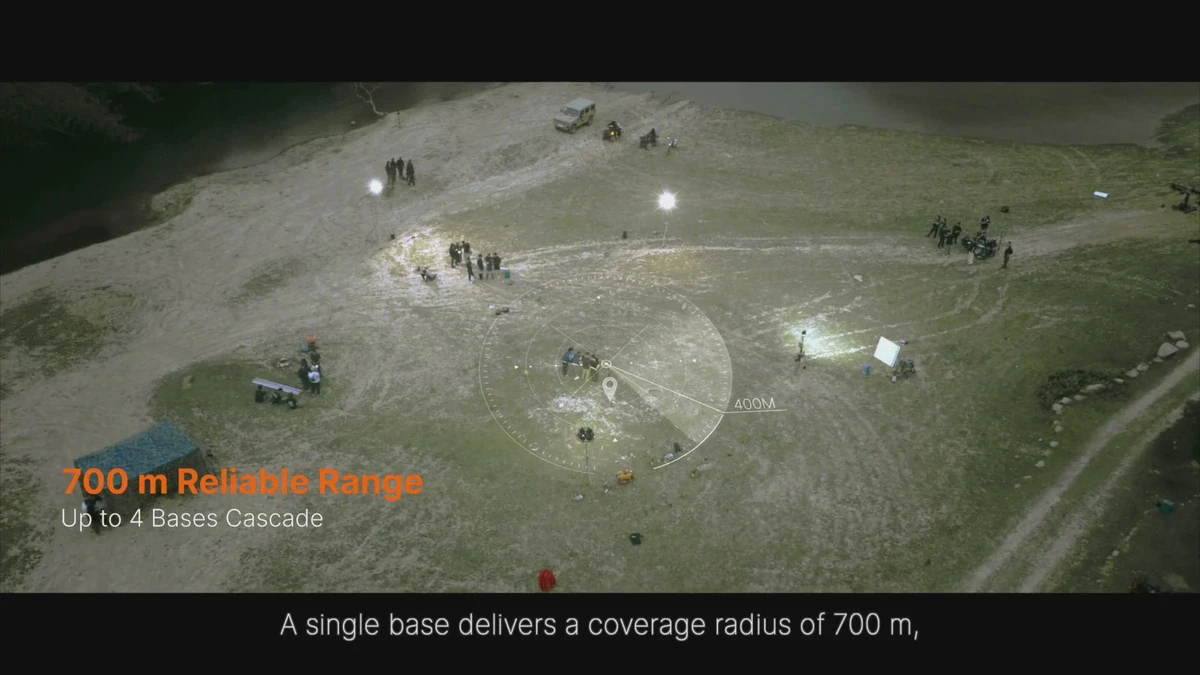
As scene complexity increases, a single workstation struggles to support high-resolution output. nDisplay distributes scenes across display clusters to achieve synchronized multi-screen rendering. This process requires a master clock, a protected high-throughput LAN, render nodes, and monitoring links. Network latency or clock desynchronization can cause screen tearing or flickering, severely impacting production schedules. Therefore, infrastructure stability and bandwidth planning are more critical than screen resolution itself.
Collaboration Pain Points Between Art and On-Set Teams
Epic’s best practices emphasize that art and on-set teams must conduct joint performance testing. A scene running on a workstation does not guarantee stable performance on an LED wall. Because LED walls differ from monitors in refresh rate, brightness, and color response, the final result artists see in software often varies. Both teams must establish a unified performance budget early on, defining frame rate targets and rendering overhead limits to prevent dropped frames or stuttering on set.
Specific Execution Steps for Prototype Testing
Before entering full-scale production, rigorous prototype testing is essential for risk mitigation. Prototype testing requires validating functional demos while stress-testing the entire toolchain in a real production environment. First, the team must build a minimal test scene containing representative geometry, material types, and dynamic elements to comprehensively assess system load. At this stage, tracking data must be captured using the exact cameras and lenses planned for production to ensure Live Link transform data matches physical equipment perfectly. Even minor parameter discrepancies can be amplified in post-production, causing virtual backgrounds to separate from foreground subjects.
Next, the focus shifts to verifying optical and display compatibility. Technicians should load a simplified scene onto the LED wall and carefully check for moiré patterns at various shooting angles. By adjusting camera distance, angle, and aperture, observe whether screen pixel pitch creates interference patterns at specific focal lengths. If visible pixels or color banding occur, the inner frustum range or texture resolution may need adjustment. Simultaneously, verify whether ambient light from the outer frustum meets subject lighting requirements. The outer frustum extends the background and casts light directly onto actors and props, creating critical lighting interactions. If outer frustum lighting is insufficient or conflicts with key lights, practical lights must be added to maintain consistent lighting logic.
Additionally, prototype testing must include data pipeline stability checks. Under master clock control, simulate extended runtime to detect memory leaks or frame rate fluctuations in the nDisplay cluster. The art team should monitor render node CPU and GPU usage on-site to confirm target frame rates are maintained in complex scenes. This process helps identify performance bottlenecks between workstations and LED walls; for example, resource-heavy effects that preview smoothly locally may cause overall latency during distributed rendering. Prototype testing allows teams to identify these issues early and optimize before principal photography, significantly reducing costly on-set trial and error.
Quality Control Workflow for Delivery and Readback
Virtual production delivery is not merely file transfer but a comprehensive quality assurance workflow involving multi-party collaboration. The pre-delivery readback phase ensures all captured data aligns with final deliverable standards. First, confirm that camera tracking data for all shots has been correctly imported into post-production compositing software. This data includes camera position, rotation, focal length, and lens distortion parameters, which form the basis for aligning virtual elements with live-action footage. Any data loss or formatting errors will halt compositing, making strict validation protocols essential to ensure metadata integrity.
Secondly, color management is critical to the delivery process. Verifying that the LED wall's output color space matches the post-production OCIO configuration is essential for maintaining consistent image tones. Due to differences between the physical properties of LED panels and digital color spaces, failing to perform accurate color mapping upfront creates significant challenges for post-production grading. The team must use professional colorimeters to measure the LED wall, generate corresponding ICC profiles, and apply them throughout the workflow. Simultaneously, the outer frustum area must be checked for visual artifacts or black borders to ensure ambient light continuity. As the bridge connecting virtual and real environments, improper edge handling in the outer frustum breaks audience immersion; therefore, playback reviews must pay special attention to the naturalness of edge transitions.
Finally, verifying performance logs serves as the last line of defense for delivery quality. Key metrics such as frame rate fluctuations, rendering latency, and network throughput must be recorded in detail during shooting to ensure stable frame rates without sudden stutters. These logs support current project reviews and provide valuable reference data for future similar projects. Through standardized delivery and playback workflows, teams can translate the technical advantages of virtual production into reliable productivity, ensuring every stage from pre-production to post-compositing meets high professional filmmaking standards. This process emphasizes the deep integration of technology and art, as only by perfecting every detail can truly convincing visuals be achieved.