Validation Logic and Execution Standards for Test Passes
In the early stages of green screen compositing, establishing an efficient and accurate test pass workflow is critical for controlling project risk. Test passes evaluate both visual previews and data outputs to assess visual quality, technical feasibility, and time costs comprehensively. Teams must first determine which shots suit a pure green screen approach and which require fluid simulations or matte painting assistance. Acceptance hinges on confirming the integration of foreground subjects with backgrounds, particularly the natural appearance of fine hair, semi-transparent objects, and motion blur areas. If strong ambient light reflections or complex depth-of-field changes are present, relying solely on automated tools often fails to meet commercial standards, necessitating manual frame-by-frame inspection.
Nuke's official documentation clearly categorizes 2D nodes, 3D nodes, depth nodes, metadata, and toolsets. An efficient compositing workflow relies on rigorous input-output relationships. It is recommended to manage base keying, color correction, FX compositing, and final output in separate layers. Encapsulating repetitive operations like denoising or sharpening into toolsets can significantly improve team collaboration efficiency. Node graph clarity directly determines the traceability of future modifications; messy wiring poses significant risks during version rollbacks. During test passes, compositors should leverage this structural advantage to quickly build temporary node graphs for visual validation, ensuring each logical layer remains independent and debuggable.
CopyCat technology enables learning sequence-specific effects from a few manually processed frames, which Inference then applies to the entire sequence. This feature is ideal for validating test passes involving localized repairs, soft segmentation, or deblurring. For instance, when subtle edge flaws appear in certain shots, artists can manually correct a few frames to train the model before batch application. Note that this technology cannot replace general fully automated keying; it serves only as an assistive tool requiring human intervention to ensure detail accuracy. During testing, teams should focus on evaluating CopyCat's generalization capabilities under varying lighting conditions and complex backgrounds, documenting its learning curve and processing time to determine if it warrants inclusion in the formal production pipeline. For transparent objects like glassware or plastic packaging, preserving correct refractive indices and specular highlights is essential, as these details define compositional realism and any minor errors will be magnified on high-definition screens.
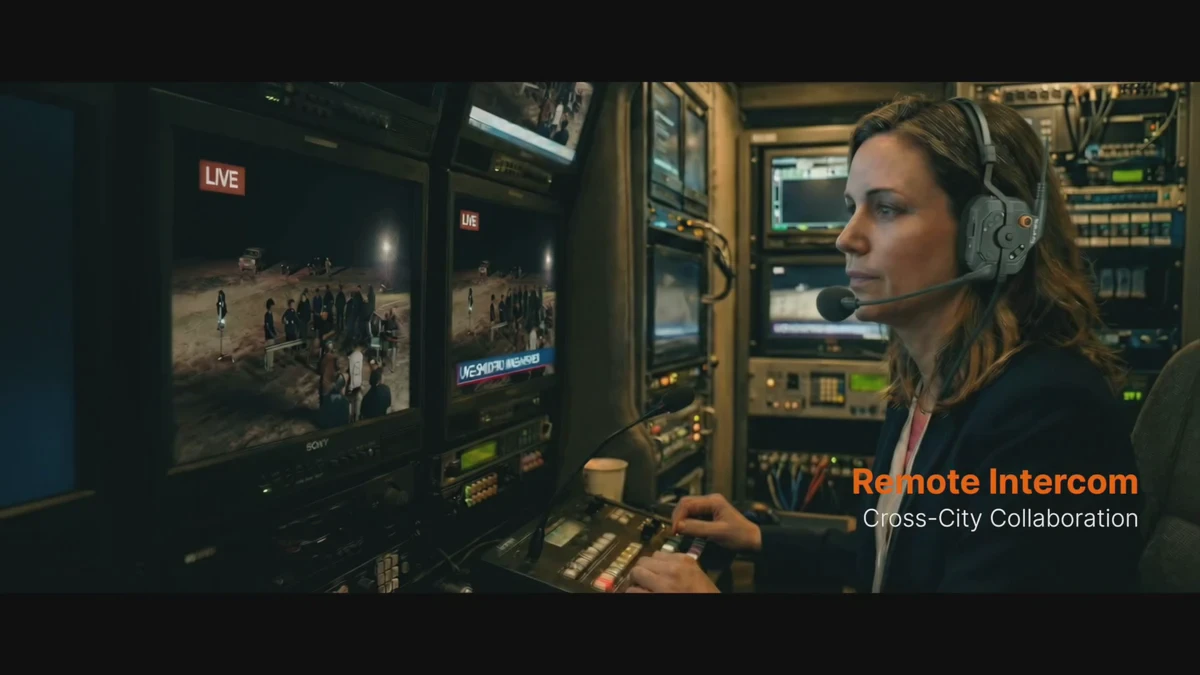
OpenColorIO is used to share color spaces and transform configurations across multiple software applications. Blender documentation recommends performing rendering and compositing in a scene-linear space, with OpenEXR commonly used for intermediate files. In green screen compositing, maintaining color consistency from production to post-production is critical. Configuring OCIO ensures that monitors and software across different departments display identical color tones. This prevents color casts caused by incorrect color space conversions, especially in HDR content production where accurate color mapping is a key acceptance criterion. During test phases, teams must work within a unified color management environment to ensure WYSIWYG accuracy. Any display results from uncalibrated screens are unreliable and may lead to incorrect judgments regarding edge feathering or brightness balance.
Green screens, edges, motion blur, transparent objects, and fine hair still require shot-by-shot inspection. For fast-moving objects, the direction and intensity of motion blur must match the camera shutter angle. Integrating fluid simulations with compositing is also a key focus during testing. When shots involve elements like smoke, water, or explosions, fluid simulation results must blend seamlessly with live-action footage. Compositors must pay attention to simulation resolution, cache formats, and lighting matches with live-action plates. Fluid simulations typically need to be rendered as EXR sequences with alpha channels for multi-layer compositing in Nuke. At this stage, using depth information is particularly important for establishing correct occlusion relationships and enhancing spatial depth. Test phases should cover these complex interaction scenarios to identify potential technical bottlenecks early.
Delivery Standards and Playback Verification Protocols
Delivery is not merely file transfer but the final line of defense for quality assurance. Deliverables must retain original assets, compositing scripts, necessary channels, and color configurations. A complete delivery package should include uncompressed master files, proxies, project files, and color management configuration files. Additionally, shot lists and version notes must be provided to help clients or downstream teams quickly locate required content. Ensure all links are correct to prevent missing files due to path issues. In digital film and television production, data integrity and traceability are key measures of professionalism. Retaining original assets means that even if issues arise in the final product, the team can revert to the initial state for recalculation or adjustment, serving as the only safeguard against sudden requirement changes.
Playback verification is an indispensable step before delivery. The playback process aims to validate how composited files perform across different decoders and playback environments. Teams must check whether all node parameters meet preset specifications and verify that color space conversions are correct, without clipping or banding. Confirming natural edge transitions without aliasing or residual green spill is a core task of playback verification. Since green screen compositing involves extensive pixel-level operations, minor compression artifacts or color banding may go unnoticed during preview but become highly visible on high-resolution masters. Therefore, playback verification must be conducted in a top-tier display environment using professional monitors rather than standard displays to capture subtle color deviations and noise.
During playback verification, pay special attention to the integrity of OpenEXR files. As the industry-standard intermediate file format, OpenEXR supports high dynamic range and multi-layer data. Teams must confirm that all layers, channels, and metadata are correctly embedded in the file. Any missing channels could cause failures in downstream color grading or VFX workflows. Simultaneously, compatibility must be tested across various playback devices, including televisions, projectors, and mobile terminals. Differences in gamma values and color spaces across devices may reveal hidden compositing issues, such as highlight clipping or lost shadow detail. Multi-platform playback verification ensures consistent visual experiences under various viewing conditions.
For shots involving complex edge processing, such as fine hair or semi-transparent objects, zoom to pixel level for inspection during playback. Fine hair must avoid hard edges or halo effects, as these details often determine compositing realism. Transparent objects like glassware or plastic packaging require accurate refractive indices and specular highlights. During playback, simulate the compression algorithms of actual broadcast environments to observe changes in compositing results after H.264 or HEVC encoding. If significant blocking noise or color distortion appears at edges, compression parameters or compositing strategies may need adjustment. This proactive verification significantly reduces rework rates and improves delivery efficiency.
Finally, the detail level of delivery documentation directly impacts client satisfaction. In addition to technical files, clear operation guides and precautions should be provided. For example, specify particular plugin versions used in the project, functional descriptions of custom nodes, and detailed color management configuration steps. This information helps clients understand the project's technical architecture, facilitating future maintenance and collaboration. Regarding limitations and next steps, this document is based on features of current mainstream compositing software, and specific operations may vary by software version. While AI-assisted tools improve efficiency, they cannot fully replace artists' aesthetic judgment. For more complex VFX requirements, in-depth testing combined with specific project cases is recommended. The following links provide official documentation on relevant technologies for further team reference and study.