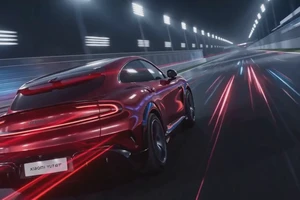
Node Logic and Data Isolation in Compositing Architecture
When building complex digital car compositing projects, the node classification principles emphasized in Nuke's official documentation are the cornerstone of project stability. 2D nodes, 3D nodes, depth nodes, metadata, and toolsets must be strictly separated; this physical isolation ensures that shots and data can be reviewed to handle the high-density visual information processing required in automotive commercials. When frames contain highly reflective metallic paint and complex environment maps, 3D nodes calculate precise light bounce paths on curved surfaces, while 2D nodes focus on pixel-level color correction and defect repair. Mixing these within the same hierarchy not only disrupts the render pipeline but also triggers cascading errors during later revisions. Therefore, artists must organize the node graph with clear input-output relationships, ensuring data flow remains unidirectional and controllable. Such structured project files serve as the foundation for current team collaboration and provide traceable logic for future version iterations, allowing every parameter adjustment to be precisely located.
CopyCat Learning Mechanisms and Test Validation Strategies
The core value of CopyCat technology lies in its ability to learn sequence-specific effects from a small set of manually processed frames, which Inference then applies to the entire sequence. This mechanism means it should not be defined as a generic, fully automatic keying tool, as complex automotive materials like metallic paint, glass, and rubber exhibit distinct physical properties under varying lighting angles that a single global model cannot cover. The primary task of testing is to validate the representativeness of training samples. Artists must select shot segments with typical features, such as motion blur areas during high-speed wheel rotation or environmental reflection changes on body curves, as training sets. By observing the Inference results across the full sequence, one can determine whether the algorithm has correctly captured texture details and lighting logic. This iterative validation based on limited samples effectively prevents erroneous patterns from spreading throughout the sequence, maintaining high visual quality standards while ensuring efficiency.
Edge Transitions and Artifact Warnings in Local Repair
Testing focuses on evaluating the precision of local repairs and soft segmentation. For fine hairs on car edges or transparent objects, traditional chroma keying often produces hard cuts or residual color spill. After using CopyCat to learn correct blur directions from adjacent frames, edge transition naturalness must be checked frame-by-frame during the test phase. If artifacts or excessive smoothing appear in a specific frame, it indicates the training data failed to cover lighting variations at that angle, requiring an adjustment to the input frame selection range rather than blindly expanding the application scope. Furthermore, deblurring validation is equally critical. When practical footage suffers from local softness due to focus issues, CopyCat can infer details by learning texture features from surrounding sharp areas. During testing, it is essential to compare texture consistency between inferred regions and the rest of the original footage to ensure no unnatural sharpening or noise is introduced. This meticulous inspection process is a key defense against visual discontinuities in the final deliverable.
Defining the Boundaries Between Automation and Manual Intervention
Another purpose of pilot testing is to establish boundaries between manual intervention and automated processing. Although CopyCat accelerates workflows, its effectiveness depends heavily on the quality and representativeness of training samples. During the pilot phase, the team must determine which details algorithms can resolve and which still require frame-by-frame manual rotoscoping. For example, algorithms may not fully remove green spill on green screen edges; in such cases, pilot test results guide artists on whether to retain manual correction steps. Thus, pilot testing serves as both technical validation and a management decision-making process, helping teams find the optimal balance between automation and manual refinement within budget and schedule constraints. Only effects validated through rigorous pilot testing should proceed to batch processing, reducing rework risks and ensuring stable final deliverables.
Color Space Consistency and Linear Workflow
In multi-software environments, OpenColorIO shares color spaces and transform configurations across applications, serving as the foundation for visual consistency. Blender documentation recommends performing rendering and compositing in scene-linear space, typically using OpenEXR for intermediate files. This means every stage—from modeling and rendering to compositing—must strictly adhere to linear color space standards. Automotive paint highlights often contain extremely high luminance values that require linear space processing to accurately simulate physical light falloff and blending. Converting to gamma-corrected space mid-pipeline causes highlight clipping or shadow detail loss, resulting in flat metallic textures. Therefore, delivered files must strictly follow this standard to ensure an accurate color transformation chain from rendering through compositing to output, preventing severe visual discrepancies caused by color space mismatches.
Channel Management Integrity and Reusability
Essential channels are independent layers supporting downstream color grading and VFX revisions, such as Alpha, Z-depth, and Specular passes. These channels play critical roles within the OpenColorIO color management system. The Z-depth channel allows compositors to adjust depth of field or add atmospheric perspective without re-rendering 3D assets, which is vital for fine-tuning spatial relationships between vehicles and backgrounds. The Specular pass isolates surface highlights, enabling independent control of reflection intensity during compositing without affecting diffuse color. Retaining these discrete channels ensures high future maintainability. Even with minor changes to the original 3D scene, updating relevant channels enables quick revisions without restarting the entire compositing pipeline, significantly enhancing project lifecycle value.
Delivery Asset Archiving Standards and Version History
Digital automotive compositing delivery involves not only exporting final video files but also systematically archiving complete project assets and color configurations. Delivery packages must include source footage, compositing scripts, essential channels, and color settings to ensure full traceability for future maintenance or secondary modifications. Source footage includes uncompressed EXR sequences or ProRes masters; these high-dynamic-range files preserve rich lighting information and serve as the foundation for any subsequent adjustments. Compositing scripts refer to annotated Nuke project files clearly labeling each node’s function and parameters, particularly regarding the organized separation of 2D nodes, 3D nodes, depth nodes, metadata, and toolsets. Such structured project files facilitate current team collaboration and provide clear logical pathways for future version iterations.
Shot-by-Shot Review Checklist for Playback Verification
Although green screens, edges, motion blur, transparent objects, and fine hair still require shot-by-shot inspection, the playback review phase focuses on overall pipeline compliance and completeness. Reviewers must verify that all keyframe data and camera tracking information are correctly embedded or separately archived, ensuring accurate spatial alignment between 3D assets and live-action plates. Additionally, node connections in compositing scripts must be checked against input-output organizational principles to prevent rendering errors or crashes caused by disorganized node graphs. For sequences generated via CopyCat, playback reviews must include spot checks across the full sequence to confirm consistency and ensure no random artifacts or flickering occurred during inference. Only projects passing comprehensive playback verification qualify as industry-standard deliverables, ensuring professionalism and reliability in digital automotive compositing for commercial production.
Failure Warnings and Emergency Response to Anomalies
During lengthy compositing cycles, failure warning mechanisms are essential for ensuring on-time project delivery. When sample tests reveal algorithm failures under specific lighting conditions, the team must immediately activate contingency plans by pausing batch processing for that category and switching to traditional manual rotoscoping or particle system reconstruction. For example, if CopyCat generates severe noise amplification on backlit translucent car windows, proceeding further will only increase post-production repair costs. Identifying and documenting such failure patterns helps optimize training set selection for future projects. Additionally, backup plans must be established in advance for render interruptions caused by hardware bottlenecks, such as using tiled rendering or lowering preview resolution to accelerate iteration. This keen insight into potential risks and rapid response capability distinguishes senior artists from ordinary operators.
Final Confirmation Step: Delivery Playback Review
Pre-delivery playback verification serves as the final line of defense against potential technical defects and visual flaws. Verification personnel must confirm that all keyframe data and camera tracking information are correctly embedded or archived separately, ensuring accurate spatial alignment between 3D assets and live-action footage. Simultaneously, node connections in compositing scripts must be checked for proper input-output organization to prevent render errors or crashes caused by node clutter. For sequences generated via CopyCat, playback reviews require spot-checking consistency across the entire sequence to ensure no random artifacts or flickering occurred during inference. Only projects passing comprehensive playback verification qualify as industry-standard deliverables, thereby guaranteeing professionalism and reliability in digital car compositing for commercial production.
Image Examples and Visual Reference Analysis
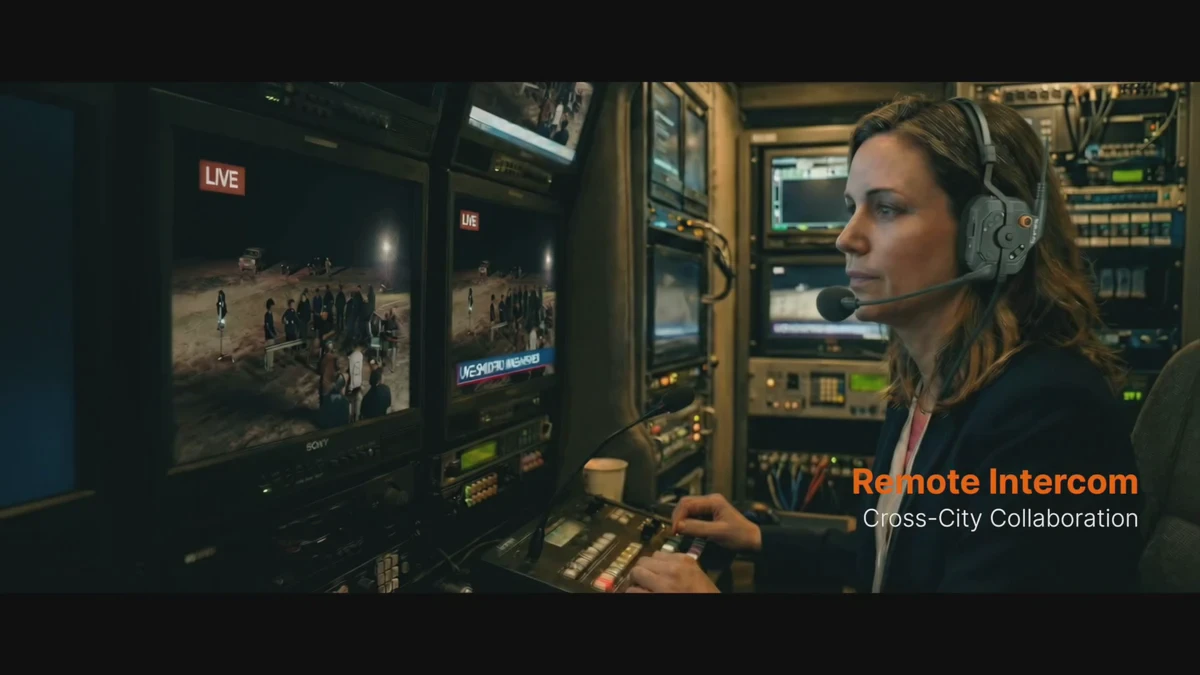
Careful observation of the above imagery provides deeper insight into the transitions between various stages of the compositing workflow. The frame displays not only the final visual effect but also the result of extensive node computations and color adjustments behind the scenes. In practice, artists must repeatedly compare their work against such reference frames to assess whether the current compositing stage meets expected texture requirements. Achieving both metallic paint glossiness and glass transparency requires strict color management and precise node control. This relentless pursuit of visual detail permeates every step from local repairs to final delivery, ensuring high-quality presentation in digital car compositing.
Summary and Outlook
Acceptance standards for digital car compositing are shifting from purely technical compliance to holistic artistic control throughout the pipeline. From CopyCat sample validation to OpenColorIO color unification, every interconnected step forms the foundation of high-quality final footage. Artists must master advanced automation tools while retaining strong traditional compositing skills to handle complex materials and variable lighting challenges. By establishing strict node management protocols, comprehensive channel retention policies, and meticulous playback verification workflows, teams can achieve an optimal balance between efficiency and quality. As technology advances, compositing workflows will become increasingly intelligent; however, the pursuit of photorealism and rigorous attention to detail will always remain the core essence of digital imaging.