Why Virtual Production Cannot Jump Straight to Large-Scale Projects
Many production teams rush to build full LED stages and begin principal photography when starting virtual production. This approach overlooks the complexity of real-time rendering. Unreal Engine's Inner Frustum technology relies on display clusters, a real-time rendering engine, and precise camera tracking systems. Virtual backgrounds must change seamlessly with the physical camera's perspective, placing extreme demands on hardware synchronization and data transmission. Skipping pre-validation can easily cause screen tearing, latency, or color distortion on set. Therefore, creating test shots before finalizing the toolchain is a key risk mitigation strategy.
Core Components of Inner Frustum Technology
The Inner Frustum requires multiple subsystems to work in concert. nDisplay distributes scenes across multiple display nodes to ensure high-resolution output. The Live Link interface receives camera position, orientation, and lighting data to synchronize virtual and physical elements. Camera calibration must precisely match the physical lens parameters, including focal length, distortion, and sensor size. Even minor deviations cause perspective errors that break viewer immersion.
Infrastructure Matters More Than Screen Size
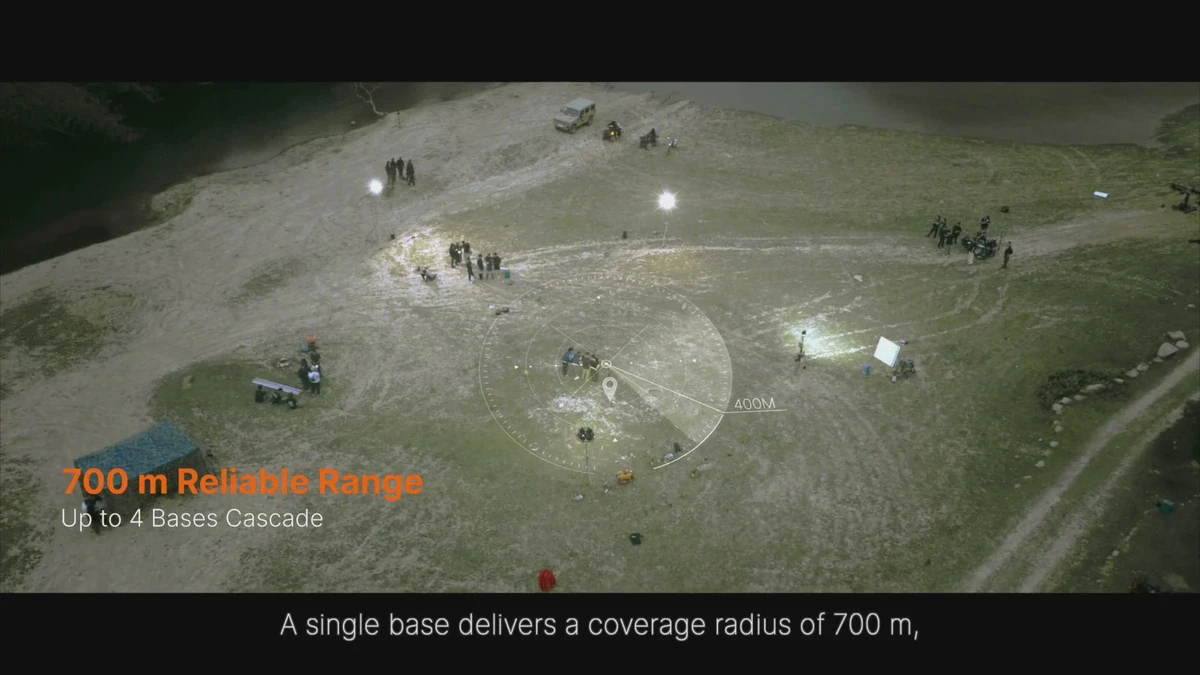
When building LED stages, teams often mistakenly believe that a large screen is sufficient. In reality, the cornerstones are master clock synchronization, high-throughput LAN, and render node stability. Monitoring chain quality directly affects the director's visual judgment. Insufficient network bandwidth or unsynchronized clocks can cause frame rate fluctuations and stuttering. Additionally, screen pixel pitch, shooting distance, and angle significantly affect moiré patterns. Rigorous lens tests must be conducted before principal photography to assess visible pixel issues across different focal lengths.
Strategies for Retaining Outer Frustum and Ambient Light
Even within the inner frustum, the outer frustum must still provide ambient light and reflection data. This helps actors and cinematographers perceive realistic spatial relationships. For complex shots unachievable in-camera, a hybrid approach can be used. This involves switching to green screen within the camera view while retaining outer frustum lighting. This flexibility allows teams to handle compositions exceeding the LED wall's physical limits without sacrificing image quality.
Collaboration Pain Points Between Art and On-Set Teams
Epic Games best practices emphasize that art and on-set technical teams must jointly conduct performance testing. Smooth operation on workstations does not guarantee stable performance on LED walls. Actual frame rates may drop significantly due to display cluster split-processing and signal transmission losses. Teams must establish unified performance budgets early, optimizing texture resolution and geometry complexity. Only prototype validation can reveal potential bottlenecks for targeted adjustments.
Prototype Testing Workflow and Key Metrics
The core purpose of prototype testing is validating technical pipeline feasibility at minimal cost, not achieving perfect visuals. Initial testing should deploy a minimal nDisplay cluster simulating real production network topology. The focus is verifying Live Link data latency and precision to ensure camera, lighting, and transform data drive LED content accurately in real time. Data latency exceeding thresholds causes visual misalignment during virtual-real integration, disrupting actor timing or causing viewer dizziness.
After confirming hardware connectivity, import standard test scenes for live-action validation. Testers should shoot from multiple angles using various focal lengths, documenting moiré frequency, color shift, and brightness uniformity at seam edges. Pay special attention to matching screen pixel pitch with the camera sensor, as improper distance and angle amplify visible pixel defects. Comparing local workstation rendering against actual LED wall output frame rates is also crucial. This identifies bottlenecks from split-processing and signal loss, enabling timely rendering adjustments or asset optimization.
Additionally, prototype testing must verify master clock synchronization. Without full synchronization, frame desync between render nodes may cause flickering or tearing. Monitoring signal quality helps identify bandwidth bottlenecks or protocol compatibility issues early. Proceed to the next phase only when all key metrics meet standards and art and technical teams agree on performance. This process benchmarks hardware capabilities and stress-tests collaboration workflows, ensuring unified understanding of technical boundaries and protocols before principal photography.
Delivery Preparation and Readback Verification Protocols
After completing sample tests and finalizing the toolchain, a strict readback verification mechanism must be established during the delivery preparation phase. This step ensures virtual production footage integrates seamlessly into post-production workflows, preventing delays caused by format incompatibility or missing metadata. First, clear acceptance criteria must be defined, focusing on camera tracking data smoothness to ensure there is no jitter or frame skipping. The physical condition of the LED wall must also be inspected individually for issues such as visible seams, uneven brightness, or color temperature drift. These subtle flaws may be hard to detect on monitors but become unacceptable visual defects when magnified in the final output.
Frame rate stability in dynamic scenes is another core inspection item. The team must confirm that frame rates consistently remain above target values during complex VFX triggers or heavy geometry movement. If frame rate fluctuations occur, immediately trace the issue back to render nodes or the network layer, reallocating render loads or optimizing scene resources as necessary. Color management consistency is equally critical; the LED wall's output color space must perfectly match post-production grading requirements. This involves calibrating the entire color pipeline from capture to display, including gamma, white balance, and LUT accuracy.
Before asset delivery, a metadata integrity check must be performed on all relevant files. This includes timecode alignment for camera tracking data, accurate recording of lens parameters, and scene version identification. Ensuring downstream editing and VFX teams can quickly access required information reduces communication overhead and rework risks. Readback verification is not only a final technical checkpoint but also a vital component of the quality control system. Through standardized checklists and repeated practical testing, teams can effectively mitigate potential technical risks and ensure on-time, high-quality delivery. This rigorous process reflects the professionalism of virtual production as a high-skill discipline and accumulates valuable empirical data for future projects.
Limitations and Further Resources
This document provides guidance based solely on general technical facts and does not cover specific client cases or equipment models. In actual projects, hardware configurations and environmental factors may cause variations in results. Teams are advised to consult official documentation for the latest technical details and best practice guidelines.