When confronting “commercial advertising PPM pre production meeting checklist” between budget meetings and the review monitor, brands are most likely to postpone rule-related questions until the final version. What matters is not the amount of terminology, but whether the twelve-item PPM freeze sheet can identify the responsible person, shot, and version before rework occurs.
The most dangerous appearance in a PPM is that “everyone nodded.” The director presents the film, the client says they like it, production says it can be done, and the agency says it will refine the details; but on filming day, the sample has not arrived, the actor cannot perform the action, lighting cannot be controlled at the location, a product claim is added at the last minute, and a horizontal shot suddenly has to support vertical use. The problem is not that the creative changed, but that decisions that should have been frozen were treated only as directions for discussion.
A PPM is not a showcase. It turns matters affecting budget, the set, and acceptance into production decisions with an owner, version number, and deadline.
The 12 decisions that must be frozen

- Whose perception the film must change, and how; 2. Product or brand information viewers must understand in the first few seconds; 3. Shot tasks assigned respectively to the main film and short cuts; 4. Final versions of product, packaging, interface, and copy; 5. Actors, character relationships, and executable actions; 6. Setting, weather, time of day, and sound control; 7. Art direction, wardrobe, props, and brand-recognition boundaries; 8. Camera positions, movement, VFX dependencies, and aspect-ratio strategy; 9. Shots that may be replaced and those that absolutely may not; 10. Rights for music, voice-over, fonts, likenesses, and assets; 11. Filming-day priorities, backup plans, and stop conditions; 12. Post-production versions, review rounds, masters, and delivery acceptance.
This is not meant to slow the meeting, but to prevent the filming day from paying a higher price for a decision with no clear ownership.
Use three colors—“frozen, pending, assumption”—not “we’ll discuss it later”
| Status | May it enter the filming plan? | What must be recorded |
|---|---|---|
| Frozen | Yes | Final version, approver, and scope of impact |
| Pending | Only with an alternative | Latest decision time, alternative, and cost impact |
| Assumption | Must not be executed as approved | Who verifies it, how, and what happens if it fails |
Whether to include an animation, whether an actor can perform an action, and whether a product can be used in water cannot all be handled with the same “it should be fine.” The core value of a PPM is separating different kinds of uncertainty so everyone knows which item affects the set, post-production, or launch.
Translate “looks good” into filming-day tasks
“More premium,” “more cinematic,” and “a little more natural” are creative directions, not execution instructions. Translate them into filmable relationships: where the key light comes from, how far the person is from the product, whether the camera observes or follows, what space sound design needs, and when the product is first seen clearly. Every judgment should have a corresponding place in the storyboard, location image, call sheet, or reference film.
If a requirement cannot become a shot task, it is not ready to be frozen; if a shot task has no clear commercial purpose, it should not occupy filming time.
What to do in the last ten minutes of a PPM
Do not play the moodboard again. Read the risk list item by item: samples, versions, weather, location, actors, rights, technology, review, delivery, and owners. When everyone leaves, they should know what cannot change on set tomorrow, what can change, who may decide, and whose renewed approval a change will require.
If you are preparing a brand TVC, product advertisement, or multi-version campaign film, see our TVC advertising-film production solution, and bring the current script, storyboard, and version requirements to the project discussion. We recommend placing the 12 decisions in the PPM before discussing how grand the images should be.
Not every decision requires the client’s individual approval
The PPM must distinguish “facts the brand must decide” from “methods the director may decide within established boundaries.” Product claims, packaging versions, sensitive images, character identities, budget ceiling, media duration, and rights scope belong to the former; fine adjustments to shot size, performance pacing, shot substitutions, and on-set scheduling usually belong to the latter. The clearer the boundary, the more creative room exists on set. Sending every small matter back to the client slows filming; leaving every major matter to the set makes the project lose control.
Beside every frozen item, write “what changes if this changes.” A packaging revision may affect props, compositing, subtitles, stills, and e-commerce pages; new information in a 15-second version may affect the script, camera positions, and editing structure. Only after seeing the scope of impact can the team make the right level of decision at the right time.
After the PPM, there must also be a filming-day control card
The control card retains only content that can genuinely block filming: claims, samples, actors, settings, weather, rights, key shots, backup plans, and the day’s decision-maker. It does not replace the full storyboard, but when conditions change on set it lets production, director, and client quickly decide whether the matter can be adjusted within boundaries or requires renewed approval.
Current rules set the boundary; the “twelve-item PPM freeze sheet” implements it
Before publication, “Advertising-film PPM meeting checklist” rechecks platform, standard, or rights facts against official adobe.com materials and official wipo.int materials. External sources answer “What is the current public boundary?” The original tool in this article answers “Who turns it into scripts, shots, versions, and acceptance actions, and when?” If the account, region, category, or rule date changes, return to the original page for verification rather than treating this article as a permanently fixed description of the platform’s back end.
Sources support only verifiable external facts; this article uses the twelve-item PPM freeze sheet and unresolved-item escalation rules to form an original production judgment, without using case imagery as a substitute for evidence of rules.
Bring the judgment back to this advertising-film / TVC project
If the team is addressing “commercial advertising PPM pre production meeting checklist,” first prepare the current page or placement, product facts, target market, and available assets, then use the twelve-item PPM freeze sheet and unresolved-item escalation rules to identify gaps. You can also begin with our advertising-film / TVC solution and confirm that this supporting article and the commercial page serve different purposes.
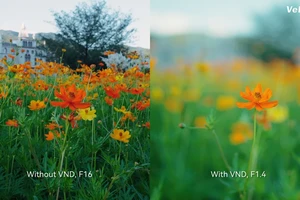
The cover of “Advertising-film PPM meeting checklist” was reframed from a local ONCE advertising-film / TVC case. It shows only composition and production language, and does not represent evidence of platform rules, product performance, or client results discussed in this article.