A product video is most likely to lose credibility precisely where it “looks highly convincing.” Water droplets roll off beautifully, a number appears in the shot, and a person completes an action with one press; but as soon as sales, legal, or media teams ask, “Under what conditions does this result hold?”, every performance statement in the video may become a risk that cannot be handed over.
Here is the judgment upfront: a performance claim is not a selling point added to subtitles in post-production. It is a promise that the same evidence can explain from testing and product status through filming conditions and page copy. The shot makes the point understandable; the evidence makes the expression defensible. Neither can replace the other.
First divide every selling point into four types

The first type is directly observable fact, such as dimensions, interfaces, visible structures, or operating steps; make sure the product filmed is the version actually sold. The second is conditional performance, such as battery life, heat resistance, water resistance, speed, or capacity; reviewers need the test method, environment, sample condition, and limitations. The third is comparative language, such as “faster,” “quieter,” or “more durable”; what matters is not the strength of the adjective but whether the comparison target, basis, and scope can be explained. The fourth is outcome language, such as “improves immediately” or “solves the problem”; these statements are least suited to being carried by an atmospheric shot alone.
If a selling point cannot be classified, do not film it as a conclusion yet. Leave it in the “to be substantiated” field of the Brief and decide the shot only after product, R&D, or brand teams provide usable boundaries.
Replace verbal confirmation with a “claim—evidence—shot” card
| Field | Specify before filming | Check during final-video acceptance |
|---|---|---|
| Exact claim | The complete sentence the audience will actually hear or see | Whether subtitles, voice-over, end card, and product page match exactly |
| Evidence number | Test report, specification sheet, approved copy, or physical observation | Whether the document version corresponds to the filmed version |
| Conditions | Temperature, distance, duration, sample, accessories, and operating method | Whether the image omits conditions that would change its meaning |
| Shot task | Demonstration action, detail close-up, comparison, or chart | Whether the shot truly shows the action rather than implying it through mood |
| Qualification format | On-screen footnote, spoken qualification, or landing-page explanation | Whether it is legible on mobile and whether it contradicts the product page |
The value of this card is not to make the video resemble an instruction manual, but to move “beautiful but inexplicable” rework to before filming. In other words, creativity can amplify proven value, but it should not manufacture an unsubstantiated result for the product.
A shot footnote is not a legal patch; it is part of the viewing order
Many teams squeeze qualifications into a line of tiny white text, which neither aids understanding nor genuinely reduces misinterpretation. A better method is to make the relationship between conditions and shots clear: state the comparison target before a comparison; identify the mode or accessory used before a demonstration; and when the result appears, use a short sentence to explain the applicable environment. The purpose of a footnote is not to obscure the image, but to prevent viewers from misreading “a demonstration in a particular setting” as “the same for everyone, all the time.”
If a footnote makes the statement lose its force as soon as it appears, the problem is usually not the footnote but that the claim exceeds the evidence. Narrow the wording, replace it with an observable action, or have R&D provide additional testing; do not try to edit the problem away with faster cuts.
Four common misconceptions
Treating laboratory conditions as everyday results; treating a concept animation as a real function; treating an old model or engineering prototype as the version currently sold; and editing comparative footage so the basis of comparison cannot be seen. All may make the image feel more “impactful” in the short term, but they leave sales, customer service, and media teams without a shared language when they use the same asset.
ONCE recommends producing the video in three layers—“perceivable, provable, and deliverable”: first let consumers understand what the product changes; then ensure every key expression can be traced to evidence; finally place the main video, short cuts, subtitled versions, and product-page assets in the same version sheet. If you are planning a product video for a cross-border product page, independent website, or advertisement, see our cross-border e-commerce product-video production solution, and bring product specifications, test files, and target-market information to the project discussion.
Do not ask only “Can we say this?” in the review meeting
A more useful question is: if this sentence is isolated by a customer, customer-service agent, channel, or competitor, can we retrieve the test, conditions, and approver within ten minutes? If not, it is not yet a publishable claim. The review can proceed shot by shot: first play the version without subtitles and confirm what the image itself implies; then play the complete version and check whether the spoken words, on-screen text, and footnotes change the meaning; finally open the product page and evidence card to confirm that consumers receive the same explanation after clicking.
This process also helps the creative team learn earlier which shots are most valuable. Shots supported by physical actions and explanations of conditions can be filmed boldly and cut repeatedly; for shots that work only with specific wording, decide at the script stage whether they are worth the production cost.
The deliverable for operations is not a single finished-video file
At minimum, it should include: a clean master without subtitles, a version with footnotes, subtitle files adapted for different platforms, a selling-point-to-evidence cross-reference, product model and packaging version, permitted markets, qualifications that cannot be deleted or changed, and the final approval date for each version. Then, when the page, price, packaging, or test result changes, the team knows which version to withdraw instead of allowing an old video to keep circulating across channels.
Current rules set the boundary; the “claim—evidence—shot ledger” implements it
Before publication, “Compliance for claims in cross-border e-commerce videos” rechecks platform, standard, or rights facts against official ftc.gov materials and official gov.uk materials. External sources answer “What is the current public boundary?” The original tool in this article answers “Who turns it into scripts, shots, versions, and acceptance actions, and when?” If the account, region, category, or rule date changes, return to the original page for verification rather than treating this article as a permanently fixed description of the platform’s back end.
Sources support only verifiable external facts; this article uses the claim—evidence—shot ledger and delivery-acceptance spot-check card to form an original production judgment, without using case imagery as a substitute for evidence of rules.
Bring the judgment back to this cross-border e-commerce product-video project
If the team is addressing “What evidence is needed for performance and effect claims in cross-border e-commerce product videos?”, first prepare the current page or placement, product facts, target market, and available assets, then use the claim—evidence—shot ledger and delivery-acceptance spot-check card to identify gaps. You can also begin with our cross-border e-commerce product-video solution and confirm that this supporting article and the commercial page serve different purposes.
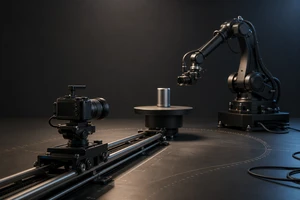
The cover of “Compliance for claims in cross-border e-commerce videos” was reframed from a local ONCE cross-border e-commerce product-video case. It shows only composition and production language, and does not represent evidence of platform rules, product performance, or client results discussed in this article.