Define Communication Goals for Rotational Storytelling During Project Initiation
Before launching a TVC project, brands must clarify whether product rotation is intended to showcase structural details or create an emotional atmosphere. If the goal is to present precision craftsmanship, such as watch movements or car wheels, rotation requires macro lenses and high frame rates to ensure every chamfer is clearly visible. If the goal is to convey brand tone, such as for perfume or beverages, rotation should combine dynamic lighting and slow motion to emphasize texture over physical specifications. Marketing leads should specify core selling points and reference visuals in the brief to prevent the production team from deviating from commercial goals during creative exploration. Failing to clarify this results in visually appealing footage that fails to support sales messaging, increasing rework costs.
Define Rotation Axes and Motion Paths in Pre-Production Storyboards
Storyboards must not rely solely on text to describe rotation; they must lock in the axis through animatics or detailed diagrams. Rotating a product around its own central axis suits standardized displays, while rotating around an external virtual point creates stronger spatial depth. The production team must confirm the speed curve at this stage, deciding between uniform mechanical motion or organic acceleration and deceleration. Brands must provide precise 3D models or physical samples to test center-of-gravity balance. If a physical object is unbalanced, high-speed rotation will cause image shake and diminish premium quality. Teams should then evaluate using post-production CGI instead of live action, or using hidden rigs with allocated cleanup budgets. Ignoring axis planning leads to perspective errors during compositing, preventing natural integration with background environments.
Set Construction and Crew Role Allocation
During pre-production, the art director must design backgrounds based on rotation characteristics. Solid colors facilitate keying, while practical sets require depth-of-field considerations to complement the rotating subject. Gaffers must calculate reflection angles in advance, preparing diffusion screens or flags to control stray light. The director and cinematographer must confirm focal lengths: telephoto compression suits close-up rotation, while wide angles suit interactions between environment and product. The production manager must coordinate venue power loads to ensure stable operation of motorized turntables or robotic arms. All personnel must complete technical rehearsals the day before shooting to confirm clear communication channels and prevent interruptions caused by miscommunication. Clear division of labor ensures dedicated oversight for every step, reducing on-set chaos.
Lighting and Mechanical Coordination During On-Set Execution
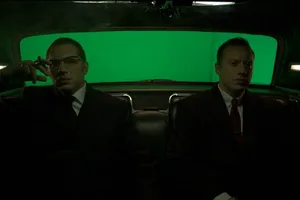
Live-action rotation imposes strict demands on lighting setups. As the product turns, highlights move across surfaces; fixed lighting positions may cause uneven exposure or broken reflections. The cinematographer must design ring lighting or multi-point fill schemes to ensure continuous sheen during rotation. Simultaneously, motorized turntables or robotic arms must synchronize with the camera shutter to avoid moiré patterns or uncontrolled motion blur. Clean background plates without the product and reference frames with markers must be recorded on set for post-production tracking. If on-set lighting is complex and reflections are uncontrollable, green screen shooting with post-production lighting reconstruction is recommended. Failing to conduct synchronization tests risks unusable footage, requiring venue and crew rescheduling and causing delays.
Matching Camera Movement and Product Dynamics in Post-Production
The core post-production task is ensuring camera and product rotation work visually in harmony rather than conflict. If the camera orbits the product, the product's self-rotation speed must adjust accordingly to maintain relative stability or create specific visual tension. Editors must align rotation start and end times with musical beats, ensuring keyframes land on accents. Color grading must unify black/white levels and color temperature between live footage and CGI elements to avoid inconsistencies caused by differing light sources. Sound design should incorporate subtle ambient or mechanical sounds to enhance rotational realism. Missing tracking data from pre-production makes forced matching result in edge flickering or floating artifacts, severely impacting quality. This requires returning to production for additional footage or adopting full CG reconstruction.
Multi-Dimensional Acceptance Checklist for Delivery
When accepting a TVC, brands should not only review overall effects but also conduct itemized checks. First, verify that product logos remain undistorted and sharp during rotation to preserve brand assets. Second, validate clarity across playback sizes, especially on mobile screens where fast rotation may cause detail loss. Audio must be checked to ensure rotational sound effects strictly match visual actions without delay or abrupt cuts. Subtitles and safe areas must comply with latest platform specifications to avoid obstruction by UI elements. Source files must include layered projects to allow future speed adjustments or background replacements. Perspective errors or lighting discontinuities constitute major defects requiring corrected versions rather than simple compressed outputs. Lax acceptance standards risk technical failures upon release, damaging professional brand image.
Identifying Boundaries Where Rotation Techniques Are Inapplicable
Not all products suit rotational display. For irregularly shaped or asymmetrical daily items, forced rotation may expose design flaws or appear cluttered. If product functionality relies on static demonstrations, such as software interfaces or home furnishings, rotation distracts viewers from functional logic. Furthermore, in low-budget or tight-schedule projects, complex rotational shooting and compositing significantly increase costs; fixed-camera multi-angle cuts should be prioritized. Brands must assess target audience viewing habits; if primary channels involve fast-scrolling feeds, prolonged rotational buildups may reduce completion rates. Forcing rotation techniques in unsuitable scenarios wastes resources and reduces communication efficiency.
Risk Management and Technical Contingency Plans
Production teams must anticipate potential risks and formulate contingency plans. Mechanical failure is a common hazard; backup turntables or manual rotation options are essential. Data storage requires dual backups to prevent footage loss from hardware damage. If weather changes affect exterior lighting, artificial sources simulating natural light or schedule adjustments are necessary. For high-precision products, dust and fingerprints are easily magnified during rotation; dedicated cleaning staff is required. If clients change requirements mid-project, impacts on existing footage must be assessed, activating alternative creative plans if necessary. Establishing risk warning mechanisms ensures orderly progress despite emergencies, safeguarding final delivery quality.
Next Steps and Collaboration Preparation
If your project involves complex product dynamics, invite the production team to creative discussions early to evaluate the cost-benefit ratio of live action versus CGI. Organize 3D data, texture maps, and core selling point documents to enable rapid animatic generation. Define acceptance milestones for each phase, reserving sufficient time for technical testing and refinement. ONCE provides end-to-end production services covering TVCs, brand videos, and product videos, assisting you in streamlining workflows from concept to delivery. Please clarify communication goals and budget ranges before contact so we can provide targeted execution plans. Avoid locking creative scripts without confirming technical feasibility to prevent passive rework later.
If you are preparing a TVC project, organize your brief, reference visuals, product or corporate materials, delivery platforms, and licensing scope before reviewing theTVC Service Pageto translate abstract preferences into actionable production parameters.