Define Visual Goals and Physical Constraints During Project Initiation
Before launching a TVC project, the brand must define the core narrative function of slow-motion shots. Slow motion primarily serves to amplify emotional tension or highlight product texture. If creative requirements involve flowing hair or moving fabric, the team must assess whether the on-set environment possesses the natural conditions to achieve these effects. The team must confirm the material properties of the subject, as silk and cotton-linen react differently to airflow. Reference footage should be collected at this stage to clarify the expected range of motion and lighting levels. Without specific references, post-production communication is prone to misalignment. A key risk is prioritizing visual spectacle over brand tonal consistency. An exception applies when the product features static aesthetics; forcing dynamic elements may distract the audience. Decision-makers must confirm during scripting whether these shots are essential narrative components to avoid wasting resources.
Material Testing and Wind Effect Rehearsal During Pre-Production
Upon entering pre-production, the production team must conduct physical tests. Fabrics of different weights vary significantly in wind sensitivity, and actor hair texture affects styling durability. It is recommended to bring various backup fabrics for on-site wind tests, recording optimal fan settings and distances. Hairstylists must use styling products to balance natural appearance with wind resistance, preventing hair from clumping. The lighting crew must anticipate exposure compensation needs under high shutter speeds to ensure sufficient brightness without flicker. This phase requires a detailed technical execution sheet specifying fan models, blade angles, and actor blocking. Failure to conduct field tests may result in significant unusable footage due to uncontrollable wind on shoot day. Acceptance criteria depend on whether details remain distinct in test playback and whether edge motion blur is controlled. Consequently, skipping preliminary testing will cause post-production repair costs to rise exponentially.
Frame Rate Selection and Lighting Control During Production
During filming, the Director of Photography must determine the capture frame rate based on final playback speed. Higher frame rates yield smoother motion but require greater light intensity. The team must coordinate lighting power and heat dissipation to prevent high temperatures from affecting actor performance or altering fabric physics. Global shutter sensors are recommended to reduce geometric distortion caused by rolling shutters, especially in fast-moving shots. Focus pulling must be handled by an experienced focus puller or a high-precision autofocus system to keep hair tips within the depth of field. A risk involves surging data volumes at high frame rates; storage media write speeds must sustain continuous recording. Storage bottlenecks causing dropped frames will necessitate reshooting the entire take. Exceptionally, if the creative demands specific motion blur, frame rates and shutter angles may be adjusted accordingly. Acceptance relies on raw footage playing back on monitors without stuttering, tearing, or soft focus.
Pacing Control and Footage Selection in Post-Production Editing
The primary task in editing is selecting the best clips from massive amounts of high-frame-rate footage. Editors must monitor the continuity of fabric folds and the natural rhythm of hair movement, removing frames with excessive mechanical feel or physical logic errors. Time remapping can fine-tune action speed to create non-linear temporal flow, provided motion trajectories transition smoothly. Sound design intervenes here, using low-frequency effects to enhance the weight of slow motion or high-frequency details to emphasize texture. Overreliance on speed-ramping plugins risks introducing artifacts or jitter. The standard is whether audiences accept changes in temporal flow subconsciously without visual discomfort. Slight focus issues may be remedied via focus stacking or local sharpening, though digital noise must be avoided. Deliverables should include a rough cut for client confirmation of narrative logic before focusing on detailed refinement.
Precision Handling of VFX and Cleanup Work
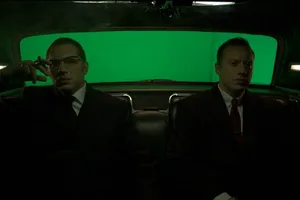
Elements that cannot be physically removed, such as hair clips or invisible support wires, require visual effects processing. Rotoscoping separates foreground subjects from backgrounds for independent color grading or replacement. When hair intertwines with complex backgrounds, frame-by-frame painting or AI-assisted segmentation tools improve precision. Teams must handle semi-transparent edges carefully to preserve hair translucency and avoid harsh matte lines. Manual retouching risks being time-consuming and prone to flickering. Conversely, solid or simple gradient backgrounds allow for quick separation via keying. Acceptance focuses on edge stability during motion, checking for jitter or residual background colors. Close collaboration with the color department is essential to ensure VFX layers match live-action footage in color space.
Texture Restoration and Style Unification in Color Grading and Rendering
Colorists must perform secondary grading tailored to slow-motion footage, enhancing fabric textures and hair highlights. High-frame-rate footage often offers higher dynamic range; highlights and shadows must be mapped properly to avoid flatness or excessive contrast. Stylized grading must adhere to brand visual guidelines, maintaining consistent hue and saturation with normal-speed shots. Excessive sharpening risks visible digital artifacts that undermine cinematic quality. The standard is rich yet comfortable detail across various display devices. Proxy files should be generated for internal review before delivery to check for color banding or compression noise. For multi-platform distribution, output versions according to respective platform color profiles. Exceptions allowing reduced realism for artistic expression apply only when creatives demand specific retro or surreal tones.
Final Acceptance Checklist and Definition of Inapplicable Scenarios
During project wrap-up, the brand should verify deliverables item by item against established standards. The checklist includes resolution, frame rate, codec format, audio levels, and subtitle accuracy. Slow-motion shots must be reviewed specifically on mobile screens to ensure detail remains legible. Source and project files must be archived as agreed to facilitate future modifications or reuse. Copyright clearance must explicitly cover all music, fonts, and VFX plugin licenses. High-cost productions are unsuitable for rapid-iteration projects with tight budgets, informational videos requiring no dynamic detail, or content relying primarily on talking heads. Complex VFX may distract if the communication goal is purely informational. Next steps should include reviewing technical challenges with the production team and building an internal asset library to accumulate data for similar future needs, thereby optimizing estimation accuracy and execution efficiency.
If you are preparing a TVC project, organize your brief, reference visuals, product or corporate materials, delivery platforms, and copyright scope first, then visit ourTVC Commercial Services pageto translate abstract preferences into actionable production parameters.