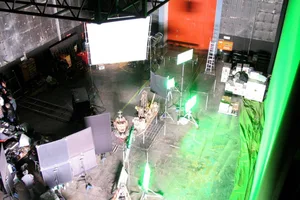
A homepage short version is not simply a truncated excerpt of the full-length film.
Many marketing leaders assume that the short version for a website homepage is merely a highlight reel cut from the full-length film. This misconception often results in a final deliverable with sluggish pacing, unbalanced information density, or a failure to establish a visual hook within the first three seconds above the fold. Homepage videos serve the dual purpose of driving immediate conversion and setting the brand tone, requiring a narrative logic independent of the long-form content. Relying solely on post-production editing to reduce duration typically compromises visual integrity or forces accelerated voiceovers, degrading the viewing experience.

During project initiation, the homepage short version should be planned as a distinct deliverable. This requires developing two parallel narrative structures during scriptwriting rather than writing the long form first and then subtracting content. The short-form script should focus on a single core selling point or emotional value, omitting redundant segments used in the long form for background context, company history, or credential listings. If existing footage cannot support an independent short-form narrative, specific shots must be added to the shooting schedule, such as tighter close-up sequences, more dynamic camera movements, or composition safe zones reserved for vertical or horizontal adaptation.
The criterion for determining whether separate short-form footage is needed lies in the visualizability of core messages. If key arguments in the long form rely heavily on extensive narration without strong corresponding visual symbols, those segments are unsuitable for a homepage environment where sound may be muted or low. In such cases, purely visual alternative shots must be filmed, or post-production methods like motion graphics or AIGC-generated imagery must be used to reconstruct the message delivery. Ignoring this criterion and forcing long-form footage into a short edit risks causing website visitors to miss core brand information entirely when audio is off.
Communication Objectives and Audience Contexts to Confirm During Project Initiation
Viewing contexts for homepage videos are highly unpredictable; users may be in offices, commuting, or in noisy public spaces. Therefore, project initiation must define whether the primary goal is building trust, generating interest, or driving clicks, as each objective demands a distinct content strategy. When building trust, visuals should emphasize authentic work environments, professional equipment details, or team collaboration; when generating interest, focus on product efficacy, innovative technology demonstrations, or emotional resonance. Vague objectives leave editors without clear criteria for selecting footage, resulting in compromised versions that are neither professional nor engaging.
The granularity of audience profiling directly impacts information density and pacing choices. Short versions targeting industry experts may retain technical terminology and parameter displays, provided visual presentation remains precise. Versions for general consumers should translate abstract concepts into tangible real-life scenarios, avoiding professional jargon that creates comprehension barriers. Brands must provide clear audience segmentation data before project launch, including knowledge backgrounds, pain points, and typical browsing habits. Without this information, production teams can only guess based on experience, significantly increasing rework risks.
Technical capabilities and interactive design of the homepage must also be confirmed in advance. Factors such as autoplay settings, default mute status, fallback cover images, and failure contingencies inversely constrain short-form content design. For instance, if the site enforces muted autoplay, the video must convey information entirely through visuals, with subtitle styling and placement coordinated with the web UI. If the video is located below the fold, the opening need not aggressively pursue a three-second hook but should instead prioritize retention in the middle section. These technical details should be jointly confirmed by the brand and technical teams before creative development to avoid forced revisions due to compatibility issues after launch.
Visual Assets Reserved for the Short Version During Production
Even if the short version primarily repurposes long-form footage, dedicated visual assets must be intentionally captured on set. This includes additional dialogue-free action close-ups, seamless loopable opening and closing shots, B-roll matching the website's color palette, and clean background plates for dynamic typography. After completing main shots for the long form, cinematographers should proactively ask editors if supplementary short-form assets are needed rather than waiting for post-production feedback. Spending ten extra minutes on set to capture a transition shot can save hours of compositing or color grading later.
Lighting and art direction must also accommodate short-form visual needs. Homepage videos typically play in small windows, where complex lighting or dense background elements can appear cluttered. For short-form shots, simplify background layers, increase subject contrast, and enhance the recognizability of key props. If the long form uses cinematic low-key lighting, the short version may require additional fill light to ensure detail clarity on small screens. Such differentiated visual treatments should be clearly noted on call sheets to prevent continuity errors leading to misuse of footage.
Actor performance and choreography also require version-specific differentiation. Natural, relaxed pacing suitable for the long form may appear sluggish in the short version. Therefore, actors should provide two performance intensities for the same scene: one for emotional immersion in the long form and another for efficient information delivery in the short form. For product demonstration shots, specifically film accelerated operations or step-by-step close-ups to facilitate speed-ramping edits that match short-form pacing. Neglecting performance adaptation forces editors to rely on frame skipping or speed adjustments, resulting in unnatural motion or emotional discontinuity.
Structural Reassembly Strategies in Post-Production Editing
Short-form editing is not merely trimming the long form along a timeline but reassembling visual logic based on a new script. Editors should first build a storyboard exclusive to the short version and select applicable footage to populate it, rather than marking deletions on the long-form timeline. This bottom-up reassembly ensures every frame serves the short-form objective, preventing structural looseness caused by retaining brilliant but irrelevant long-form shots. When suitable footage is lacking at key nodes, promptly notify the director or brand to negotiate reshoots, copy revisions, or alternative visual solutions rather than forcing splices that create narrative gaps.
Sound design holds independent status in the short version. Even if the homepage defaults to mute, a complete audio track is essential as some users will enable sound. Crucially, musical rhythm, sound effects, and narration pauses must strictly align with short-form edit points; the long-form audio track cannot simply be trimmed. Short-form music typically requires faster transitions, denser sound effects to reinforce visual focal points, and re-recorded or adjusted narration pacing and phrasing. If budget constraints preclude re-recording narration, at least rhythm-edit the original audio to match the breathing pace of the short-form visuals.
Color grading and subtitle treatment also require targeted optimization. Small-screen viewing demands higher color saturation, contrast, and text readability. Short-form grading should moderately boost mid-tone brightness and local contrast relative to the long form to prevent loss of shadow detail. Subtitle font size, line spacing, duration, and motion effects must be retested to ensure legibility across devices of varying resolutions without overlapping key visual elements. If the short version includes data visualization or product annotations, graphic styles must align with the overall website UI for a seamless brand experience. Neglecting these details makes the short version appear unpolished, damaging professional brand perception.
Key Checkpoints for Phased Acceptance
Acceptance of corporate video short versions should not occur only at final delivery but be broken down into manageable milestones. During scripting and storyboarding, confirm whether the short-form narrative stands independently, whether core messages are visible within three seconds, and whether tone aligns with the homepage. Issues identified at this stage incur the lowest modification costs; adjusting structure after filming or rough cuts triggers cascading delays. Brand feedback at this stage should be specific, such as 'Is this sentence understandable when muted?' or 'Does this transition match the website's motion style?', rather than vague comments like 'It feels wrong.'
Rough cut acceptance focuses on pacing and information completeness. While visuals may be ungraded and audio temporary, the editing logic must be finalized. Reviewers should simulate real homepage environments (e.g., mobile small windows, office monitors) to verify whether key information appears at expected timestamps, identify confusing jumps, and ensure smooth looping transitions. Once the rough cut is approved, structural changes areyuan ze shang no longer accepted during fine cutting; only minor duration adjustments, individual shot replacements, or audio-visual sync optimizations are permitted. Frequently overturning structure during fine cutting extends timelines and risks quality degradation or copyright issues from repeated asset handling.
Pre-delivery acceptance must cover technical and compliance dimensions. Beyond standard checks for visuals, audio, and subtitles, verify that video encoding, bitrate, and resolution meet website deployment specifications, file naming and metadata support SEO management, and background music and font licenses cover permanent website display. Pay special attention to confirming that no third-party assets intended solely for the long form or unauthorized likenesses remain in the short version. All acceptance feedback must be documented in writing and signed off to avoid ambiguity from verbal communication. Videos failing technical acceptance may never go live despite perfect content due to slow loading or legal risks.
Applicability Limits and Risk Warnings for Homepage Short Versions
Not all corporate video projects warrant a homepage short version. If core brand messaging relies heavily on linear narrative or complex argumentation, forced compression may cause misunderstanding or erode trust. For example, companies involving precision manufacturing processes, regulatory approval systems, or deep-tech R&D struggle to convey value effectively within 30 seconds. In such cases, the homepage is better served by a full-length video accompanied by detailed text and graphics rather than an information-deficient short version. The key test is whether the short version can independently prompt the target audience's next action without distorting facts. If not, abandon the short-form strategy and optimize the long-form loading experience and segmented navigation instead.
Imbalanced resource allocation is another common risk. If project budget and timeline suffice for only one high-quality long-form video yet multiple short versions are mandated, all versions will likely fall below baseline standards. Brands should honestly assess resource ceilings during initiation, prioritizing quality for the core version while treating others as future iteration goals. Production teams must also clearly communicate marginal costs of multi-version production during quoting and scheduling to prevent corner-cutting or delivery delays caused by underpricing.
Beware the trap of the 'universal short version.' Requirements vary vastly across homepages, social media, exhibition screens, and sales presentations; attempting to use one short version for all channels typically yields mediocre performance everywhere. If cross-platform needs exist, define core differentiators for each version during pre-planning and reserve space for modular reassembly during production and post-production. ONCE consistently emphasizes customizing content structures for specific communication contexts in corporate videos, brand films, and overseas marketing videos rather than applying generic templates. When brands cannot judge applicability limits themselves, professional production teams should be involved during initial consultation to avoid ineffective investment downstream.
Recommended Next Steps
If you are planning a corporate video project and considering a homepage short version, first analyze current user behavior data and conversion paths on your website to define the video's specific role. Then compile a brief covering audience profiles, core message priorities, technical constraints, and reference cases as a foundation for discussions with the production team. Do not rush into creative brainstorming; first reach written consensus on the necessity, independence, and duration of the short version. Only when these prerequisites are clearly answered can subsequent scripting, filming, and editing truly serve business objectives rather than becoming formalistic visual decoration.
If you are preparing a corporate video project, start by organizing your brief, reference visuals, product or company materials, delivery platforms, and licensing scope, then review theCorporate Video Services Pageto ground discussions from abstract preferences into actionable production parameters.