Core Decision-Making Logic for Foreground-Background Relationships in TVC Commercials
In TVC production, the relationship between the foreground and background is a narrative tool used to guide the viewer's visual attention and convey the product's core selling points. During the project initiation phase, marketing directors must clarify whether this relationship is intended to enhance product feature demonstrations, create a specific emotional atmosphere, or build brand symbol recognition. If the product's selling points rely on showcasing microscopic details or require an immersive scene experience, foreground and background staging becomes essential. Conversely, if information delivery takes precedence over visual aesthetics, or if the product itself lacks visual distinctiveness, forcibly piling up depth of field will only result in a blurred subject.
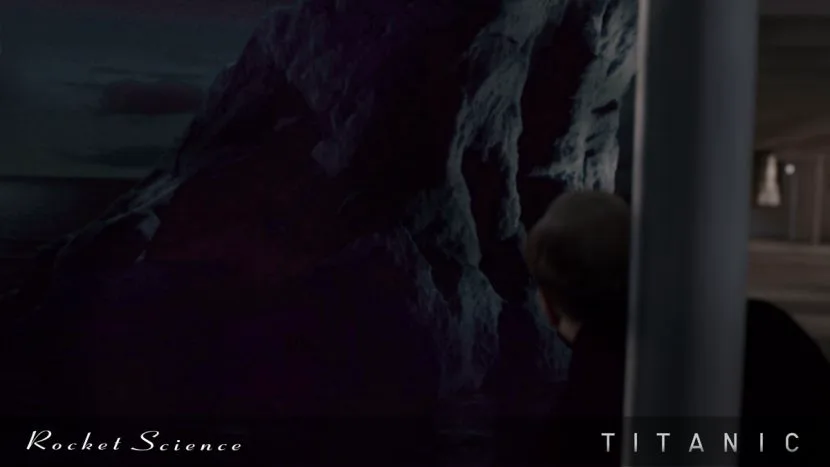
When making decisions, it is necessary to evaluate whether the existing assets and shooting conditions can support the creative direction. When referencing industry VFX case studies, you should strip away their specific storylines and production specifications, extracting only their methods for handling spatial depth, focus shifts, or sharp-soft contrasts. For example, some series use foreground obstructions to create a voyeuristic feel that enhances suspense; when adapted for a TVC, this technique might translate to shooting a beverage through glassware to emphasize its clarity. The key is to determine whether this visual rhetoric is compatible with the brand's tone and whether it can achieve controllable delivery quality within the established budget.
If this strategy is adopted, the specific functional definitions of the foreground and background must be locked in during the scripting phase. Determine whether the foreground serves as a framing device to guide the eye, a prop to imply the usage scenario, or a dynamic element to enhance visual rhythm. Determine whether the background provides environmental context, extends spatial imagination, or carries supplementary information. Any unverified visual assumptions should be eliminated during the storyboard confirmation stage to avoid bringing uncertainty to the high-cost production set.
Key Materials and Confirmation Items to Be Prepared by the Brand
To ensure the foreground and background design precisely serves commercial objectives, the brand must provide in-depth materials that go beyond a standard brief. The primary task is to define the absolute priority of the product within the frame and list the key areas that must not be obscured, defocused, or distorted. For example, in a skincare TVC, the bottle label must remain fully visible, and even falling petals in the foreground must avoid the text area. This list should serve as a strict constraint for all subsequent visual design.
Secondly, actual product samples or high-precision 3D models must be provided for pre-production testing. The success of the foreground-background relationship relies heavily on the scale, material reflectivity, and color contrast between objects. Flat images alone cannot determine whether a transparent container will blend into the background under complex lighting, nor can they predict whether foreground clutter reflected on a metal surface will cause continuity errors. It is recommended to bring product samples to location scouts or lighting tests to verify on-site compatibility with the planned environment.
Additionally, overused visual clichés from competitors and past campaigns should be reviewed to identify outdated expressions to avoid in this TVC. Foreground and background techniques can easily fall into formalistic traps, such as the overuse of blurred bokeh or repetitive window-frame compositions. The brand should specify the exact pain points they wish to overcome rather than vaguely requesting a premium feel. Furthermore, the impact of the final platform's aspect ratio and compression algorithms on depth-of-field details must be confirmed, as the vast difference in information capacity between vertical short videos and horizontal long videos directly dictates compositional choices.
On-Set Execution Control and Risk Contingency Plans
Once shooting begins, achieving the foreground-background relationship relies on precise physical control rather than post-production fixes. The Director of Photography must simultaneously consider independent lighting layers for the foreground, subject, and background during setup. A common mistake is flooding the entire set with even light, which eliminates dimensionality. The correct approach is to use rim lighting or localized fill on the foreground to separate it from the subject, and to light the background independently to maintain the desired tonal balance. Each lighting layer should be independently adjustable to ensure sufficient separation for color grading in post-production.
Focus management is another high-risk operation. When the product is in the midground and there are moving objects in the foreground, the focus puller must pre-mark multiple focus points and rehearse repeatedly. It is recommended to use a large monitor to check in real time whether focus transitions are natural or abrupt, avoiding out-of-focus product keyframes caused by pursuing a shallow depth of field. For shots with complex foreground obstructions, a safety take should be prepared—either by reducing the obstructed area or increasing the depth of field—ensuring usable footage remains if the primary creative vision cannot be perfectly executed on set.
Art direction must strictly follow perspective principles when building foreground-background relationships. Temporarily built foreground props with disproportionate scales or cheap materials will instantly look fake under high-definition lenses. All foreground elements must undergo lens tests to confirm their textures and colors effectively complement rather than distract from the product. For location shoots, uncontrollable background clutter such as irrelevant signage, reflective walls, or moving shadows must be cleared in advance. A dedicated crew member should monitor the edges of the viewfinder to prevent accidental intrusions, as the cost of post-production removal far exceeds that of on-set prevention.
Layer Reconstruction and Detail Restoration in Post-Production
Post-production focuses on recalibrating the foreground-background relationship captured during filming. Editors must precisely match the dynamic rhythm of the foreground and background to the timing of the product's appearance. The speed and direction of foreground movement should echo the pacing of the product's selling points; too fast will steal attention, while too slow will feel sluggish. If the foreground-background interaction in the original footage is less than ideal, digital matte painting or AIGC-generated supplementary elements can be used to enhance spatial depth, but any new content must adhere to the lighting logic of the live-action shoot to avoid a floating effect.
The color grading stage must further enhance layer separation. The standard approach is to slightly reduce the saturation or add a soft-focus effect to the foreground, pushing it to a secondary visual level; maintain the highest sharpness and color accuracy for the main product; and darken or shift the background hue to push it further back in space. This tiered processing must be checked frame by frame on a professional monitor to ensure the product remains the visual focal point across different display devices. Sound design also contributes to constructing the foreground and background; foreground sound effects, such as wind or flowing water, should create acoustic depth alongside product operation sounds and background music, as the auditory sense of distance significantly enhances the immersive credibility of the visuals.
If continuity errors or focus flaws remain from the shoot, post-production fixes must have a defined cutoff point. Minor dust and scratches can be handled quickly, but if extensive repainting or complex tracking replacements are required, it is crucial to promptly assess the impact on the overall schedule and budget. At this point, the focus should return to commercial essentials, balancing perfectionism with delivery timelines, accepting flaws within a tolerable range when necessary, or concentrating resources on the core product showcase segments. All post-production adjustments should retain layered project files to enable quick re-rendering for different platform specifications in the future.
Tiered Inspection Checklist for TVC Commercial Delivery and Acceptance
Evaluating the foreground-background effects of a TVC commercial cannot rely solely on subjective impressions; a structured inspection process must be established. First, verify product compliance, ensuring that in all shots featuring foreground-background relationships, key product information is unobstructed, undistorted, and free of color casts, while fully adhering to brand VI standards. This is a non-negotiable baseline that no artistic treatment can override.
Next, test the effectiveness of the visual guidance. Invite internal staff who were not involved in the project to watch the final cut, and record whether their initial focal point lands accurately on the product, and whether they can clearly understand the scene or emotional information conveyed by the foreground and background. If the majority of the feedback indicates that the visuals are appealing but the product is forgettable, or that the foreground is incomprehensible, it means form overshadows content and revisions are required. Simultaneously, test the viewing experience across different devices, such as smartphones, tablets, and TVs, to ensure that foreground and background details do not blur together on small screens, and that background noise or CGI seams are not overly noticeable on large screens.
Finally, verify the completeness of the technical deliverables. In addition to the master file, you should request a clean version without subtitles or foreground obstructions, layered PSD or EXR sequences, and focus test records for key shots. These assets are used not only for archiving the current project, but also as a foundation for subsequent derivative edits, multilingual version production, or platform-adaptive cropping. If the contract stipulates the inclusion of source files, you must also confirm that the project naming conventions are standardized, media links are intact, and there are no copyright risks. All technical checks should be completed before signing off on acceptance to avoid rework caused by format issues after launch.
Applicable Boundaries and Alternatives for Foreground and Background Techniques
Although foreground and background relationships can enhance the visual impact of TVC commercials, their application has clear boundaries. When product information density is extremely high and multiple parameters need to be conveyed in a short time, complex depth-of-field staging becomes a cognitive burden; in such cases, a flat, high-contrast, straightforward composition should be used. For price-sensitive FMCG products or promotion-driven content, consumers focus more on benefits than on aesthetic experiences, and overly refined layering may instead lead to the misperception that the product is overpriced.
In low-budget or extremely tight-schedule projects, the risk of physically executing high-quality foreground and background setups is too high. If professional lighting, art direction, and focus pulling cannot be guaranteed, forcing the execution will only yield a cheap-looking, half-finished product. In such cases, consider alternatives, such as compositing static illustrations as foreground elements in post-production, using macro lenses to simplify spatial relationships, or abandoning depth-of-field design entirely in favor of editing rhythm and copywriting. Honestly confronting resource constraints is more important than fixating on a specific visual style.
Certain product types are inherently unsuitable for strong foreground-background expression. For example, software interface demonstrations, abstract service brands, or pure audio products lack a physical carrier, causing spatial layers to lose their anchor. Forcibly adding decorative foregrounds will only create information noise. Such projects are better suited to establishing visual structure through motion design, data visualization, or interviews. Recognizing when not to use a technique is just as important as knowing how to use it.
Pragmatic next steps from method to action
If you are preparing a TVC and considering the use of foreground-background relationships, it is recommended to first compile a brief containing product close-ups, a list of core selling points, reference visuals, and taboos. Subsequently, arrange a targeted visual testing meeting with the production team to verify the feasibility of the concept using actual products and simple props, rather than remaining in conceptual discussions. ONCE can provide full-process production support for TVCs, product videos, and campaign videos, assisting you in translating creative ideas into executable shooting plans and delivery standards. Before launching, please ensure that all visual choices have been validated against commercial objectives, allowing the form to truly serve communication effectiveness.
If you are preparing a TVC project, you can first organize the brief, reference visuals, product or corporate materials, delivery platforms, and copyright scope, and then view theTVC service pageto ground communication from abstract preferences into executable production boundaries.