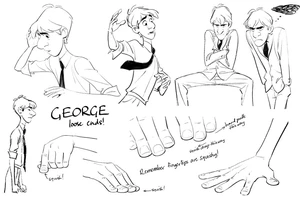
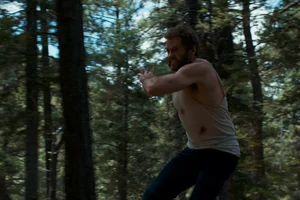
Confirm the acceptance criteria for character consistency during the project initiation phase.
When evaluating an AIGC commercial proposal, brands must first answer whether inconsistent character identity across shots in the final video is acceptable. The answer to this question directly determines the project budget, timeline, and the choice of the production team. If the brand expects strict uniformity in the character's appearance, such as maintaining consistent facial features, clothing details, and demeanor for the same spokesperson across different scenes, the production team must include consistency verification as a core delivery metric in the project plan. If the brand allows the character's appearance to vary within a certain range, such as for virtual characters used in abstract concept expression, the verification standards can be relaxed, but it is still necessary to specify which shots allow variation and which must remain strictly consistent.
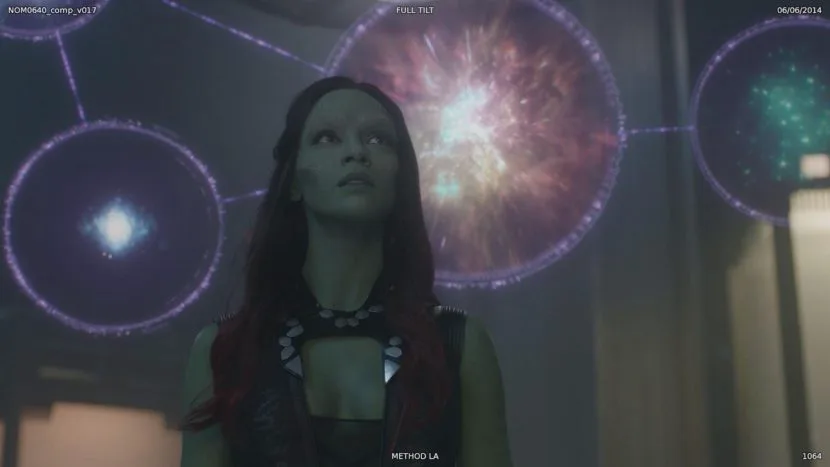
Specific actions during the project initiation phase include the brand providing character reference images—one each of the front, side, half-body, and full-body views—and noting key features such as hairstyle, eyebrow shape, skin tone, clothing color, and accessory details. The production team needs to generate consistency test samples based on the reference images, including at least three different shot sizes and two different lighting conditions, to allow the brand to make an intuitive judgment. The standard is that the brand can identify the subject as the same character at a normal viewing distance without zooming in on the image. If the brand needs to zoom in on specific details to tell, it indicates insufficient consistency, requiring adjustments to the generation parameters or workflow. The risk is that an excessive pursuit of consistency may result in stiff imagery where the character's expressions and movements lack natural variation; therefore, the brand must evaluate both consistency and vividness simultaneously, rather than focusing on just one dimension.
An exception applies if the project goal is to quickly produce concept videos or internal test materials with low consistency requirements, allowing the verification process to be simplified, but the contract must state that the deliverables do not include strict consistency guarantees. Otherwise, disputes can easily arise during later acceptance. The consequence of delivery is that if standards are not clearly defined during the project initiation phase, later rework costs may exceed the budget by 30%, and no one can be held accountable.
The brand should also require the production team to provide a consistency verification plan document, explaining which tools, parameters, and processes are used to ensure character identity stability. If the production team cannot provide a specific plan and only makes verbal promises, the brand should be cautious about signing the contract. Because AIGC video generation involves randomness, projects without a systematic verification plan will most likely experience character drift in the final video.
How to collect materials during the shooting phase to support consistency verification.
The shooting phase of an AIGC commercial differs from traditional video shooting, with a focus on collecting materials for generation and verification. The brand needs to understand that the work on set includes three parts: first, shooting the reference actions and expressions of real actors; second, collecting scene and lighting information; and third, recording the character's appearance details from different angles. These materials will be used for subsequent AIGC generation and consistency verification.
Specifically, the production team prepares a material checklist before shooting, including actions such as the actor's front, side, back, walking, turning, sitting, and standing, with each action shot from at least three different camera angles. For lighting, the intensity and direction of the key light, fill light, and rim light must be recorded, and a gray card or color chart must be shot for later color correction. The brand needs to cooperate by ensuring the actor's wardrobe and makeup do not change during the shoot; if there is a costume change, full-body and detail shots of each outfit must be taken separately. The standard is that the character's facial features are clearly visible from different angles in the materials without severe occlusion or blurring, and the clothing texture and color remain consistent under different lighting.
The risk is that time on set is tight, and the production team might compress the material collection time, leading to a lack of key angle references during later generation and making character consistency verification impossible. Therefore, the brand should reserve at least half a day in the shooting schedule specifically for material collection, which must not be mixed with the main shoot. An exception applies if the project uses entirely virtual characters and requires no real actors; in this case, material collection becomes reference image gathering and style testing, but scene empty shots and lighting references must still be captured to ensure the generated images blend with the real scene.
The delivery consequence is that if material collection is incomplete, the character's face may distort and clothing details may become scrambled during later generation; if the brand discovers issues during acceptance, the production team will need to reshoot or adopt a repair solution, but the repair effect is limited and adds extra costs. Therefore, the quality of materials in the shooting phase directly determines the feasibility of consistency verification.
Technical verification process for character consistency in post-production.
In the post-production phase, the verification of character identity consistency must be conducted in steps and cannot rely solely on the final video. The production team should establish a verification process that includes generated intermediate frame checks, keyframe comparisons, dynamic sequence checks, and final compositing checks. The brand needs to understand these processes to ask the right questions during milestone acceptances.
The first step is the generated intermediate frame check. After generating each video segment, the production team extracts close-up frames of the character's face and compares them with the reference images to calculate the error of facial feature points. If the error exceeds the preset threshold, it is regenerated or manually corrected. The standard is that the positional deviation of facial feature points, such as the eye corners, tip of the nose, and corners of the mouth, does not exceed two pixels, and there is no obvious visual jump in skin color and texture. The brand can request comparison screenshots from the production team but does not need to understand the technical details, only needing to confirm visual consistency.
The second step is keyframe comparison. Select the clearest frame of the character in each shot and compare it side-by-side with the clearest frame of the previous shot to check for continuity in clothing, hairstyle, and accessories. For example, if the character wears earrings, the style and position of the earrings must be consistent across all shots. The risk is that AIGC generation may alter accessory details, such as changing earrings from round to square, so the brand must explicitly list which details must remain strictly consistent, such as brand logos, product packaging, and character tattoos.
The third step is dynamic sequence checking. Play the continuous shots to observe whether the character's face and body remain stable during movement. Common issues include facial distortion when the character turns their head, leg deformation while walking, and an abnormal number of fingers during hand movements. During acceptance, the brand should focus on shots with large movements, such as running, waving, and turning. If any anomalies are found, the production team must mark and fix them. An exception applies if the project style is abstract or surreal and allows for character morphing, but the brand must confirm this in advance; otherwise, they cannot refuse repairs later on the grounds of style.
The fourth step is final compositing inspection. After compositing the generated footage with live-action backgrounds, visual effects, and subtitles, recheck the character's consistency across different layers. This is because compositing may introduce color shifts or edge blending issues, making the character look different. The brand should require the production team to provide before-and-after compositing versions to confirm the source of any issues. The consequence of delivery is that if the post-production verification process is incomplete, the character may suddenly appear older or younger in a certain shot in the final video, leaving the brand with no choice but to accept it or remake it, which is costly and time-consuming.
The acceptance checklist must cover all dimensions of character consistency.
When accepting an AIGC commercial, the brand must not just watch the final effect, but should check it item by item according to a pre-established acceptance checklist. The checklist should include five dimensions: facial features, clothing details, motion continuity, lighting consistency, and audio matching. Each dimension requires clear inspection actions and judgment criteria.
For facial feature inspection, the brand prepares a character reference image, randomly extracts five shots from different scenes in the final video, and compares the facial contours, feature proportions, skin texture, and expression range one by one. The judgment criterion is that the character in each shot can be recognized as the same person, and the expression changes align with the plot logic. If the character's expression is stiff or distorted in a certain shot, it must be flagged even if the facial features are consistent. The risk is that the brand may focus only on the face and ignore other dimensions, resulting in an incomplete acceptance.
Clothing detail inspection requires confirming that the color, pattern, material, and wearing state of the character's clothing are consistent across shots. For example, if the character wears a red jacket, the color code of the red jacket must be identical in all shots, and the positions of details like buttons and zippers must remain unchanged. The brand can require the production team to provide a clothing consistency report listing the key features of the clothing in each shot. An exception applies if the plot requires a costume change; in this case, the shots after the change must be clearly distinguished from those before, and the changing action itself must be coherent.
Motion continuity inspection primarily checks whether the character's movements in adjacent shots are fluid, without jumping or repetition. The brand can play the action transition points frame by frame to confirm that the character's position and posture are reasonable. If the motion is discontinuous, such as the character suddenly changing from standing to sitting without a transition, it does not meet the acceptance criteria. The judgment criterion is that the action timeline is traceable in the editing software, and the start and end frames of each action are clear.
Lighting consistency inspection requires that the direction and intensity of light on the character in different scenes match the environment. For example, if the scene has warm indoor lighting, the shadows on the character's face should be soft; if the scene has strong outdoor lighting, the character's outline should be clear. The brand can observe the direction of the shadows on the character's nose and eye sockets; if the shadow direction contradicts the scene's light source, it is considered inconsistent. The risk is that inconsistent lighting will make the audience feel the character is detached from the scene, affecting immersion.
For audio matching inspection, if the character has dialogue or voiceover, the timbre, pacing, and emotion of the voice should match the character's image. The brand needs to confirm that the voice actor's voice matches the character's image and that the lip sync is accurate. If the lip sync is off, the audience will notice it even if the visuals are consistent. The consequence of delivery is that if the acceptance checklist is incomplete, the brand may discover missed issues after delivery, but by then the contract has ended and free repairs cannot be requested.
Technical boundaries the production team must explain to the brand
Before the project starts, the brand should require the production team to provide a written explanation of the capability boundaries of AIGC technology, including which situations can guarantee consistency and which cannot. This can avoid unrealistic expectations later on. The production team needs to clarify that current AIGC video generation technology has good control over facial consistency, but weak control over full-body movements, complex props, and multi-person interaction scenes.
Specifically, if the project involves full-body running, jumping, or dancing, the risk of limb deformation is high, and the production team may need to use frame-by-frame retouching or mix in live-action footage. The brand should understand these risks and decide whether to accept them. If the project involves multiple people in the same frame, such as two characters conversing, the identity consistency of each character must be verified separately, and interactive movements between characters may cause clipping or occlusion issues that require additional processing by the production team.
An exception is if the project uses a single character with simple movements, such as a person sitting at a desk and talking; in this case, consistency verification is relatively easy, and the production team can guarantee a high standard. The brand can request sample videos of varying complexity from the production team based on the project's complexity for evaluation. The standard is that the character in the sample video remains consistent over five continuous minutes of footage, with natural movements. If the sample video cannot achieve this, it indicates that the project's complexity exceeds technical capabilities, and the plan needs adjustment.
The brand should also require the production team to explain the generation parameters, such as seed values, sampling steps, and model versions, because these parameters affect the stability and reproducibility of the generated results. If the production team cannot provide parameter records, subsequent adjustments and fixes will lack a basis. The consequence of delivery is that if the technical boundaries are not transparent, the brand may discover midway through the project that the expected results cannot be achieved, but having already invested a large budget, they can only accept a downgraded solution.
Character consistency scenarios unsuitable for AIGC commercials
Not all brand projects are suitable for AIGC commercials; projects with extremely high character consistency requirements or involving complex narratives may not be appropriate. Brands need to identify these unsuitable scenarios to avoid blind investment. The first unsuitable scenario is when the project requires a real celebrity or public figure endorsement and demands complete image restoration, including micro-expressions and unique temperament. Current AIGC technology struggles to capture a celebrity's unique charm, and the generated results may be recognized as "fake" by fans, damaging the brand's reputation.
The second unsuitable scenario is when the project contains a large number of close-up shots where the character's face occupies the main part of the frame and the audience will examine it closely. For example, in a skincare commercial's facial close-up, if the character's skin texture or eye catchlight is unnatural, the audience will notice it immediately. At this point, traditional live-action or CGI may be more reliable. The standard is that if the character's facial close-ups in the final video exceed thirty percent of the total duration, traditional methods are recommended.
The third unsuitable scenario is when the project requires precise interaction between the character and a real product, such as using the product, opening the packaging, or pressing a pump. AIGC-generated hand movements may deform, making the interaction look unrealistic. The brand can require the production team to conduct a small-scale test; if the failure rate of hand movements in the test exceeds fifty percent, it is unsuitable.
The fourth unsuitable scenario is when the project requires multi-language versions, and the character's lip movements in each version must sync with the different languages. Currently, AIGC lip-sync technology has good support for English but limited support for other languages, potentially requiring extensive manual adjustment. The brand should evaluate the target market; if minority languages are involved, live-action or animation is recommended.
An exception is if the project is a concept promo that does not pursue realism but emphasizes visual impact; in this case, AIGC can accept changes in character form and even use these changes as creative elements. At this point, consistency verification can be relaxed, but the brand must still specify acceptance criteria in the contract. The consequence of delivery is that if the brand fails to identify inapplicable scenarios, the project may fail, wasting budget and time with no accountability.
The next step is recommended to start with a sample video test.
Before deciding whether to adopt an AIGC commercial, the brand is advised to first require the production team to provide a thirty-second sample video. The content should include front, side, full-body, and action shots of the character, simulating the project's lighting and scenes. The cost of a sample video test is far lower than a full project, but it can effectively evaluate the level of character consistency. During testing, the brand should invite internal teams and external audiences to conduct blind reviews, collecting their subjective impressions of character uniformity. If over eighty percent of the audience in the blind review believes the character is the same person, it indicates that consistency meets the standard.
If the sample video test passes, the brand can proceed to formal project initiation, but must still clearly define acceptance criteria and rework clauses in the contract. If the sample video test fails, the brand should require the production team to adjust the workflow or consider a hybrid solution, such as live-action shooting for the character's face and AIGC generation for backgrounds and props. A hybrid solution offers more control over character consistency but comes at a higher cost. The brand can make a choice based on the budget and project importance.
Finally, the brand needs to remember that an AIGC commercial is a tool, not an end goal. Character consistency is one quality metric, but not the only one. The brand should comprehensively evaluate creative expression, communication effectiveness, and production costs to choose the solution best suited for the project. If the project has extremely high requirements for character consistency and a sufficient budget, traditional live-action shooting or CGI may be more reliable. If the project pursues innovation and efficiency while allowing a certain margin of error, AIGC is worth trying. Regardless of the method chosen, upfront verification and clear acceptance criteria are the keys to success.
If you are preparing an AIGC commercial project, you can first organize the brief, reference visuals, product or corporate materials, delivery platforms, and copyright scope, and then view theAIGC video services pageto ground communication from abstract preferences into executable production boundaries.